


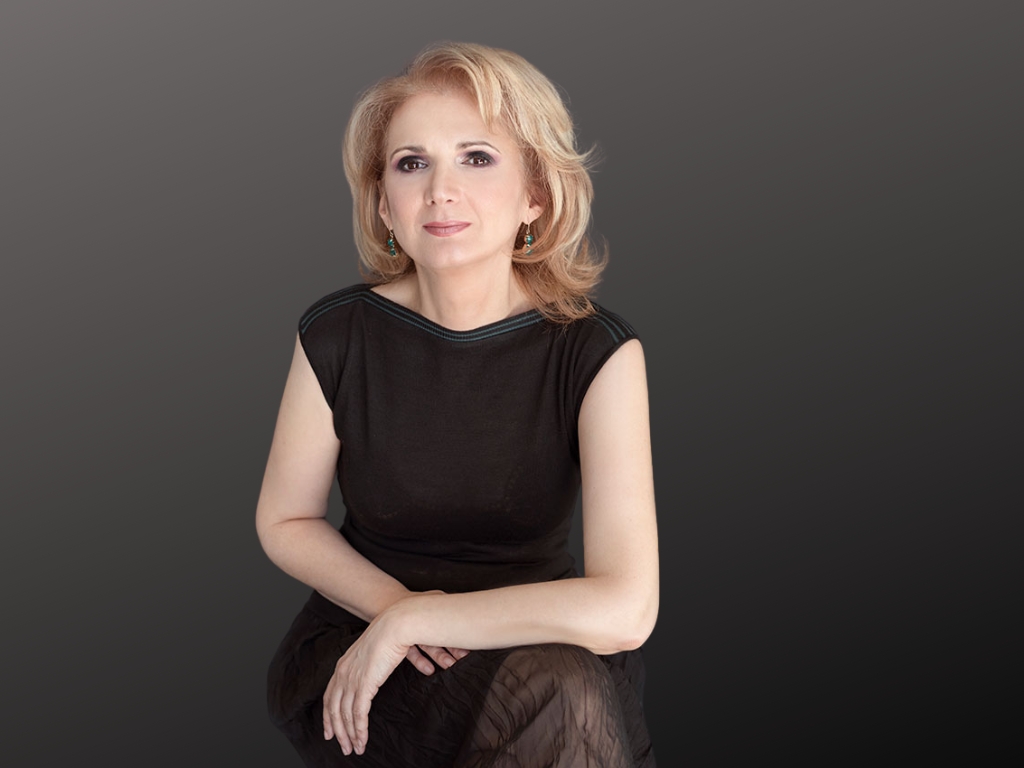
Daniela Palade Teodorescu is an Example of Resilience and Reinvention. Amid a career crisis at the age of 52, Daniela embraced entrepreneurship, transforming a difficult period into a real opportunity for personal and professional growth. The burnout she experienced in 2020 was a clear signal for Daniela that change was necessary. This experience led to her training as a neurotrainer, helping her to better understand and support mental health – both for herself and those around her.
Daniela is guided by principles such as resilience, authenticity, and kindness, values she brings to her collaborations with others. She advocates for servant leadership and believes that empathy and emotional intelligence are absolutely essential for creating a lasting and meaningful impact in business.
To young people, she recommends developing autonomy, being honest with themselves, and finding their inner strength – the key to discipline and adaptability.
C&B: You transitioned to entrepreneurship during a challenging time in your career, at the age of 52. What motivated you to embrace this change, and how has this step influenced your personal and professional growth?
Daniela Palade Teodorescu: It was the moment I entered the phase of intrapreneurship – willingly or not. This happened last year, during a full-blown mid-career crisis. This crisis had been looming for a while; I could sense it because I had read and written about it. However, I didn’t have the courage to confront it. So, it came to me in a rather brutal way, like all decisions we keep postponing. It was a pause imposed by a professional blockage but also by my father’s agony, whom I accompanied in his final weeks. Somehow, my father’s suffering made me less afraid of what was no longer working professionally and helped me more easily accept the pause. It wasn’t a complete pause – I couldn’t afford that – but I worked at a completely different pace, connecting with my inner rhythm.
C&B: The burnout you experienced in 2020 was a clear sign that change was needed. How did this experience help you redefine your priorities and reinvent yourself as a neurotrainer?
Daniela Palade Teodorescu: The lesson is that any blockage or health problem is a signal that you’re not on the right path. Any short-term pain can transform into a long-term benefit. “Befriend” the challenge and see what it’s trying to tell you. However, this lesson is hard to learn because there are many fears that keep you spinning in a hamster wheel. Not coincidentally, I had a hamster at home during that time 😊.
In my case, burnout was also intertwined with long-COVID symptoms, which even doctors struggled to understand. Our family psychologist suggested a few sessions of dynamic neurofeedback, which managed to stabilize me. That’s how I started studying this technology more deeply. To understand it better, I also took courses – one for linear neurofeedback (the medical variant, which didn’t work for me) and then a course in Dynamical Neurofeedback NeurOptimal (the non-medical variant). It’s a completely non-invasive technology that helps the brain perform better and self-regulate in increasingly common situations – anxiety, panic attacks, depression, chronic exhaustion, etc.
C&B: How has your training as a neurotrainer contributed to understanding and supporting mental health, both for yourself and for those you collaborate with?
Daniela Palade Teodorescu: Since I have two teenagers at home who need intense cognitive performance and anxiety regulation, I worked with them and saw the results. Improvements include increased focus in class, a longer attention span during lessons and at home, enhanced memory capacity, better time management, reduced procrastination, decreased performance anxiety – especially before important exams – and relief from chronic stress. Kids become calmer, more detached, and balanced, with an overall better mood and improved emotional control, marked by less irritability and nervousness, particularly in teenagers. These benefits also apply to adults, but children need more guidance.
Because my father’s suffering left a deep impact on me, I wanted to do something to help prevent neurodegenerative diseases. Dynamic neurofeedback is very useful for professionals aged 45+ who want to train their brains to slow cognitive decline. This contributes to a better quality of life and increases the chances of longevity.
C&B: Resilience, authenticity, and kindness are the values that guide you. How do you apply these principles in your daily activities, and how do they help strengthen collaborative relationships?
Daniela Palade Teodorescu: Resilience is a combination of patience, acceptance, and gratitude that helps us not lose our way in the ocean of various turbulences—economic, financial, health-related, and relational crises. Life in the current VUCA matrix (Volatility, Uncertainty, Complexity, Ambiguity, Disruption) is increasingly challenging, and resilience is essential for the daily marathon. Authenticity is becoming harder to maintain in a world full of carefully studied appearances, especially on social media. It’s no coincidence that the term “fake authenticity” has emerged, highlighting how difficult it is to internalize and sustain true authenticity.
As for kindness… I recommend that everyone watch the movie Evan Almighty, where, in the role of the wisest, kindest, and most humorous God, Morgan Freeman answers one of humanity’s greatest questions: “HOW DO I CHANGE THE WORLD?” THROUGH EVERY SPONTANEOUS ACT OF KINDNESS. I can’t think of a more concise, relevant, or accessible call to action. If there are still skeptics who think kindness is an outdated and misplaced concept in this unkind world, I agree and invite them to try an exercise: replace “bad” with “unkind” and make small, selfless gestures that can tip the scale towards “good.” Look around—good people have a high level of ethics, and the much-touted and desired “psychological safety” only exists where there are good people.
C&B: You support the concept of servant leadership, based on empathy and emotional intelligence. How can leaders adopt this style of leadership to create a significant impact in their teams and organizations?
Daniela Palade Teodorescu: In Romania, this type of leader has been labeled as “servile,” “servant,” or even “humble”—but I believe “servant” is the most fitting term because it relates to serving in a spiritual sense. That’s why I left the most fundamental quality of this leader—spiritual intelligence—until the end, which, combined with empathy, makes a difference in business, especially during such a disruptive time as we’re experiencing. You might say that in the age of artificial intelligence, supporting this idea is outdated, misplaced, even ridiculous. And yet… as the exponential rise of artificial intelligence transforms the economy and businesses, we need to cultivate our differentiating factors in relation to “machine learning”—emotional and spiritual intelligence.
C&B: How do you use your personal experience of reinvention to support others in overcoming challenges and discovering their own opportunities for authentic growth?
Daniela Palade Teodorescu: I work with high school students and university students who want to learn more about long-term career planning, personal branding, failure and success in careers, a form of mentorship. I help them with their essays for admission to international universities, as this is a crucial test.
With mature professionals, I work on career transitions, mid-career professional reconfiguration, and age diversity in companies. I also cover topics such as presentation skills and helping mothers return to work after maternity leave, a difficult and delicate process for both employees and employers. I am invited to speak on female leadership, gender equality, and single parenting challenges. Over 20 years, I’ve accumulated so many experiences!
Since the topic of the mid-career crisis is rarely discussed in organizational debates, I’ve set out to write a book that will create a context for discussions and best practices, possibly even for useful public policies. It’s almost ready.
C&B: You mentioned the importance of autonomy and discipline for young people. What advice would you give to those at the beginning of their journey to develop their inner strength and remain honest with themselves?
Daniela Palade Teodorescu: Here, it’s very important what parents have instilled. Schools can no longer be blamed for a lack of autonomy and discipline if these have been replaced by overprotective parenting, pampering, and keeping children under a glass dome.
Children have become accustomed to receiving everything they want as quickly as possible and with as little effort as possible. How can they not get bored or become disillusioned before reaching adolescence? They lack the frustration tolerance that would drive them to strive, seek solutions, and be motivated, instead of waiting for ready-made solutions.
I challenge young people to answer the question “What can I do on my own, without the support of my parents?” That’s where the measure of autonomy lies, this meta-competency of learning.
Autonomy also leads to self-discipline and adaptability. And creativity— which comes from the constant practice of “how can I do things differently?” or “what do I do when I’m missing this or that?”
I often talk to young people about those who build sustainable businesses—often starting from scratch, “from the ground up,” despite the hardships and lack they faced in their childhoods. Self-made men. Self-made women. That’s where the inspiration lies.
C&B: What were the greatest challenges you faced when transitioning from a corporate environment to intrapreneurship, and how did you overcome them?
Daniela Palade Teodorescu: Economic and financial uncertainty. But that’s something every entrepreneur experiences. The fear of falling ill and not being able to work to support my family. The fear of not being able to afford a sick leave. How did I overcome them? By daily nurturing my spiritual intelligence, with my family and friends close by.
C&B: How do you think empathy and emotional intelligence can transform not just leadership but also the way organizations manage employees’ mental health?
Daniela Palade Teodorescu: I return to spiritual intelligence. A Romanian theologian who works with entrepreneurs said: “Spiritual intelligence in companies is both gold and explosive. If we don’t manage it properly, we risk losing people. This ingredient is so powerful, and the way we use this enzyme is an art. But without it, economic life would have no flavor. If we know how to dose it well so that we “season” the enterprise, fulfilling the goals of a business plan, it’s an immense success. It’s a long-term endeavor. Without spirituality, there is no future, ecology, sustainable economy, or a vision of humanity and society that can save them both at once. Because you can save humanity and destroy society. Or vice versa. When a leader learns the joy of spiritual training, all these challenges will be approached differently—as opportunities for spiritual growth.”
C&B: At SMART HR, you discussed how to turn challenges into opportunities for authentic growth. What is the main message you wanted to convey to participants about the power of reinvention and resilience?
Daniela Palade Teodorescu: An immediate hardship can prove to be a long-term blessing. Finding in vulnerability those very abilities you may not have even been aware of. A problem or need of yours can be an excellent opportunity to find solutions that can also help others with similar needs. Instead of lamenting “why me, why this?!” it’s better to ask with curious and playful wonder “why not me?! What does life have in store for me in this story?” Change your perspective, like in the refrain of The Motans – “Maybe, maybe, the sunset is just the sunrise seen from behind…”

 UK
UK
 IT
IT
 ES
ES
 DE
DE
 FR
FR
 RO
RO
 PT
PT
 HU
HU


