


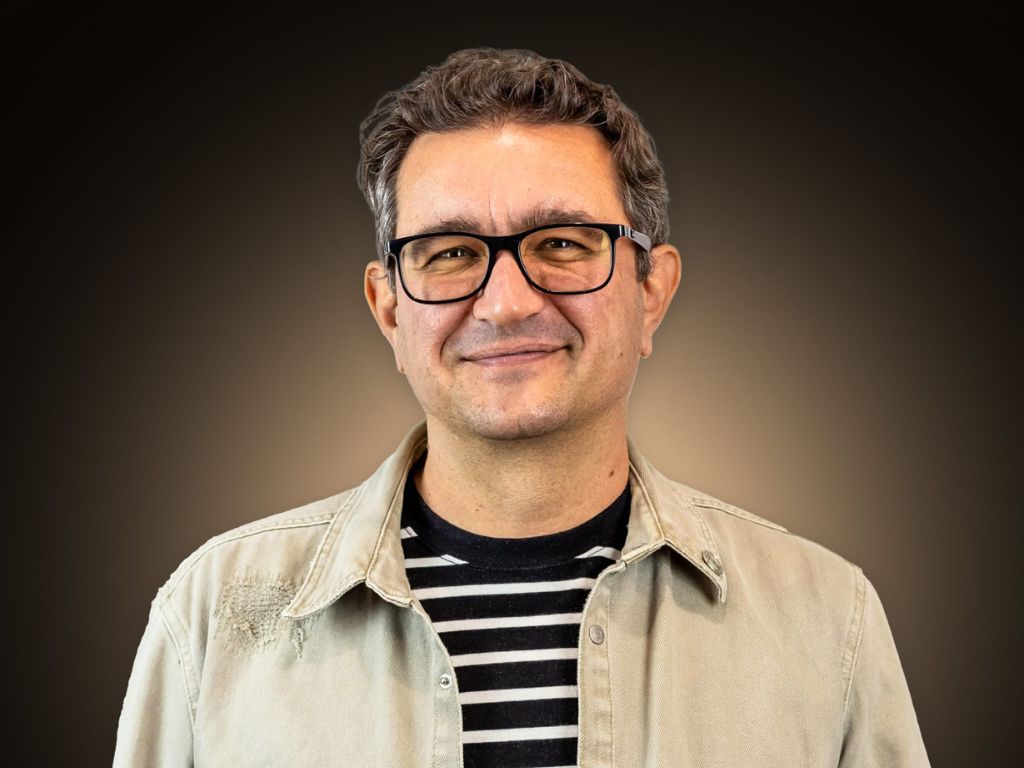
A journalistic piece about the loss of wonder in a screen-driven world and how marketing has become caught between algorithms, emotions, and fatigue. An honest look at the reality of digital marketing in 2026 and the need for simplicity, meaning, and intentional decision-making.
Modern technology has killed our sense of wonder. Not abruptly. Not spectacularly. But slowly, every day, through notifications, infinite scrolling, “just one more video,” “just one more post,” “just one more piece of news.” A kind of Chinese water torture (a terrible form of torture in ancient times). In the digital world, this form of torture is a sneaky one. Because we don’t realize it’s torture. Because we don’t realize how it erodes the very foundation of our own personal feng shui. And what’s worse is that we don’t realize how bad it actually is for us. We think this is just how life is supposed to be, and that’s that. We don’t even realize that life could, in fact, be different—not necessarily one in which a large part of it is “motorized” by algorithms.
From an evolutionary point of view, humans are built to feel wonder. To have their curiosity sparked. It’s a form of progress. Wonder should be a creative event. It appeared when you saw something truly new, when you heard something you had never heard before, when you encountered something that changed your perspective. And people learned. And progressed. Through qualitative leaps built on quantitative accumulation. Then, at some point, the modern era arrived. An era that gave us more and more of what we might call the permanent novelty of information. When newspapers became a constant for the masses, the permanence of novelty had a daily cycle: you picked up the paper in the morning and knew that until the next morning, you wouldn’t receive another one, no new information. Then came the radio, which drastically reduced the cycle at which we received information. Then television arrived, on the same “instant” principle. And then came digital. Which, in short, went “boooooom” with everything that had to do with cyclical periodicity as the basis for how we received information. In digital, not only can we receive information at any time, but we can also access it ourselves whenever we want, however we want. And as a major leap (we don’t know if it’s also a qualitative one…), we can do this anywhere.
The difference between, say, television and digital is also one of location, if you like. To watch TV, you had to stay in a fixed place. You couldn’t carry the television around with you wherever you went. You had to return to the space where the TV was working in order to watch it. Digital completely eliminated this limitation. But actually, it wasn’t digital. It was the phone. This device that is, in many ways, the most personal device in the history of humanity. The phone has, in fact, trivialized wonder. Because through the phone, more and more, we experience the world around us. Today we see hundreds of “new” things every day, but we no longer feel anything new. In place of wonder, a void has remained. And the major problem is that this void doesn’t stay empty. It gets filled with something else: anger, hatred, polarization, cynicism, sarcasm, distrust. Which is exactly what we see all around us.
The fuel that powers people’s presence in digital today, the fundamental axiom of how this ecosystem functions, is this: people no longer react to information (novelty, therefore), but to strong emotions. And when novelty (real or imagined) is transmitted through strong emotions, then buckle up. And algorithms don’t just know this. They rely on it. That’s why they keep poking at our emotional fences. Constantly. More and more intrusively. Algorithms no longer primarily compete for people’s attention. They compete for emotions in a world where people no longer know how to feel wonder. Attention is just the gateway into their souls.
Why are we talking about algorithms? Because for the first time in the history of marketing, the algorithm itself is a target audience segment for any brand. If we don’t “target” algorithms through marketing, then algorithms won’t “index” us and, as a result, won’t bring us into the attention of other people (whom only algorithms can reach).
This is the context in which digital marketing in 2026 must be understood. Without this framing, it will be very difficult to do effective marketing. And we’ll keep asking ourselves, “What am I doing wrong?” And most likely, from a technical standpoint, there’s nothing wrong at all. Just a strategic perception error, if you will. Which I aim to help you avoid through these lines.
From my point of view (and with many millions of euros in and from marketing behind me), digital marketing today is five to seven times more complicated than it was in 2016. Which, for a brand, means two major increased costs: 1. Higher media budgets (the money that goes to the big platforms) 2. Higher management costs (more agencies, more spreadsheets, more decisions to make, etc.).
If ten years ago digital marketing was about “being present online,” about posts and ads, in 2026 digital marketing has become an exercise in organizational engineering. And I say this with sadness. And with the sigh of someone who is about to mark 20 years of doing digital marketing. In the beginning, it was primarily about creativity. Now it is, first and foremost, about organizing marketing activity.
At Kooperativa 2.0, we work with 44 types of digital marketing that we can offer our clients. Yes, you read that right: 44. And for each type, very precise implementation organization is needed. With lots of spreadsheets. Today, marketing is still creativity, that’s true. But it’s somewhere near the end of the list. Because first and foremost, it means automations, integrations between applications, funnels, data, analytics, AI, email flows, remarketing, pixels, etc., etc., etc. And acronyms (more and more acronyms…), whose meanings are becoming harder and harder to understand: CPA, CAC, ROAS, CPM, LTV, etc., etc., etc.
In 2026, it no longer matters which channels you are present on. What matters is how they all connect to each other. And how well you manage to create these connections. And how efficiently you manage this web. The winners are no longer those who are everywhere, but those who have a coherent system that tells them where to be present most effectively. This increase in complexity didn’t come only from technology (which has undoubtedly exploded). It also came from market expectations. Customers expect personalized, fast, coherent experiences—“something I like.” And to deliver that, companies are forced to build increasingly sophisticated infrastructures.
At the same time, AI has democratized superficial quality. Today, almost anyone can generate good posts, good texts, good visuals, and even decent campaigns. “Good” has become the new banal. To do something “better,” you need an entire strategic and operational arsenal.
And on top of all this, a new phenomenon has settled in: digital fatigue. Customers are tired. Marketers are tired. Entrepreneurs are tired. People no longer want more content. They want more meaning. But everyone is searching for this meaning (which, fortunately or unfortunately, cannot be automated) by consuming more and more. A vicious circle from which, it seems, there is little escape.
I say “it seems” because, from my point of view, the escape lies precisely in assuming this mindset: marketing is so complicated that it requires a strategic management decision in order to be properly handled. It’s no longer “just a department.” It’s no longer “the marketing director handles it, it’s their problem.” It’s no longer something that “if it happens, we’ll talk, we’ll call you.” Without a strategic management decision that serves as the backbone of the marketing strategy, we will see a lot of scraped knees on a lot of brands in 2026.
I already have over 200 face-to-face meetings (online or in person) under the #YouPayWhatYouThinkIt’sWorth system. The common denominator of those who came to talk about marketing was this: “I don’t understand anything anymore, I don’t know what I’m supposed to do.” So, what is to be done?
I believe we’ve reached a moment in marketing where marketing itself needs some “props.” Without which it can no longer really support itself. First, these two major props are needed, and only then can we think about marketing as such.
Professional Digital Footprint Diagnosis (DPFD). That’s what we call it at the agency. This is the first “prop” we work with. It essentially means a 360-degree audit of a brand’s digital presence. And it’s a managerial tool that answers the fundamental question: “Where do we stand?” If you don’t know where you’re starting from, how can you know where you want to go?
Digital hygiene is the second prop. And it means many things: account security, account setup, a minimum digital presence (so that you are there when someone looks for you), a basic understanding of the rules, etc. Digital hygiene answers the question “What are we standing on?”
Then comes marketing. Built on these two props. And marketing answers the question “How do we move forward?” And the answer is what I mentioned above: with the help of true organizational engineering.
So, if it’s that hard and that complicated, will we ever stop doing digital marketing?
My short answer is no. I don’t think it’s a viable option.
But it would be somewhat ideal if we stopped doing digital marketing badly.
That’s what I’m saying.

 UK
UK
 IT
IT
 ES
ES
 DE
DE
 FR
FR
 RO
RO
 PT
PT
 HU
HU


