


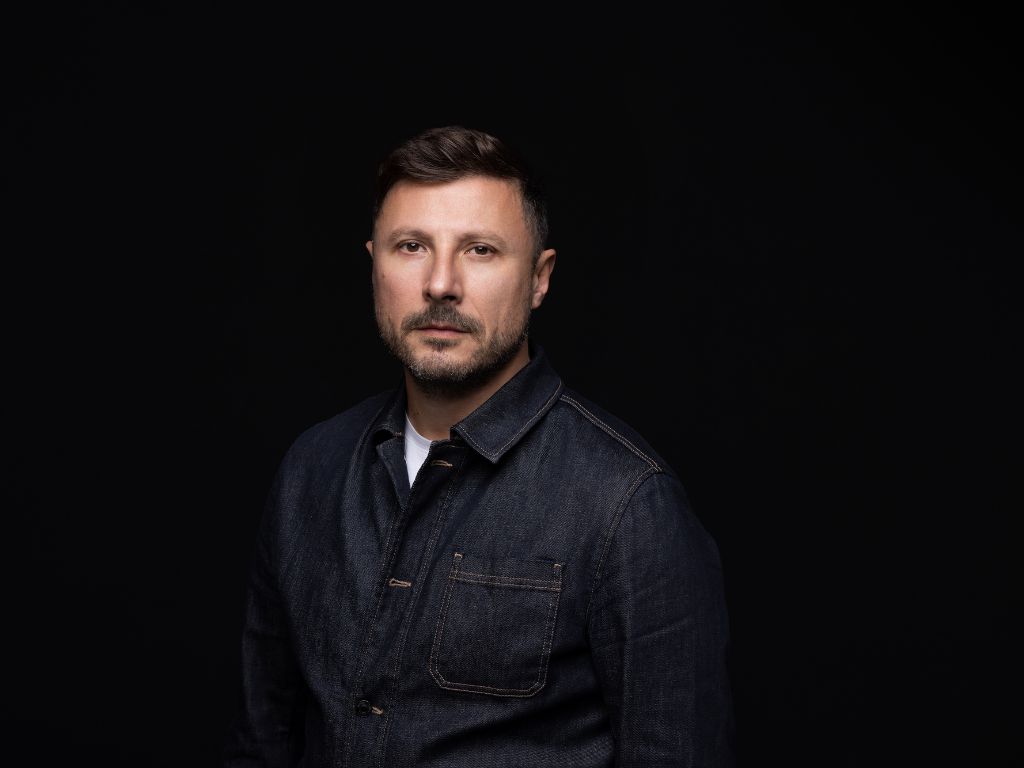
Grațian Mihăilescu, founder of UrbanizeHub, shares his mission to transform cities into sustainable communities, the challenges of urban development and the projects shaping the future of cities.
Grațian Mihăilescu is the founder of UrbanizeHub, an organization focused on sustainable urban development. Grațian studied in Germany, Italy and Belgium, completed a PhD in urban governance, and since 2022 has been part of the European Commission’s Board within the 100 Climate Neutral and Smart Cities mission, a flagship EU program. In recent years he has collaborated as an expert with the World Bank and the European Commission on projects related to strategic planning, urban innovation, public policy and sustainability. Together with his colleagues at UrbanizeHub, he has implemented important projects in urban regeneration, climate neutrality and participatory urbanism, all involving thousands of people in the process. He strongly believes in his mission to transform cities into cities for people.
C&B: If we were to look at a narrative thread of your career, which were the key moments that defined you?
Grațian Mihăilescu: I believe I had several key moments. Like anyone else. The first was when I left on a scholarship to Germany at the age of 27. It was a time when all my friends were chasing well-paid jobs and the stability of a position. I was curious and asking questions. I was eager to learn. I left at 27 from a multinational company where I had a good salary to join a study program in Germany, without really knowing what I would do afterwards.
Then, after five years of experience across Belgium, Germany, Italy, Hungary and Serbia, I returned home. And that is when the struggle began. Because it truly was a struggle. Society was not ready for the ideas I had cultivated during those years of work, study and practice. My ideas were considered too utopian, people told me. They said I could not do such things in Romania.
Then came the second key moment: 2016, the year when the world opened up.
In February 2016 I left Europe for the first time: Nepal and Bangladesh, together with my friend Mihai, for a dream that seemed too big on paper but perfectly possible in reality. We went there for a noble cause: building a library in a rural area of Bangladesh, a project dreamed of by my master’s colleague Sayed since 2010.
On the construction site of that library I truly felt, for the first time, that anything is possible when you bring the right people to the same table, people with the same energy and concerns, and direct resources toward a shared effort. That was the moment when the spark ignited in me, from which UrbanizeHub was born shortly after—although at the time it seemed like pure madness to launch an initiative about smart and sustainable cities from scratch.
The hometown and the trust that changes destinies
In June 2016, the new mayor of my hometown, Reșița, chose to believe in my expertise at a time when I was still building myself. Communication and the city’s development plan became topics we developed together: at the level of public discourse, strategy and urban development vision.
It was a collaboration in which I learned enormously from an entrepreneur, while he took from me vision, strategy and an eye for opportunities that can change a city. Ten years later, Reșița has attracted 250 million euros in European funds and is probably the city with one of the most significant transformations in terms of public investment.
When “no” becomes “yes” and changes your world
In December 2016, after two consecutive rejections from the Aspen Leadership Program, I was accepted into a global leadership program in San Francisco. The program was short and intense, with another 100 leaders from around the world, and it changed the way I think, act and mobilize resources—both human and financial—for projects that transform communities and cities. It was the kind of experience that rearranges your inner map: after it, you cannot return to the old version of yourself.
Three moments, one direction
Looking back, I realize these three moments were more than isolated achievements. They shaped my personality and left their mark on how I see the world, work and people. Most importantly, they defined my future. They created a mix in my life of social engagement and entrepreneurship, of impact and business, of communities and better cities.
The journey of 2016—the people, the places, the seemingly crazy decisions—guided the last decade of my life: the projects I built, the connections I formed, the team I gathered around the same vision.
C&B: What challenges did you encounter in developing UrbanizeHub, both from a platform perspective and in terms of social impact?
Grațian Mihăilescu: The first challenge came around 2012 when, after five years of experience in Belgium, Germany and Italy, I returned home. That is when the struggle began. Because it really was a struggle. Society was not ready for the ideas I had cultivated during those years of work, study and practice. My ideas were considered too utopian, people told me. They said I could not do such things in Romania.
I fought this battle from 2008 until around 2016, when, as I mentioned earlier, the world started opening up and my ideas and projects began to take root. Changes happened in cycles, and I believe many things shifted at the level of mentality after the Colectiv tragedy, unfortunately. We needed a tragedy to trigger some reforms and to awaken part of society. Roșia Montană was the beginning in 2012, then Colectiv, and later the justice protests in 2017–2018. All these events somehow transformed society and the perception of certain issues.
When I launched UrbanizeHub in 2016, I was talking about cities for people, about technology and sustainability, while the public discourse at the time revolved around corrupt mayors, sidewalks and flower beds. That was roughly the level of perception back then. Now, ten years later, people talk about quality of life, housing, urban regeneration and the need for green spaces. I like to believe we also contributed a small brick to that evolution.
In terms of social impact, we have one ambition: to continue participatory projects. All the projects we have carried out so far—strategic planning, urbanism, urban regeneration or innovation—have involved tens, hundreds and perhaps thousands of people. Educate, Connect and Inspire are the pillars on which we developed the first urban festival about the future of cities: New Urban Habits. We also have Urban Lab for Green Cities, where we build strategic partnerships with universities and city halls to organize idea competitions for greener cities. Through innovative methods that we patented at the EU level, we bring people together to work on the future of cities.
What I would like to see is more openness to dialogue and communication from the private sector, which should support such initiatives. People must understand that change also comes from the private sector, not only from the public sector. The more companies and businesses get involved in these kinds of actions, the more the value of urban living will grow and cities will begin to look like sustainable communities.
C&B: Is there a dream or ambition that has always guided you, regardless of obstacles?
Grațian Mihăilescu: Yes. I have always been an engaged person with a strong thirst for knowledge. I am and always have been a curious person who constantly wants to step outside the comfort zone. I always wanted to do things with impact. I never considered money a goal. It is a tool. I never chased power, money or positions. I am someone who built himself through experiences, studies, research, projects and people.
I always wanted to accumulate knowledge and expertise, to experience different educational systems and to understand certain questions I was asking myself. One question that has guided me since 2016 is: What would you do if you knew you could not fail?
I am also very ambitious. I never accepted resignation. I always tried to do things even when everyone told me it was impossible. Over time, after many failures, rewards also came. There is no magic formula. It is a lot of work and endurance. It is a mindset you build over many years. Not everyone can have it.
I never had grand objectives, but rather stage objectives: I want to study abroad, I want to receive a scholarship from the Commission, I want to work with the European Commission or the World Bank, I want to build an organization that shapes the future of cities. I am living my dreams. And I constantly need dreams because they make me wake up in the morning and start the day with energy.
C&B: What were you like at the beginning of your journey and how do you feel you have transformed until now?
Grațian Mihăilescu: I was less experienced, impatient, more inclined toward micromanagement, very attentive to small details, and easily upset if things did not turn out as I had planned. With age came wisdom and patience. Confidence is always there now, compared to 20 years ago when I could not make decisions because I was afraid of making the wrong one.
There are many things you gain with time and experience. They all relate to human qualities, and I believe people should evolve constantly until the end of their lives. We continuously learn and shape our personalities. I hope so.
C&B: If we spoke with your team or collaborators, what do you think they would say about you?
Grațian Mihăilescu: That I am tireless. That would probably be the first thing. That I have energy. I have some colleagues in their early twenties who cannot keep up with me. That is how I grew up: active, constantly stepping outside the comfort zone, always generating new ideas and proactive approaches.
They would probably say I am a good communicator. I enjoy that. I studied it. I practice it constantly, both on social media and on television.
They would say I have solid expertise in what I do and that I dedicate myself fully to my work. For me, things are simple. After many failed attempts, I had the privilege to grow a project exactly as I envisioned it: UrbanizeHub. Through it I do things I enjoy—urbanism, public policy, education, communication, festivals and sustainable development. These are all beautiful topics that I care deeply about. When you do things you are passionate about, you do not feel like you are working. You feel that you are investing your energy with meaning.
C&B: What was the most important decision you made that changed your trajectory?
Grațian Mihăilescu: The first step was leaving for Germany on a scholarship. My life took a completely different direction then. At a time when people were chasing stability and jobs, I was chasing knowledge and experiences that would shape my future, without really knowing what that future would look like.
Then moving to Brussels, where I lived for about three years in total. Then leaving for Trento in Italy and Budapest between 2010 and 2012, or going to San Francisco in 2016. These were decisions that seemed difficult at the time, but everything I accumulated from those experiences eventually settled into the person I am today.
Another important step was moving to Bucharest. In 2018 I decided to move here. I was in Timișoara doing my PhD and teaching at the university. I finished my PhD in 2019, but around that time I experienced severe burnout that almost ended badly. I had a serious car accident and had to be rescued from the wreckage by firefighters. After that accident, during which I had to learn to walk again after months of hospitalization, I decided my life had to continue in the capital.
Since then I have been in Bucharest, and in many other places where we have projects and work.
Last year I made an investment in Săsăuș, a forgotten village in Transylvania in the Hârtibaciului Valley, to develop a project that combines entrepreneurship with education, heritage, rural architecture and sustainability. I believe this is the most recent decision that is changing my trajectory, but honestly I think more decisions like this will come in the future, even internationally.
C&B: How would you define the mission of UrbanizeHub for someone discovering the project for the first time?
Grațian Mihăilescu: I think the mission of UrbanizeHub lies in our motto: Together we shape the future of cities. I believe cities need expertise, collaboration, interdisciplinary approaches and innovation. We need more people pulling in the same direction: the public sector, the private sector, communities represented by NGOs, universities and other structures that we call stakeholders.
In more technical terms, this is about collaborative strategic planning. Unfortunately, we have not seen much of this kind of administrative leadership or efficient public management in many Romanian cities.
I like to believe our mission is to educate and innovate in sustainable development while also creating pilot projects—which we have already been doing for the past three or four years through our urbanism division called Urban Vision—to show how cities must transform physically, not just at the level of perception.
C&B: When did you realize there was a real need in Romania for such an initiative?
Grațian Mihăilescu: For the first time in history, cities host more than half of the world’s population, and in the coming years we will witness accelerated global urbanization. By 2050, two billion people will migrate to urban areas and more than 70% of the world’s population will live in cities.
Cities represent the pinnacle of civilization, the places where people innovate and design tomorrow. But cities are also where the biggest problems are generated: pollution, traffic, heat islands, housing challenges. Yet it is also in cities where we must find solutions to these problems.
Ten years ago I looked at cities differently from how others did. I saw many problems but also thought about solutions. I saw the culture of bicycles, green spaces, cultural events, streets closed to cars and open to people. That was my perception of cities long ago. I was not only seeing the reality of the time but imagining what could be done and how we might like to live as urban communities.
It is clear that the accelerated urbanization we are heading toward brings many problems. I wanted to contribute solutions, education, inspiration, best practices, expertise and engaged people who can transform cities. I believe that only through the power of example can you motivate others and move things forward.
C&B: What does a typical day look like for you now, and which moments bring you the greatest satisfaction?
Grațian Mihăilescu: I do not have fixed habits or a strict schedule. Everything flows very flexibly according to an agenda that constantly changes depending on meetings, calls, emails and travel.
I do not need an office to work. I work from the car, from airplanes, from cafés, from home or from the office. I am constantly connected—email, WhatsApp, social media. Because I coordinate UrbanizeHub, which is more than just an organization—we have multiple initiatives under our umbrella—and because I work with the European Commission, I am in constant contact with experts, colleagues and collaborators.
There are days when I work in English, then in Romanian, then back in English again. Some days are dedicated to sustainability, others to urbanism, others to preparing research projects, organizing events or festivals. Often all these things happen in the same day. Some people might say it is too much. I appreciate the diversity and feel energized by all the projects I am involved in.
Satisfaction comes when you see results. Happy people, satisfied clients, enthusiastic young people. Tens, hundreds and thousands of people are impacted by the work of a small, young and dedicated team that generates projects meant to change the condition of cities and communities in Romania.
For example, at the end of last year, out of 1,200 projects analyzed during the year, two of ours reached the podium. Within Community Index – 7th edition, over 1,200 projects from Romania were evaluated, conducted between May 2024 and August 2025, using a set of 43 indicators aligned with international standards such as the Business for Societal Impact (B4SI) Community Investment Framework and Social Return on Investment (SROI).
UrbanLab for Green Cities received the Gold award and the New Urban Habits festival received Bronze. The goal of Community Index is to connect local perspectives with global methodologies and to provide a clear benchmark for a new generation of mature projects and well-documented best practices with real impact.
For our team it is important that from time to time this kind of recognition appears unexpectedly. It motivates us and pushes us to continue working at the same level of quality and impact.
C&B: What values or principles guide you in what you do and how do you apply them daily?
Grațian Mihăilescu: Quality, Impact, Change and Innovation. I try to combine the business dimension with the impact dimension. I believe that without meaning, our work would have no purpose. I work a lot around purpose.
I have colleagues who do not necessarily have this dimension and are not interested in community, people or education. Over time they may get lost in activities that will not give them relevance, first of all at a human level. I try to combine these aspects as well as possible and pass them on to future generations. I like to work with meaning.
Then there is the strategic dimension. For every action or project I think strategically. I constantly ask myself how the model can be replicated, how we can scale it for greater impact, how we can reach more people, how we can influence policies or decisions. Strategic thinking is present in most of my projects.
I like to keep my word, I like to be punctual, I like to deliver everything I promise. I do not like gossip, I am not envious. I am open and I believe in people.
C&B: How was UrbanizeHub born and what inspired you to create a platform dedicated to cities and urban communities?
Grațian Mihăilescu: I launched the project in English in 2016. In fact, my trip to San Francisco in 2016 was meant to pitch the idea of such a platform in the global innovation center, Silicon Valley. There I received positive feedback from everyone I interacted with. That motivated me to continue the project even without specific funding.
In 2017 I decided to transform the global platform—which was being read in the United States, Asia, India and Europe—into a Romanian-language platform adapted to the specific problems of Romanian cities.
C&B: Are there major projects or initiatives you have not launched yet but would like to in the future?
Grațian Mihăilescu: Yes. Even though we are visible, we face a real funding challenge. We are waiting to secure collaborations with private partners and to attract EU funding to develop innovative projects.
We would like to strengthen the Urban Vision team and develop as many green and sustainable city projects as possible. We would like to attract research and innovation funding to integrate technology and digital tools into our work, such as VR and AI. We also want to continue exploring the New European Bauhaus component, involving artists and architects in shaping the future of cities.
I want to grow the New Urban Habits festival and turn it into a reference event for urban development at the European level. I want to launch the project in Săsăuș in the rural area and show that beautiful things can happen there too, and that the connection between rural and urban environments is vital for the future of humanity.
For the Urban Lab for Green Cities project, I would like it to become a national sustainability innovation program with an accelerator that generates solutions for cities, whether business solutions such as green entrepreneurship or community solutions such as social innovation.
We have many plans. They are dreams we work for and that motivate us to start the day. Me and my colleagues.
Grațian Mihăilescu’s story is about the courage to pursue ideas that may initially seem too bold for their context. From international experiences to the projects developed through UrbanizeHub, his journey shows that transforming cities begins with vision, collaboration and perseverance.

 UK
UK
 IT
IT
 ES
ES
 DE
DE
 FR
FR
 RO
RO
 PT
PT
 HU
HU


