


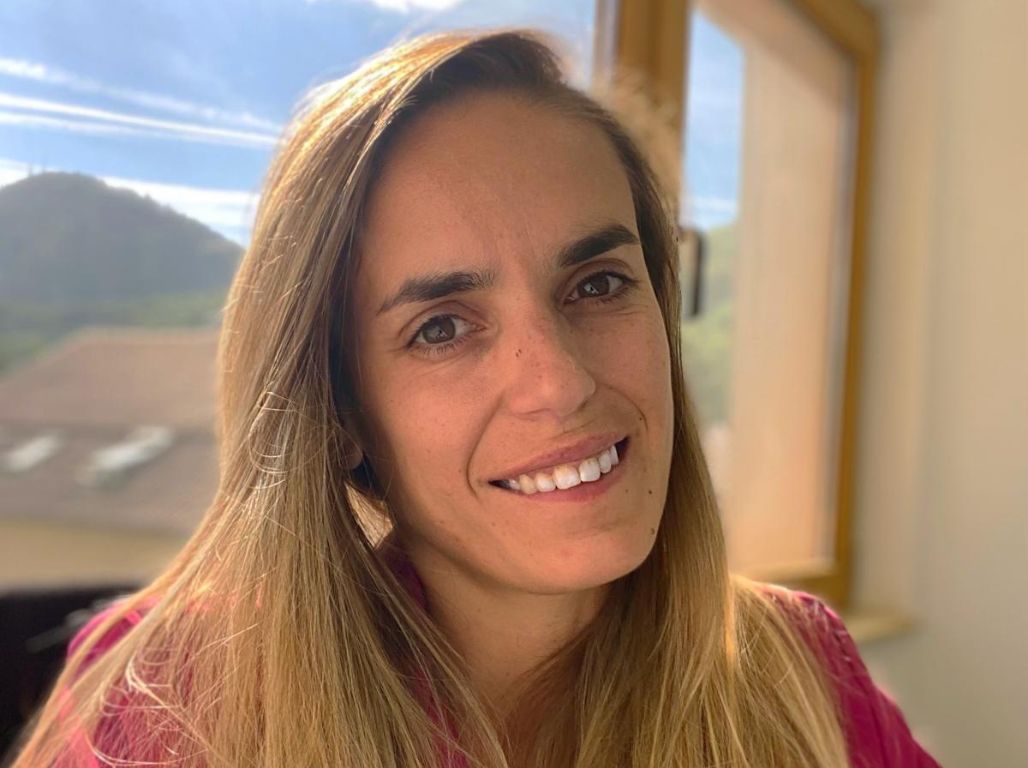
Discover Nicoleta Cîrjan’s professional journey, from media and ONG-s to leadership in education, and her insights on decision-making, values, and real impact.
He is a professional with over 20 years of experience in leadership, communication, and management, built across very diverse industries, from media and public administration to NGOs and strategic consulting.
He currently holds the role of Executive Director at Școala Liberă Waldorf Sophia in Brașov, where he oversees the organization’s strategic and operational direction in a context that requires balancing educational vision, financial sustainability, and growth.
His career path has not been linear, but rather guided by projects that share a common essential element: real impact on people and communities.
C&B: If we were to look at a narrative thread of your career, what were the key moments that defined you?
Nicoleta Cîrjan: Looking back, the thread of my career is built around the idea of building and transforming.
I started in media and communication, in organizations such as TVR and Kanal D, where I learned how messages are crafted and how public perception is influenced. It was a very intense period that trained me to quickly understand people and context.
Later, I transitioned into the NGO and sustainability space, through projects developed within Green Revolution Association and later as the founder of MAINOI Association, as well as in my role as Sustainability Manager at Electric Castle Festival. That’s where I learned what real impact means and how to build initiatives that mobilize communities and change behaviors.
As I matured, both professionally and personally, including through my role as a mother, my move toward the education sector came naturally, through my position as Marketing & Communication Manager at All About Parenting by Urania Cremene. There, I worked directly with parent communities, built relevant communication strategies, and gained a deep understanding of the real needs of families in relation to education. This was למעשה my first profound interaction with this field.
A defining moment in my career was entering public administration, within the Brașov City Hall, where I coordinated external relations, tourism, and the city’s events. Managing a significant budget and complex projects with impact on an entire city taught me what responsibility at scale truly means.
And the most recent chapter, my role as Executive Director at Școala Liberă Waldorf Sophia, is perhaps the most complex, as it brings together all these experiences into a living system where every decision has a direct impact on people, from children and parents to the team and the wider community.
C&B: What has been the most difficult moment in your journey so far, and how did you overcome it?
Nicoleta Cîrjan: The most difficult point wasn’t a single moment, but rather two major transitions, each with its own challenges.
The first was moving into public administration, a very different environment from where I came from. It brought a different pace, clear structures, slower processes, and a high level of institutional complexity. I had to learn how to navigate a system where decisions depend not only on efficiency, but also on context, procedures, and multiple levels of validation. It was a period in which I learned patience, as well as how to achieve results within an apparently rigid framework.
The second difficult transition was entering the private education system in an executive role. If in public administration the challenge was structure and pace, here the difficulty comes from the sensitivity of the field. In education, decisions are never just operational or financial—they are deeply human, with direct impact on children, parents, and teams. I had to recalibrate my decision-making approach and constantly balance vision, reality, and emotion.
Looking back, I’ve realized that what helped me move forward each time was flexibility. The ability to adapt quickly, understand context, and build the right solutions for each environment has become my professional superpower.
C&B: Is there a dream or ambition that has always guided you, regardless of obstacles?
Nicoleta Cîrjan: If I were to summarize it in a personal motto, it would be: “Be yourself and change the world.”
It’s an idea that has consistently guided me, including during the time I built an NGO around this principle. Beyond the wording, it has never been just a slogan for me, but a deep belief: real change begins when people truly embrace who they are and act from that place.
Looking back, all stages of my career, whether in media, NGOs, public administration, or education, have had one common denominator: the desire to build projects that have meaning and create real impact, not just immediate results.
I was never motivated by status, but by contribution. I’ve always been interested in how I can genuinely influence people, communities, or systems.
Today, this principle is very clearly reflected in the field of education. I believe it is one of the few areas where you can generate deep change, even if not immediately. And our role as leaders is to create contexts where people can become themselves and, from that place, contribute further.
C&B: What were you like at the beginning of your journey, and how do you feel you have transformed since then?
Nicoleta Cîrjan: At the beginning, I was very execution-oriented, focused on doing things well and quickly. I had a lot of energy, determination, and a strong need to prove that I could deliver results.
Over time, things changed. I realized that it’s not enough to do things well, it’s essential to understand why you’re doing them and how everything connects within a larger system.
The most important transformation was the shift from execution to building. From solving things to creating contexts in which things work without constant intervention.
I’ve become more attentive to people, dynamics, and rhythm. If at the beginning I focused on results, today I focus much more on process and sustainability.
At the same time, I’ve become more comfortable with uncertainty. I no longer feel the need to control everything, but rather to understand direction and create the framework in which the team can perform.
In essence, my transformation has been from proving to building and supporting growth, both for organizations and for the people around me.
C&B: If we spoke to your collaborators, what do you think they would say about you?
Nicoleta Cîrjan: I think they would first say that I am demanding. I have high standards and I want things to be done well, with meaning and responsibility.
At the same time, I believe they would say I am involved and present. I’m not a distant leader, I like to deeply understand things, stay close to the team, and build alongside people, not just coordinate from a distance.
They would probably also say that I don’t avoid difficult decisions. I prefer clarity, even when it’s uncomfortable, because in the long run it creates stability and trust.
And perhaps most importantly, I think they would say I am consistent. I don’t change my principles depending on the context, and I try to build an environment where people know what to expect.
Last but not least, I hope they would say I am a leader who sees potential in people and supports them to grow, not just to perform.
C&B: What is the most important decision you’ve made that changed your trajectory?
Nicoleta Cîrjan: The most important decision was stepping out of my area of expertise, communication and marketing, and moving into management.
Although I had consistently held coordination and project management roles for teams of over 150 people, the truly defining moment was entering a leadership position in public administration. It was the first context in which responsibility was no longer just about delivering projects, but about an entire system: teams, significant budgets, and, most importantly, managing public resources.
It was not a comfortable transition. I entered an environment with clear rules, complex processes, and high expectations, where I had to learn quickly and make decisions with real impact. It was probably the most intense way I could have made the transition from specialist to leader.
That experience completely changed my perspective. I began to think holistically, to take ownership not only of direction but also of the consequences of decisions.
Looking back, that was the turning point, the moment I moved from building strategies to building systems and organizations.
C&B: How did you build your leadership style and decision-making approach? Was it natural or learned?
Nicoleta Cîrjan: It was definitely a combination of something natural and something learned over time.
Naturally, I’ve always had the tendency to take responsibility and move things forward when I believed in an idea. I’ve organized and coordinated people from early stages in my life, without necessarily aiming for it, it was simply how I functioned.
At the same time, true leadership has been, and still is, a continuous learning process. I’ve learned, and I’m still learning, how to understand people, accept them as they are, and create a framework where everyone can contribute their best.
When it comes to decision-making, it didn’t come naturally at first. It involved a lot of personal development—learning not to postpone, not to chase perfection, and to take decisions even when not all the answers are available.
Today, leadership for me means clarity and accountability, but also the ability to build a context in which people are involved in decision-making. I strongly believe that people shouldn’t just execute, but contribute, understand, and over time learn to take ownership of their own decisions.
C&B: What does a typical day look like for you now, and which moments bring you the most satisfaction?
Nicoleta Cîrjan: In reality, there is no “typical” day—and I think that’s one of the things I enjoy most about my current role.
My days are a mix of strategic decisions and very concrete, sometimes unexpected situations. I might start with discussions about budgets, development, or organizational direction, and continue with meetings with the team, parents, or partners. It’s a role that requires being present on multiple levels at once.
What brings me the most satisfaction are the moments when I see things working coherently without my direct intervention. That means the team is aligned, processes are well built, and direction is clear.
At the same time, the small moments matter too: a meaningful conversation with a colleague, positive feedback from a parent, or those meetings when new parents visit the kindergarten or school and you can see their joy and relief in finding the right place for their children.
For me, satisfaction doesn’t come only from results, but from building an organization that grows in a healthy way and from developing the people who support it.
C&B: What values or principles guide you, and how do you apply them daily?
Nicoleta Cîrjan: I believe three things constantly guide me: a sense of fairness, professionalism, and humanity.
Fairness is essential to me. I try to make balanced and honest decisions, even when they are not the easiest or most convenient. In the long run, I believe fairness builds trust and stability.
Professionalism comes from respect, for the work itself and for the people I work with. It means clarity, responsibility, and consistency: doing things well, not just well enough.
But beyond these, I strongly believe in the human dimension, in the ability to connect with others, understand them, and take their context into account. Leadership is not just about goals and results, but also about people.
In practice, this means making fair decisions, staying consistent, and at the same time remaining attentive to people and the context I work in.
C&B: If you were to send a message to those who follow your example, what would it be?
Nicoleta Cîrjan: I think the most important thing is not to wait for the “perfect” moment.
We often tend to postpone decisions or important steps until we feel fully ready. In reality, clarity comes from action, not from waiting.
At the same time, it’s important to stay true to your direction and values, even when the context becomes difficult or unpredictable. It’s easy to adapt externally, but harder to remain aligned with yourself.
And perhaps most importantly, don’t forget that the things that truly matter are built over time. There are no real results without consistency, patience, and accountability.
If I were to put it in one sentence: start, stay consistent, and build something that has meaning for you, not just something that looks good to others.
Nicoleta Cîrjan’s journey shows that authentic leadership is not built overnight, but through diverse experiences, deliberate decisions, and a constant drive to create real impact. From communication to management and education, each stage has contributed to shaping a balanced leadership style centered on people, values, and sustainability. Her message remains clear: progress comes from action, consistency, and the courage to build something meaningful.

 UK
UK
 IT
IT
 ES
ES
 DE
DE
 FR
FR
 RO
RO
 PT
PT
 HU
HU


