


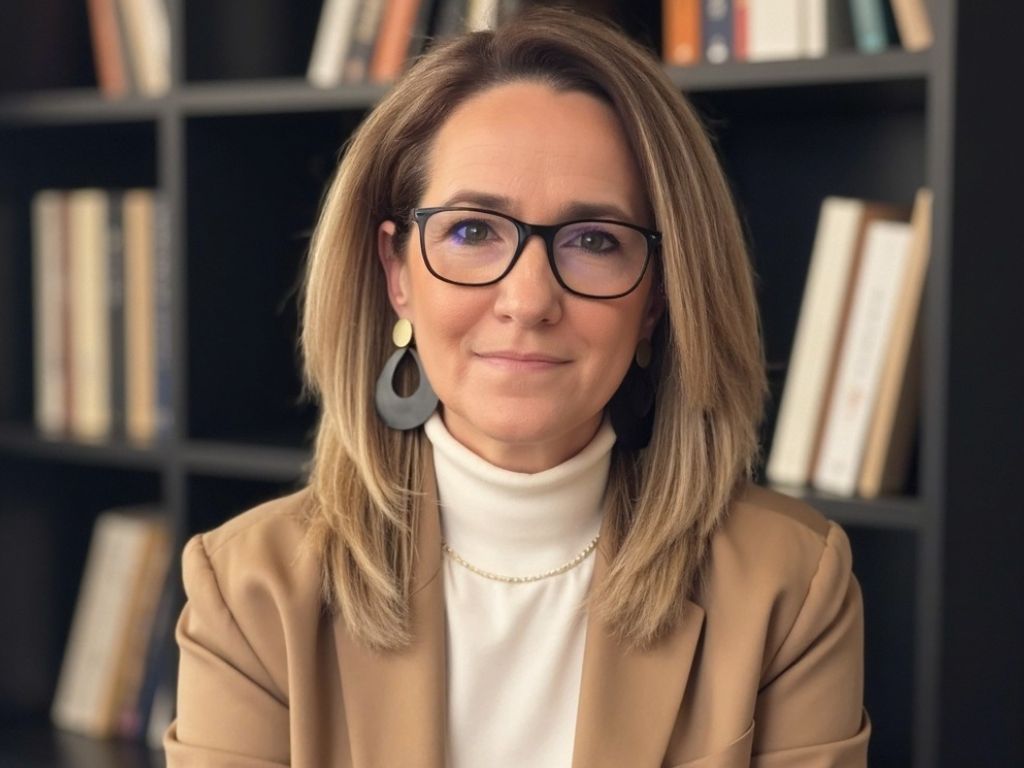
With over 18 years of experience in finance, Aurora Papuc-Peșteșan talks about her transition to the role of fractional CFO and how financial clarity becomes a real driver of business growth.
From Numbers to Clarity: How Aurora Papuc-Peșteșan Redefines the CFO Role in Businesses Undergoing Change
In an economic context where the speed of decisions is often more important than their perfection, financial clarity becomes a competitive advantage. For Aurora Papuc-Peșteșan, CFO at Access Financial Services IFN S.A., this clarity is not just a professional goal but the foundation of a working method built over more than 18 years of experience in finance, alongside entrepreneurs and management teams from banking, insurance, IT, IFNs, and HORECA.
After a solid career in full-time executive roles, Aurora chose to take a different step, not through a radical break, but through a natural evolution. The transition to the fractional CFO role came at a time when the impact of her work was most visible in critical phases for companies: growth, restructuring, reorganization, or professionalization. An apparently simple moment—a comment received during an M&A process, “This is the first time I understand what a CFO is telling me”—became a clear signal of the value she could bring beyond the boundaries of a single full-time role.
The fractional leadership model gave her the freedom to work with different organizations, as well as the responsibility to deliver real value quickly. Without long acclimation periods, without traditional onboarding, each project begins with a direct immersion in the business reality: people, numbers, tensions, bottlenecks, and opportunities. For Aurora, the role of fractional CFO is not just about strategies and reports but also about building trust, translating numbers into accessible language, and creating a new way of working that remains functional even after the collaboration ends.
Behind every successful project is the same pragmatic and hands-on approach. She does not look for “perfect” companies but sincere organizations where there is genuine openness to change and a willingness to make responsible decisions. One of her most cherished projects began with a simple confession from an entrepreneur: he didn’t understand anything from the numbers provided by the accountant. In a few months, by structuring the cash flow, clarifying real margins, and introducing KPI-based reporting, the numbers began to tell a coherent story, and the finance team started delivering with purpose.
The difference between a full-time CFO and a fractional one, in Aurora Papuc-Peșteșan’s view, is one of perspective and pace. The full-time executive builds from within, having time to develop things organically but sometimes risking overlooking essential details. The fractional CFO comes from the outside, with a clear mandate, asks the difficult questions, and balances internal experience with an objective vision. She does not contradict; she complements. She does not take control but becomes a decision-making partner.
For entrepreneurs and CEOs, the value of a fractional CFO lies precisely in the ability to relieve the pressure of financial decisions and bring structure where the founder is already overloaded. The most common mistakes in such collaborations involve unrealistic expectations, insufficient time, and lack of clarity regarding deliverables. A fractional CFO is not a magician, and every problem solved can open new ones. Therefore, a clear framework and real management involvement are essential for achieving concrete results.
Looking ahead, Aurora Papuc-Peșteșan sees the fractional CFO role as a career model in continuous growth. Increasingly, organizations need data-driven decisions, clear reporting, and solid structures without necessarily justifying a full-time role. In this context, fractional leadership becomes the shadow support that provides direction, clarity, and stability.
Her professional journey shows that modern financial leadership is no longer about control but about meaning. About the ability to build trust, work side by side with people, and transform numbers into a tool for healthy growth. In an increasingly complex business world, clarity may well be the most valuable form of leadership.
This material is an original editorial report, based on an interview previously published in our niche publication, Fractional. The full interview is available here.

 UK
UK
 IT
IT
 ES
ES
 DE
DE
 FR
FR
 RO
RO
 PT
PT
 HU
HU


