


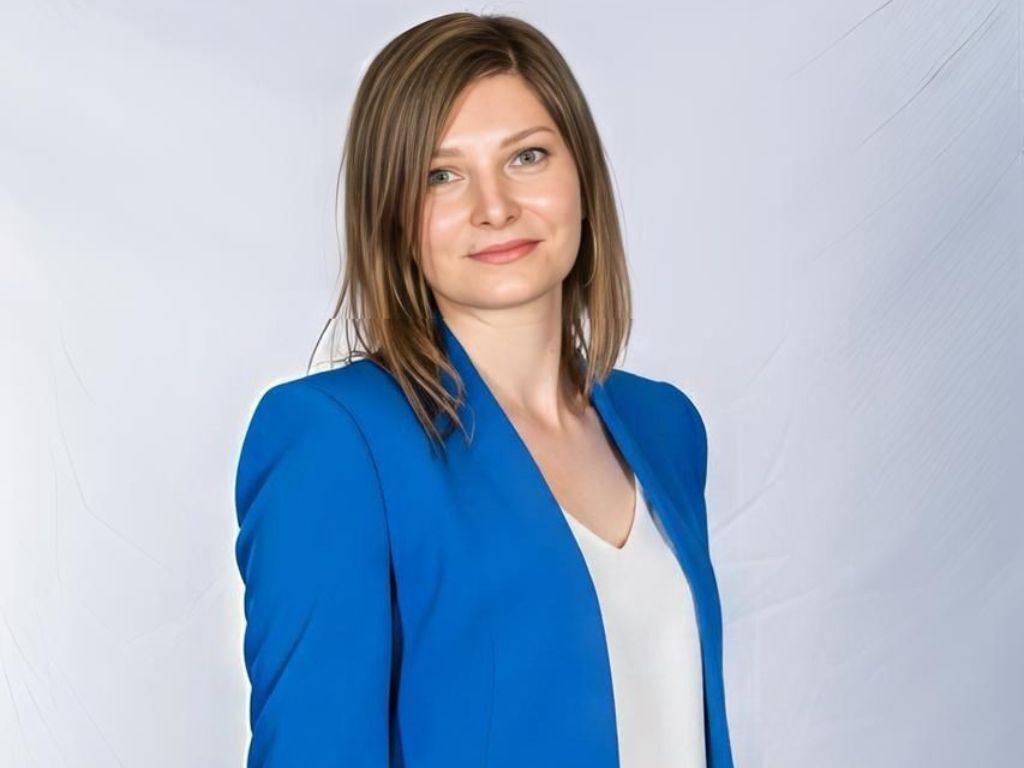
Ioana Stroica, founder of MiniCFO, explains how the Fractional CFO model helps entrepreneurs understand their numbers, organize their finances, and make strategic decisions based on data.
With more than 15 years of experience in finance, Ioana Stroica, founder of MiniCFO, belongs to the generation of professionals who adopted the fractional work model long before it became a popular concept in the business environment. Today, she helps entrepreneurs transform financial chaos into structure, clarity, and strategic decisions based on data.
Her role goes far beyond accounting or financial reporting. For Ioana, a Fractional CFO is a strategic partner to the entrepreneur — a professional who brings order to a company’s numbers and creates the financial framework necessary for growth.
The founding of MiniCFO was, in many ways, the natural result of a professional journey built around consulting and working directly with multiple organizations.
A model practiced before it had a name
Looking back, Ioana says the transition to the fractional model was not a sudden moment but rather an organic evolution.
During the first ten years of her career, she worked as a dedicated consultant for the clients of the firm where she was employed. That period naturally became a true professional school: entering different organizations, understanding their financial mechanisms, and providing solutions tailored to each context.
Later, she continued to provide external consulting while also holding a full-time role in the financial field. This intense period confirmed that she could deliver real value to companies even from outside a traditional organizational structure.
“In practice, I was doing fractional CFO work before the term became a trend,” she says.
MiniCFO emerged as the crystallization of this experience. Not as a break from the traditional work model, but as the assumption of a different role: building financial structures for multiple entrepreneurs simultaneously.
The diversity that keeps the mind moving
One of the most attractive aspects of the fractional model is the constant dynamic of projects.
In a classic corporate role, Ioana says, there is a risk of entering a routine where the same problems reappear cyclically. Working with multiple companies, however, brings a continuous variety of challenges.
“Every day is a different puzzle,” she explains.
Working with entrepreneurs from various industries keeps the level of intellectual energy high and creates the opportunity to apply financial solutions in very different contexts.
At the same time, there are real challenges. Rapidly switching contexts between clients and maintaining a high level of involvement in each project requires mental discipline and rigorous organization.
At the beginning, another challenge was educating the market.
Many entrepreneurs believed that in order to have financial clarity they needed a CFO permanently present in the company. In reality, many SMEs need strategic expertise delivered efficiently rather than forty hours of weekly presence.
For Ioana Stroica, choosing projects is not based only on a company’s financial potential, but especially on the relationship with the founder.
“I don’t sell financial services. We enter into a partnership built on trust.”
She looks for entrepreneurs who are open to transparency and who truly want to build a solid business, not simply tick the box of financial reporting.
MiniCFO is not suitable for companies that are only looking for operational support for entering data. Instead, it is the right place for entrepreneurs who say: “We have sales, but we don’t know where the money goes,” or “We want to grow, but we’re afraid we’re losing control.” In such situations, the role of a Fractional CFO becomes essential.
The moment when clarity changes the direction of a business
One of the moments that confirmed the impact of the fractional model was the collaboration with a service company that constantly struggled with liquidity problems.
Although the company had a high turnover, it was living in a permanent state of financial pressure. The founder was convinced that the business was not profitable.
A deeper analysis, however, revealed a different reality. The issue was not profitability, but the way collections and payments were managed.
By rebuilding the cost structure and implementing a 13-week cash flow forecasting system, the company began to gain visibility over its own finances.
Renegotiating terms with suppliers and enforcing more disciplined invoicing completely changed the company’s financial dynamics. In just three months, the business moved from survival mode to generating cash reserves. “The calm I saw on the entrepreneur’s face was priceless,” Ioana says.
The difference between an internal CFO and a fractional one
The role of a full-time financial executive often comes with complex internal dynamics: organizational politics, endless meetings, and the administration of operational details.
In the fractional model, the perspective is different.
A Fractional CFO enters the organization with objectivity and clarity, focusing exclusively on results. “I’m not there for internal politics. I’m there for results.”
Time is limited and valuable, which means every intervention is oriented toward real impact. This positioning also offers an important professional freedom: the ability to tell the truth directly and remain objective.
How to explain the value of a Fractional CFO
For skeptical CEOs, Ioana often uses a simple analogy. “Why buy the entire airplane if you only need a ticket to your destination?”
Many SMEs need the expertise of a senior CFO but do not have the operational complexity that would justify a permanent role. Through the fractional model, companies can access the same strategic experience at a fraction of the cost. When entrepreneurs compare the potential cost of financial mistakes with the investment in a Fractional CFO, the value becomes obvious.
Common mistakes companies make
One of the biggest mistakes companies make when working with fractional leaders is treating them as distant external providers.
For the model to work, a Fractional CFO must be integrated into the management team and have access to real data and decision-making processes.
Another mistake is attempting micromanagement. The value of a fractional leader comes precisely from the autonomy and strategic perspective they bring.
The future of work for senior experts
Ioana is convinced that the fractional model will continue to grow in relevance. Companies are becoming increasingly agile and are realizing that it is not efficient to keep all strategic resources permanently within the organization.
At the same time, senior professionals increasingly seek the freedom to work with multiple organizations and generate impact in diverse contexts.
In this sense, the fractional model is not just a career alternative but a natural evolution in the way expertise is delivered in the modern economy.
Building a reputation, not just a career
For professionals considering this transition, Ioana offers clear advice: do not wait for the perfect moment. Real expertise is in demand on the market, but success in the fractional model requires more than technical competence.
Personal branding and networking become essential, because opportunities most often arise through recommendations and professional reputation. It is equally important to define a clear niche. “You can’t be everything to everyone.”
Through MiniCFO, Ioana Stroica has built her mission around a simple objective: helping entrepreneurs see beyond the numbers and use financial information as a strategic tool.
Her journey demonstrates that the financial role in a modern company goes far beyond accounting. A Fractional CFO can become an essential partner within the management team, bringing clarity, financial discipline, and strategic direction to entrepreneurs’ business decisions.
This material is an original editorial feature created based on an interview previously published in our niche publication, Fractional. The full interview is available here.

 UK
UK
 IT
IT
 ES
ES
 DE
DE
 FR
FR
 RO
RO
 PT
PT
 HU
HU


