


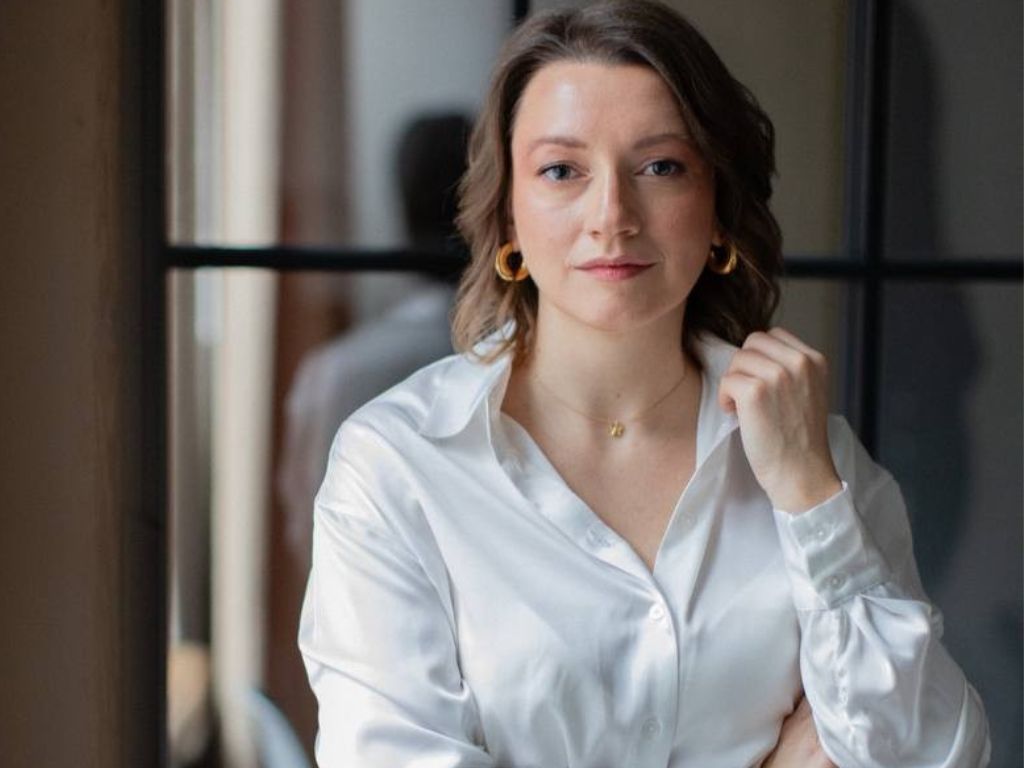
Yuliia Symenovych, Chief Operating Officer at Profit Wales and Fractional COO, speaks about the transition to fractional leadership, operational scaling, and strategic decisions that accelerate growth without the costs of a full-time executive.
Behind every company that manages to scale in a healthy way lies a solid operational foundation — even if it often remains invisible. Clear processes, well-structured teams, and coherent operational decisions are not flashy elements, but they are what make the difference between a business stuck in chaos and one that is ready for growth. For Yuliia Symenovych, Chief Operating Officer at Profit Wales and Fractional COO with over a decade of experience in operational leadership, this reality is the starting point of every collaboration.
A natural transition to fractional leadership
With a professional background spanning service companies, product-oriented organizations, digital, IT, and marketing, Yuliia arrived naturally at the fractional leadership model. It was not a disruptive decision, but a gradual and organic transition. After years in full-time executive roles, founders and CEOs began approaching her for targeted support with specific operational challenges — from inefficient processes and fragile team structures to a lack of clarity around priorities.
“Most of them didn’t need — or couldn’t afford — a full-time COO, but they urgently needed real operational expertise,” she explains. This is how the Fractional COO role became the ideal solution: access to senior-level experience, proven frameworks, and strategic guidance, without the costs and rigidity of a permanent executive.
What attracts her most to this model is the constant exposure to different contexts. Working simultaneously with multiple companies allows Yuliia to continuously expand her perspective on how businesses, teams, and leaders operate. This diversity, however, comes with a clear pressure: delivering results quickly. In fractional leadership, value must be demonstrated within the first few months — sometimes even within the first few weeks.
Project selection is therefore essential. Yuliia works primarily with companies in digital, IT, services, marketing, and product-based businesses — industries where market dynamics and the need for adaptation are constant. Beyond the industry itself, the founder’s mindset matters even more. Collaborations work only when there is openness to change, a willingness to create structure, and an acceptance of modern operational practices. “If a leader is rigid or resistant to optimization, the results will be limited for both sides.”
When the founder steps out of operations and the company begins to scale
One of the most relevant examples of impact was a collaboration with an Amazon-focused agency, where the founder was deeply involved in every operational detail. The lack of structure made real growth impossible. By rebuilding the organizational chart, hiring key roles, and implementing clear processes, the company reached a point where it could operate independently of the owner’s constant presence. The result: better client delivery and a scalable foundation for long-term growth.
Fractional versus full-time: results, not presence
The fundamental difference between a full-time and a fractional role, in Yuliia’s view, is the focus on results rather than presence. A Fractional COO is not there to “do the work,” but to guide, prioritize, and create clarity. Execution remains with internal teams, while fractional leadership ensures direction and operational discipline.
For skeptical CEOs, the message is simple: growth is often slowed not by a lack of ambition, but by a lack of operational competence. A fractional leader does not merely offer theoretical recommendations, but integrates into the company, understands real bottlenecks, and maintains accountability over time. It is a strategic partnership, not surface-level consulting.
That said, the success of this model also depends on how it is understood. One of the most common mistakes is treating fractional leaders as occasional consultants. Without access to real data, teams, and processes, impact is limited. Equally problematic is expecting results without actually implementing the proposed changes.
Looking ahead, Yuliia sees fractional leadership becoming increasingly present in modern business structures. Remote work, global teams, and the need for flexibility have normalized the idea of part-time executives, especially in operations, finance, HR, and marketing. For senior professionals considering this transition, her advice is clear: sharp positioning, adaptability, and a strong focus on fast results. In the fractional space, reputation is built through tangible impact, not promises.
This material is an original editorial feature, developed based on a previously published interview in our niche publication, Fractional. The full interview is available here.

 UK
UK
 IT
IT
 ES
ES
 DE
DE
 FR
FR
 RO
RO
 PT
PT
 HU
HU


