


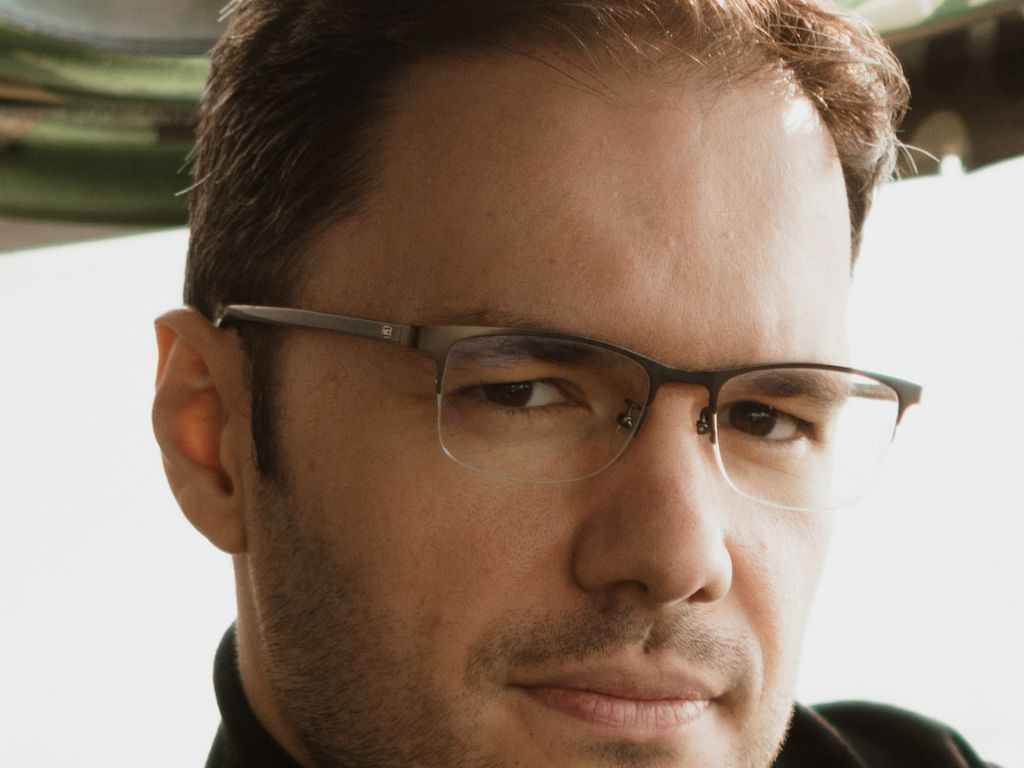
With over 15 years of experience in web development and leadership, Vladi Iancu explains his transition to the fractional CTO role, the decisions that save resources, the differences compared to full-time executives, and Romania’s potential on the global product market.
Vladi Iancu helps startups and companies in Romania take their digital products to the next level. He has more than 15 years of experience in web development and leadership, has built teams, scaled products, and worked across both services and product environments. This combination is precisely what allows him today to clearly understand what it means to do things right, from scratch, in a competitive European and global context.
For him, the transition to fractional leadership was not a sudden break, but a natural continuation. In the past, he ran a services company and worked simultaneously with multiple clients and projects. The fractional CTO role came naturally, as a formalization of an already familiar way of working.
External influences played a role, through conversations with a coach and meetings with other fractional CTOs. That is how he realized this model could also work in Romania, even if the market is not yet mature. From his perspective, the potential is there. We have strong technical skills, but what’s needed is a shift in mindset and perspective, along with access to funding, for Romanian products to truly go global.
The freedom to keep learning and the challenge of instability
What attracted him most to the fractional model is diversity. Every company, every team, and every industry comes with different problems. This forces him to develop across multiple dimensions at the same time, which for him is a desired challenge, not a drawback.
At the same time, he openly acknowledges that one of the most difficult aspects is building and maintaining a constant client pipeline. The fractional role does not come with the security of a guaranteed monthly salary, and the lack of stability can be demanding.
On the other hand, exposure to very different people is one of the greatest sources of learning. From almost every collaboration, Vladi says he takes away something valuable, either professionally or personally.
How you choose projects when execution alone isn’t enough
Project selection is essential. For real results, he says, there must be a clear fit between a company’s needs and his strengths. He is analytical, data-driven, and customer-oriented, and more often than not his role is to fill a strategic gap within a company by using technology in a creative and pragmatic way.
Equally important is the chemistry with the management team. Most of the time, a few meetings or hands-on workshops are enough to understand whether this compatibility exists. Without it, the collaboration risks becoming inefficient.
Another key criterion is the company’s mission. Vladi chooses to get involved only in projects he genuinely resonates with, because that is the only way he can deliver real value.
Paradoxically, many of the moments with the greatest impact came when he said “no.” He stopped costly initiatives with long implementation timelines and no prior validation, and reframed them as fast, controlled validation experiments.
A clear example is a collaboration with a company that planned to develop a complex B2C product without any proof that the market actually needed it. Instead of continuing down that path, Vladi proposed a rapid proof of concept. The outcome was clear: low interest. This early validation made it possible to reallocate resources, which at the time represented nearly half of the company’s total costs, and led to a strategic, business-saving pivot.
Full-time versus fractional: the difference isn’t just about time
The major difference between a full-time executive and a fractional one is availability. But this time limitation comes with a major benefit: exclusive focus on what truly matters.
In some companies, this means less classic operational management and more work on automation, direction, and strategy. In others, the role is far more hands-on, focused on unblocking bottlenecks and providing the clarity needed to reach the next stage of growth.
In both cases, the fractional role is one of supporting other leaders, not controlling them.
When faced with skepticism, Vladi doesn’t try to force things. The first step is understanding where the resistance comes from. Not every company and not every CEO is a good fit for a fractional executive role, and that is perfectly valid.
Still, the advantages are clear. Risks are lower, budgets are more flexible, and collaboration can start and end quickly if it doesn’t work out. Compared to hiring a full-time C-level executive, the costs and implications are significantly lower.
Two mistakes appear frequently. The first is ignoring the importance of asynchronous communication. Too many unnecessary meetings slow collaboration and consume valuable time.
The second is treating the fractional role as a form of outsourcing. A fractional executive is not an external provider executing clearly defined tasks, but a member of the leadership team, involved in strategic decisions and responsible for the company’s direction. Without proper integration, frustrations arise on both sides.
The future of fractional leadership and advice for those considering this path
Vladi sees real growth potential for this model, especially as technology and AI accelerate changes in the market. Still, he doesn’t believe it’s a universal solution. It doesn’t suit every organization, nor every leader.
For those considering this transition, his advice is honest and counterintuitive: it’s not as simple as it looks. Lack of stability, constant context switching, administrative responsibilities, and the need for self-promotion can be exhausting.
Fractional roles are most often time-bound. When one project ends, the need to build the next opportunity begins immediately. That means constantly working not just for clients, but also for yourself, investing in education, networking, and continuous development.
Fractional leadership, as Vladi Iancu sees it, is not a shortcut, but a mature form of responsibility. One that requires clarity, discipline, and courage, but that can build products, teams, and businesses capable of competing on a global level.
This material is an original editorial feature, created based on an interview previously published in our niche publication, Fractional. The full interview is available here.

 UK
UK
 IT
IT
 ES
ES
 DE
DE
 FR
FR
 RO
RO
 PT
PT
 HU
HU


