


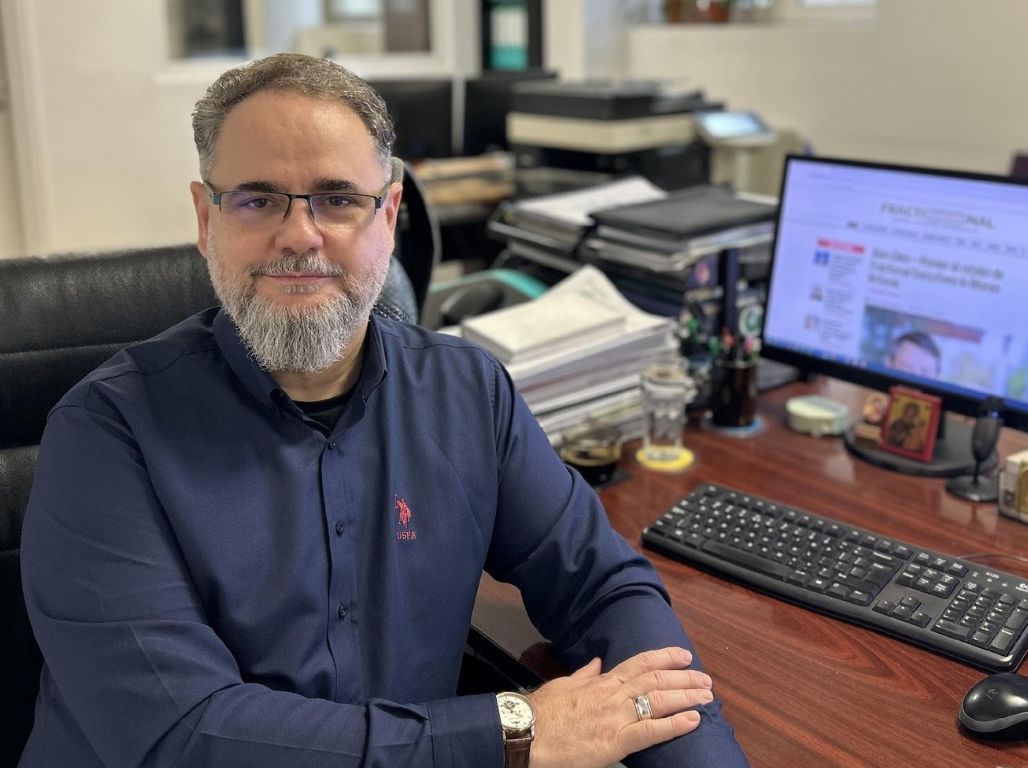
The transition to fractional leadership is not a break, but a strategic extension. Antuanel Zamfir explains the real impact, challenges, and benefits of this flexible leadership model in HR and executive search.
Traditional leadership models are increasingly under pressure from market dynamics, efficiency demands, and the growing need for applied, fast, and measurable expertise. In this context, fractional leadership is no longer a niche alternative, but a strategic solution for organizations seeking results without the rigidity of classic structures.
Antuanel Zamfir, a professional with over two decades of experience in human resources management, mass recruitment, and executive search at an international level, is a relevant example of how senior expertise can be strategically leveraged through fractional projects. His work spans diverse markets, from Romania and Central Europe to the United Kingdom, the United States, Canada, and the United Arab Emirates, integrating strategic recruitment, training, evaluation, and career coaching.
Fractional Leadership as a Strategic Extension of a Traditional Career
For Antuanel Zamfir, fractional leadership does not mean abandoning a traditional career, but rather a natural expansion of it. Targeted projects focused on internal process optimization, organizational efficiency, and HR structure redesign allow companies to access high-level expertise without long-term commitments. This complementarity becomes a competitive advantage for organizations open to new ways of working.
Value, Compatibility, and Measurable Results
One of the greatest challenges of fractional leadership lies in shifting mindsets. The role of a fractional leader must be understood not merely as a cost-efficient solution, but as a strategic partnership with direct involvement and clear accountability for outcomes. As a result, project selection is never opportunistic, but grounded in shared values, ethics, and real implementation potential.
After years of experience in HR, the ability to say “no” becomes essential. Effective collaborations are built only where openness, transparency, and a genuine willingness to change exist, with people remaining at the center of the decision-making process.
When Fractional Expertise Accelerates Transformation
The true impact of fractional leadership is best seen in complex, high-stakes projects. One relevant example involves collaboration with a European company operating in over 15 countries across the CEE region, where the growth strategy required recruiting a new CEO, building a multidisciplinary sales team, and implementing tailored training programs within a 12–18 month timeframe.
Such projects demand an intense concentration of know-how, fast decision-making, and a hands-on approach, defining traits of fractional leaders who must deliver results within compressed timelines.
The Future of Leadership Is Flexible
The key difference between a full-time executive and a fractional one lies in execution speed and impact. A fractional leader acts as an informal business associate, influencing strategy directly without being present on a daily basis. This model offers flexibility, objectivity, and efficiency, but also requires realistic expectations from organizations.
Looking ahead, the fractional model is set to become increasingly prevalent, supported by remote work and companies’ growing need for targeted expertise precisely where critical business challenges arise. For senior professionals with solid know-how, strong reputations, and entrepreneurial spirit, fractional leadership represents not only a career evolution, but also a path to professional freedom and meaningful fulfillment.
This material is an original editorial report, developed based on an interview previously published in our niche publication, Fractional. The full interview is available here.

 UK
UK
 IT
IT
 ES
ES
 DE
DE
 FR
FR
 RO
RO
 PT
PT
 HU
HU


