


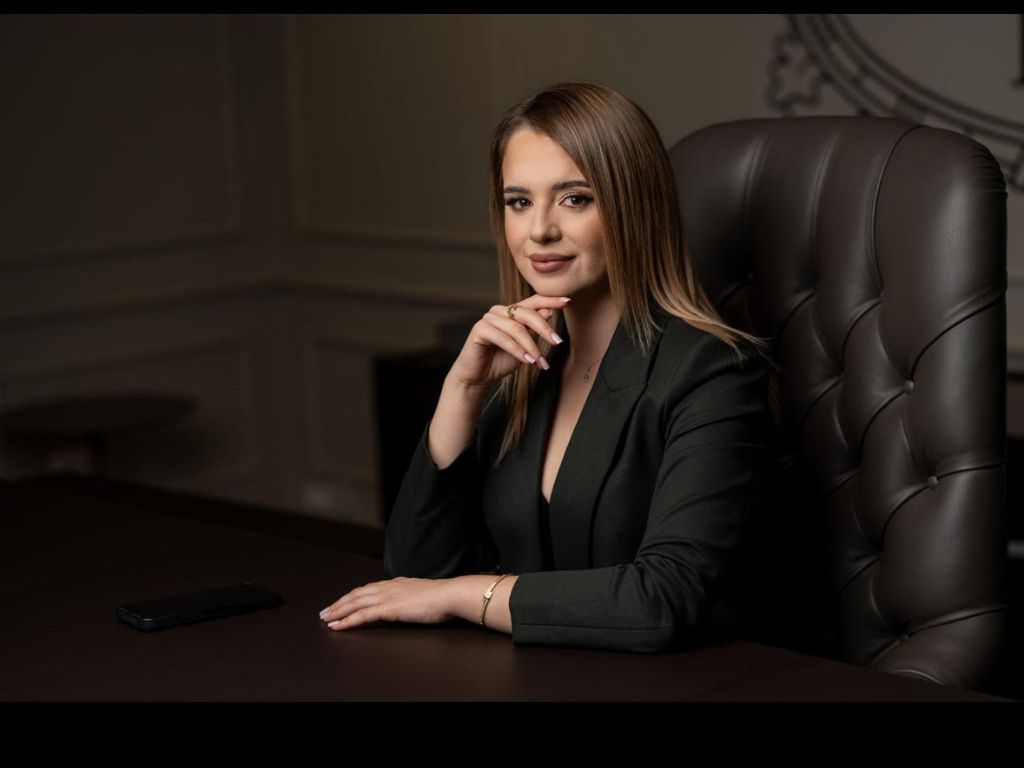
Diana Mladin speaks about the balance between operational leadership and digital product development, decision-making in uncertainty, and how sustainable performance is built through constant progress and clarity.
In a context where leadership is often associated with fast decisions and spectacular results, Diana Mladin proposes a different perspective: real performance does not come from exceptional moments, but from consistency, clarity, and the ability to build, day by day.
Working at the intersection of operational leadership and digital product development, Diana constantly navigates between two different worlds: one grounded in processes, people, and immediate reality, and the other oriented toward building, experimentation, and the future.
For her, strategy is only valuable to the extent that it can be transformed into execution.
From understanding systems to building them
Her path was not the result of a single decision, but a natural evolution. Operational leadership gave her a deep understanding of how organizations function, while working on digital products created the space needed to test, build, and adjust.
“One shows you reality, the other allows you to shape it.”
This combination allows her to see beyond the surface: not just what isn’t working, but how it can be rebuilt better.
Decision-making in uncertainty: direction, not perfection
One of the most important lessons she has learned is related to decision-making.
In reality, leaders never have all the information. Waiting for the “perfect moment” can become more costly than making an imperfect but assumed decision.
Instead of seeking absolute certainty, Diana prefers to define clear directions and create space for adjustment along the way.
This approach reduces bottlenecks and allows organizations to keep moving, even in ambiguous contexts.
Clarity comes from less, not more
In busy periods, when responsibilities overlap, the natural instinct is accumulation: more tasks, more control, more effort.
For Diana, clarity works the opposite way. “I don’t confuse being busy with making progress.”
Her approach is based on structure and personal boundaries. She works sequentially, not simultaneously, and constantly returns to simple questions: what truly matters now? This discipline reduces noise and allows for real focus.
Impact built over time, not delivered instantly
A relevant example from her experience is not related to a spectacular transformation, but to an apparently minor adjustment.
An operational issue, ignored because it did not seem critical, was generating constant friction within the team. Instead of treating it superficially, she chose to build a solution. The results were not immediate, but over time they became visible: less stress, more coherence, a healthier work rhythm. It is the type of impact that does not appear in headlines, but fundamentally changes how an organization functions.
Two types of leadership: optimization vs. building
Her leadership style adapts depending on the context. In existing systems, the focus is on listening, understanding the history, and fine-tuning. In building from scratch, more ownership, clarity, and decision-making are required. Both demand patience, but in different forms.
This flexibility becomes essential in an environment where organizations are either in optimization processes or in accelerated building phases.
Fractional leadership as a form of focus
In a traditional executive context, the idea of fractional leadership is often misinterpreted as reduced involvement. For Diana, it is exactly the opposite. It is a form of focus: being present where decisions matter most, without burdening the organization with rigid structures or unnecessary dependencies.
Value does not come from time spent, but from the clarity and direction brought in critical moments.
Meaning in work: beyond objectives
Even in the most operational periods, Diana keeps a simple principle: not to lose connection with meaning. She does not look for it in big milestones, but in the connection between small actions and their real impact. Recalibration comes from reflection and authentic conversations with people.
For her, leadership is not only about decision-making, but also about being present in one’s own process. A journey that is built, not rushed. For those who feel that traditional roles no longer allow them to contribute at the level they know they can, her advice is not radical. She does not recommend abrupt changes, but clarity.
Start with a simple question: where do I bring real value? Professional growth is not a sprint, but a daily practice. A process of continuous adjustment, where progress matters more than speed.
This material is an original editorial feature, developed based on an interview previously published in our niche publication, Fractional. The full interview is available here.

 UK
UK
 IT
IT
 ES
ES
 DE
DE
 FR
FR
 RO
RO
 PT
PT
 HU
HU


