


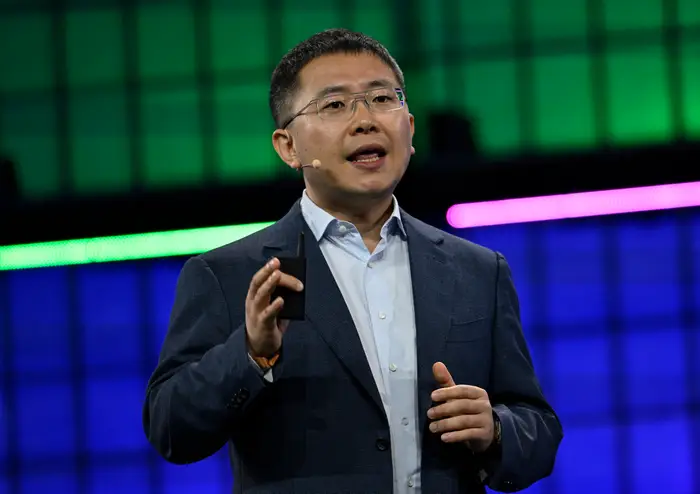
Artificial intelligence should be judged by the tangible value it delivers to businesses rather than by industry hype, argues Kuo Zhang in an opinion article published by EuroNews.
According to Zhang, AI has the greatest impact when it helps small and medium-sized enterprises (SMEs) make faster, more informed sourcing decisions, improve efficiency and support business growth.
AI Focused on Business Decisions
The opinion piece argues that many European SMEs remain cautious about AI, questioning whether it can be trusted with critical purchasing and supply chain decisions.
According to Zhang, Alibaba.com has developed AI tools trained on verified trade data—including supplier profiles, certifications, product specifications and logistics records—rather than general internet content.
The platform’s AI verifies factors such as REACH and RoHS compliance, ISO certifications, landed costs and customs classifications before recommending suppliers, aiming to improve the reliability of sourcing decisions.
New AI Mode Targets SMEs
EuroNews reports that Alibaba.com plans to launch AI Mode in December, a new agentic AI system designed to process natural-language sourcing requests.
According to the article, the platform will analyse technical drawings, review compliance documentation and compare suppliers based on pricing, production capacity, certifications and delivery timelines to identify the most suitable partners.
Zhang argues that the technology is intended to complement rather than replace human expertise, particularly for small businesses that lack dedicated procurement teams.
Supporting European Competitiveness
The opinion highlights growing interest in AI among European companies.
According to research commissioned by Alibaba.com and conducted by Censuswide, 90% of European SMEs consider product innovation essential to their growth strategy, while 62% say they are confident using AI tools for areas such as product design, sourcing and manufacturing.
Zhang concludes that AI can help European businesses manage increasingly complex supply chains, meet sustainability requirements and compete more effectively internationally, provided the technology remains focused on practical, verifiable business outcomes rather than technological hype.
Photo: Business Insider

 UK
UK
 IT
IT
 ES
ES
 DE
DE
 FR
FR
 RO
RO
 PT
PT
 HU
HU


