


Discover leadership and social responsibility lessons from the history of Guinness. An example of how caring for employees can contribute to a brand’s success and longevity.
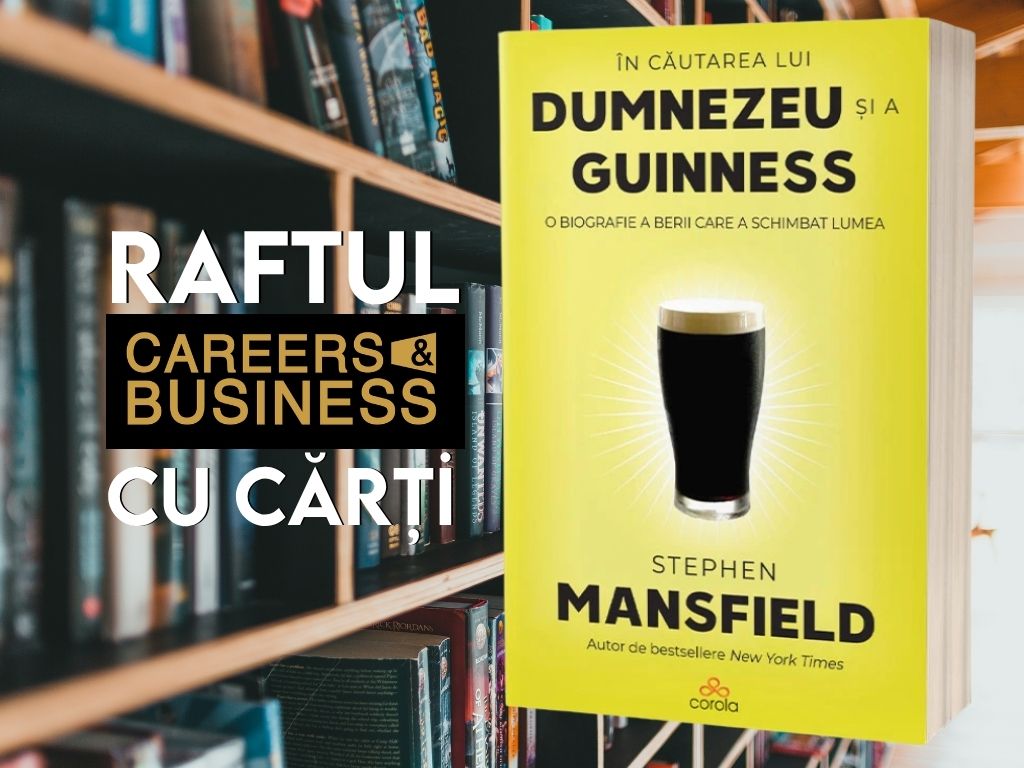
In Search of God and Guinness: A Biography of the Beer That Changed the World by Stephen Mansfield, published by Corola, an imprint of ap! (ACT and Politon), is not merely a book about beer or the history of a brand. It is also a lesson in how profit should go hand in hand with care for employees, their well-being, and their development.
In the excerpt below, published exclusively by Careers&Business, Stephen Mansfield arrives at the Guinness brewery in Ireland, St. James’s Gate, to consult the company archives. He reconstructs in his mind the image of Ireland during an era when craftsmanship was passed down from one generation to the next, imagining the lives of the people who worked tirelessly at the brewery.
The author also highlights the many benefits enjoyed by workers as early as the 1900s. They received privileges that were virtually unheard of at the time and that, even today, would surpass those offered by major companies such as Google or Microsoft.
Exclusive Excerpt:
I should mention that it was not the Guinness brand of today that first captured my imagination, however brilliant, high-tech, and impressive it may be. No, my historical imagination took flight, and I could see this pure and cherished craft of brewing beer being passed down through generations. I saw barley, water, hops, and yeast transformed by skilled craftsmen into a drink that kept men away from the madness caused by alcohol while revitalizing them and making them whole. I saw well-cared-for and beloved horses pulling beer barrels, and I watched coopers teaching their trade to awkward young apprentices. I saw ships crossing the seas, their decks loaded with dark beer, and men on the docks eagerly unloading what they hoped they would soon have the chance to taste. I saw workers gathering after a day’s labor and raising a glass of their national beer. And I heard men in pubs laughing with relief that the day had finally ended, while entire families toasted with a Guinness to the blessings God had brought into their lives.
I knew I had found that earthly, human, and sacred story of a people perfecting their craft over time and of a family seeking to do good in the world for the glory of God. It was exactly what my weary soul needed: a story as rich as the scent of barley at the St. James’s Gate brewery and as full of bitterness and sweetness as any story passed down from generation to generation.
Thus, my weariness brought me to Guinness.
But so did hope.
During the months I spent researching and writing this book, the most severe economic crisis since the Great Depression began to unfold. It started with the collapse of the U.S. housing market and spread to Wall Street, where aggressive lending practices, reckless borrowing, and secondary bets on those loans—known as “swaps”—worsened an already serious situation. Shortly afterward, some of America’s most important financial institutions collapsed, while most of those that survived did so only through federal assistance.
The situation grew worse, and greed seemed to be spreading everywhere.
Overwhelmed by the greed and suffering that played out daily on the television in my office, I turned gratefully to the Guinness story. In it, I found an antidote—a dose of the spirit of a bygone era—that revived me and gave me hope.
From the very beginning of the corporation’s and the family’s history, Guinness embraced a responsibility toward those in need. It all began at home, with its own employees. Edward Cecil Guinness, great-grandson of founder Arthur Guinness, expressed a fundamental company belief when he said: “You cannot make money from people unless you are willing for them to make money from you.” Accordingly, the Guinness brewery typically paid wages that were 10 to 20 percent above average, enjoyed a reputation as the best workplace in Ireland, and, just as importantly to many employees, provided them with two pints a day of its famous stout.
Moreover, the benefits offered by the company exceeded even those imagined by modern corporations such as Google and Microsoft. Consider the picture presented in a Guinness company report from 1928, a period not particularly enlightened regarding the treatment of workers. Guinness employees at the Dublin brewery had access to two fully qualified physicians working in an on-site clinic, where any employee, spouse, or child could receive treatment. These privileges extended to widows and retirees as well. The doctors were available day and night, made house calls, and consulted specialists on behalf of their patients whenever necessary.
Employees also had access to two dentists, two pharmacists, two nurses, a “visiting lady”—a social worker who ensured that workers’ homes met proper hygiene standards—and a masseuse. Hospital beds were available both at the Guinness brewery and at a countryside sanatorium for patients recovering from tuberculosis.
This was only the beginning. Retirees received pensions granted “at the discretion of the board,” without having been required to contribute from their own pockets. This benefit extended to widows as well. If an employee or a family member died, the company covered most funeral expenses.
To improve employees’ quality of life, the company established an on-site savings bank and contributed to a fund from which workers could borrow money to purchase homes. To ensure that life in those homes was as pleasant as possible, the company also sponsored competitions that encouraged domestic skills, offering cash prizes for sewing, cooking, decorating, gardening, and hat-making. Concerts and lectures were organized for workers’ wives, based on the belief that the moral and intellectual level of a household would rise no higher than that of the mother or wife who lived within it.
The same philosophy led the company to sponsor guilds and associations of all kinds. There was an association dedicated to the breeding and care of “dogs, poultry, pigeons, and cage birds,” another for growing vegetables and flowers, and one for “encouraging home industries.” A sports association was founded to sponsor competitions in Gaelic football, cricket, cycling, boxing, swimming, hurling, and tug-of-war. In addition, nearly every essential skill involved in brewing was represented by a guild or professional development association sponsored by the company.
Educational benefits were also more generous than those offered by most modern corporations. Guinness paid for all employees between the ages of 14 and 30 to attend technical schools in Dublin and even financed higher education for qualified individuals. The brewery maintained a library, a musical society, and “Workers’ Rooms”—lounges where employees could read, reflect, or focus on interests beyond their daily work. Courses were also available in woodcarving, cage making, weaving, drawing, photography, carpentry, calligraphy, music, singing, and dance.
The generosity of the Guinness family seemed limitless. Each year, every employee was paid to spend a day in the countryside with their family on “Excursion Day.” Train tickets, meals, and entertainment were all covered. Single men were permitted to bring a companion, and once again the company paid the bill. To mark Queen Victoria’s Jubilee, Guinness granted every employee an additional week’s wages.
Immersing myself in this culture of generosity provided a welcome respite from the times in which I lived, when greed and unjustified privilege were daily destroying so many lives. It was not difficult to see how the Guinness story could bring balance, calm, and a measure of grace to our harsh age. Once again, I found myself drawn to the Guinness legacy—for the lessons it might offer and for what it could mean to corporations seeking to rise from the ruins and build a different model from the one that had led us so far astray. The hope that Guinness might teach us something guided my work and lightened my spirit.
It was a hope that kept me firmly attached to the Guinness story.
And then there was the beer.
I must admit that I approached the subject of beer as something of an outsider. I had never been a beer drinker and did not feel deprived because of it. Yet the culture that had grown around beer and the sense of community it seemed to inspire fascinated me. Looking at the world of beer, I felt exactly like a little boy with his face pressed against the window of a candy shop.
The Guinness story demonstrates that long-term success is built not only through financial performance but also through continuous investment in people. The benefits offered to employees, support for education, and commitment to community well-being transformed the company into a model of responsible leadership. The excerpt presented by Stephen Mansfield offers valuable insight into how authentic values can contribute to building a sustainable and respected organization.
ap! (ACT and Politon) is one of the leading players in Romania’s book market. Specializing in high-quality nonfiction, the publishing house has introduced Romanian readers to internationally acclaimed authors such as Tim Ferriss, Robin Sharma, Tony Robbins, Wayne Dyer, Steve Harvey, Gino Wickman, and many others. At the same time, ap! (ACT and Politon) is the Romanian publisher responsible for releasing the largest number of audiobooks on the local market. Since its launch in 2014, the publishing house has brought more than 300 audiobook titles to Romania, many of them international bestsellers that have inspired and transformed thousands of lives around the world.
ap! (ACT and Politon) believes in continuous development and offers Romanian readers titles covering a wide range of subjects, including personal and professional development, business, entrepreneurship, spirituality, and wellbeing. Its publications are available in multiple formats, including print, eBook, MP3, and audiobook, allowing readers to enjoy them anytime and anywhere.

 UK
UK
 IT
IT
 ES
ES
 DE
DE
 FR
FR
 RO
RO
 PT
PT
 HU
HU


