


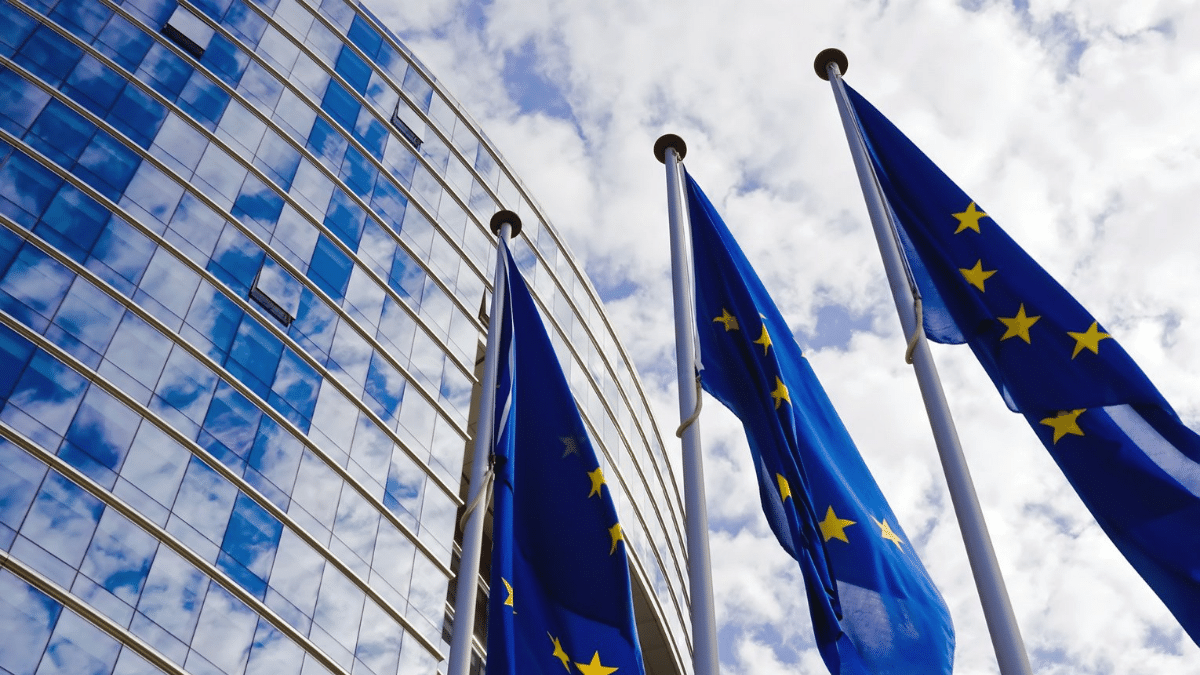
The European Commission is preparing new rules that would allow public authorities to exclude foreign companies from public procurement if they are considered to pose security or foreign interference risks, according to EuroNews.
The proposal, contained in a draft regulation obtained by EuroNews and expected to be presented in September, reflects growing concerns over geopolitical tensions, data security and Europe’s dependence on strategic technologies and raw materials supplied by non-EU countries.
Public Buyers Could Exclude High-Risk Companies
According to EuroNews, the draft regulation would allow contracting authorities to assess potential risks throughout the entire procurement process—from planning and market consultations to contract execution.
The proposal states that companies could be excluded if their ownership, financing or control structure creates a risk of undue foreign influence or if legislation in their home country could require them to disclose sensitive information or interfere with contract performance.
Public authorities would also be allowed to apply a European preference when awarding contracts, although this would not become mandatory under the current proposal.
Strategic Sectors Targeted
The draft legislation would apply to sectors considered critical for the European Union, including energy, water, transport, postal services, and oil and gas extraction.
According to EuroNews, the proposal builds on the European Commission’s broader “Made in Europe” strategy, unveiled earlier this year to strengthen domestic industries in areas such as clean technologies, automotive manufacturing and energy-intensive sectors.
The regulation also seeks to protect critical infrastructure, supply chains, essential services and technologies from physical, cyber and hybrid threats, while reducing strategic dependence on third-country suppliers.
Security Concerns Drive Policy Shift
EuroNews reports that European institutions have become increasingly concerned about foreign legislation that could compel companies to transfer data stored within the EU.
Several member states have already taken action. France recently ended a contract with Microsoft involving health data and replaced Palantir Technologies with French firm ChapsVision for domestic intelligence data processing.
Meanwhile, countries including Germany, France, Italy and Denmark have restricted or cancelled contracts involving Huawei over national security concerns.
The proposal also follows recent trade tensions with China, including restrictions on exports of rare earth minerals and semiconductor-related products that are critical for Europe’s automotive, defence and clean technology industries.
Photo: ILGA Europe

 UK
UK
 IT
IT
 ES
ES
 DE
DE
 FR
FR
 RO
RO
 PT
PT
 HU
HU


