


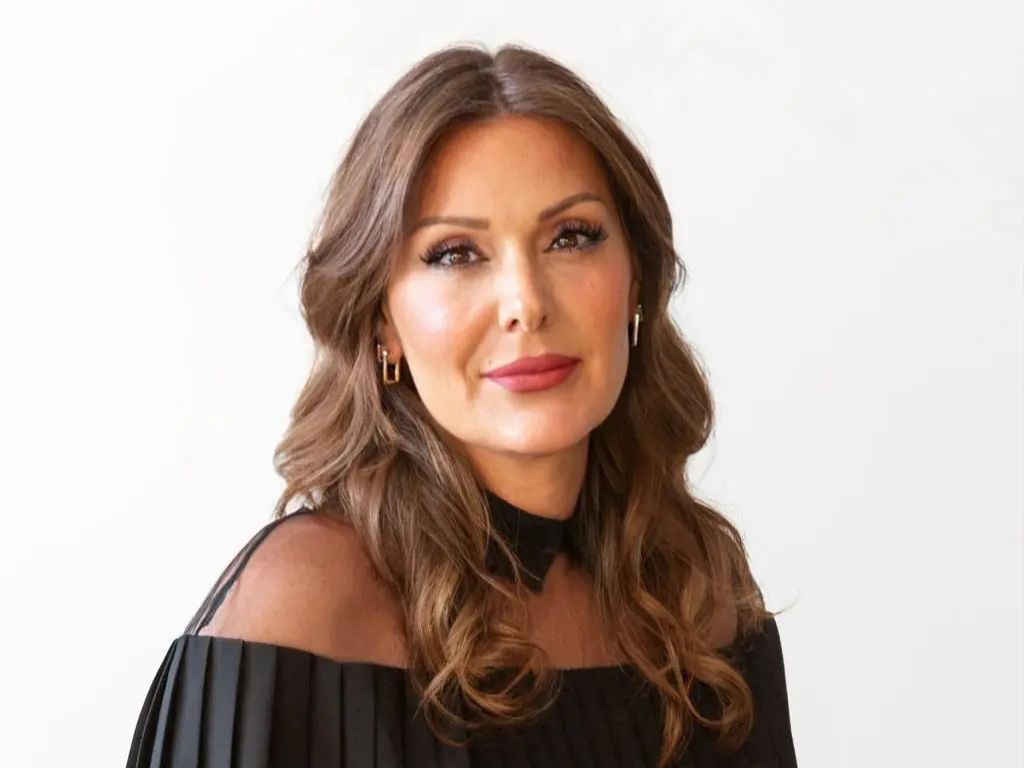
With over 20 years of experience in marketing and business growth, Lara, an award-winning fractional CMO, talks about her transition to fractional leadership, freedom, resilience, and how real authority is built in a competitive market.
For Lara, marketing has never been just about campaigns or visibility. It has always been about change. About taking companies from where they are and guiding them to where they want to go—sometimes even beyond what they dared to imagine. With more than two decades of experience and an internationally recognized career, including features in publications such as CNBC and the Chicago Tribune, Lara is today a respected name in fractional leadership and growth strategy.
Through her company, Start Some Shift, she works with service-based businesses across North America, in industries ranging from healthcare to professional services, helping them become the top choice in their markets. Yet the path to this working model was not meticulously planned, but rather an act of courage.
In 2008, in the midst of the global economic crisis, Lara left a “safe” job and struck out on her own. “It was scary to give up the illusion of stability,” she says, “but I knew I wanted autonomy—creative, financial, and personal.” The surprise came quickly: without a real transition period, using her professional network, she was fully booked with projects in less than a month. Even in difficult times, companies needed marketing—perhaps more than ever.
What drew her most to the fractional model was freedom. The freedom to design her business around her life, not the other way around. As a fractional leader, Lara can work from anywhere, and she often spends winters in Europe with her son, without client relationships suffering. After the loss of her son’s father, her perspective on time changed drastically. Work could no longer be separated from life. “Professional success isn’t worth it if it comes at the cost of moments that truly matter,” she reflects.
Yet this model also comes with vulnerabilities. When the Covid pandemic hit, all five of her permanent clients disappeared in a single week. Her business evaporated overnight. It was a brutal moment, but one that forced clarity. Lara rebuilt everything in a more strategic, scalable way, better aligned with what she wanted to deliver long-term. That reset became a turning point.
Today, she chooses her projects with great care. She looks for clients with real problems she can solve, people she would enjoy spending time with beyond a contract, and businesses that aren’t “sinking ships.” “Marketing is an investment, not a bandage,” says Lara. The best collaborations happen when there is openness, budget, and a willingness to act quickly.
Her specialty is brand perception—the moment a company stops being “one of many” and becomes the company in its industry. One example comes from a collaboration with a B2B company that was strong in one market but invisible in another. By narrowing focus, strategically repositioning, and building a complete ecosystem of brand, content, and lead generation, the company went from anonymity to authority. In less than a year, it was present on the stages of major industry events, recognized as a thought leader, generating thousands of qualified leads and highly profitable new revenue streams.
The difference between a full-time executive and a fractional one, Lara explains, is not the amount of work, but the type of impact. As a fractional leader, you bring an external perspective, free of emotional baggage, with a focus on action. You are paid for clarity, diagnosis, and results, not for attendance at endless meetings. The pace is faster, and responsibility is directly tied to impact.
For skeptical CEOs, her message is simple: a fractional leader provides executive-level expertise without the costs and rigidity of a full-time role. They bridge the gap between strategy and execution, ensuring plans don’t just remain on paper.
Looking ahead, Lara is convinced that fractional leadership will become the norm, not the exception. Companies will increasingly demand expertise on demand, while senior professionals will seek freedom, creativity, and purpose. For those considering this transition, her advice is clear: clarity is your currency. When you know exactly what value you bring, for whom, and why it matters, you can build a business that grows sustainably—and a life that no longer needs to be put on hold.
This piece is an original editorial feature, based on a previously published interview in our niche publication, Fractional. The full interview is available here.

 UK
UK
 IT
IT
 ES
ES
 DE
DE
 FR
FR
 RO
RO
 PT
PT
 HU
HU


