


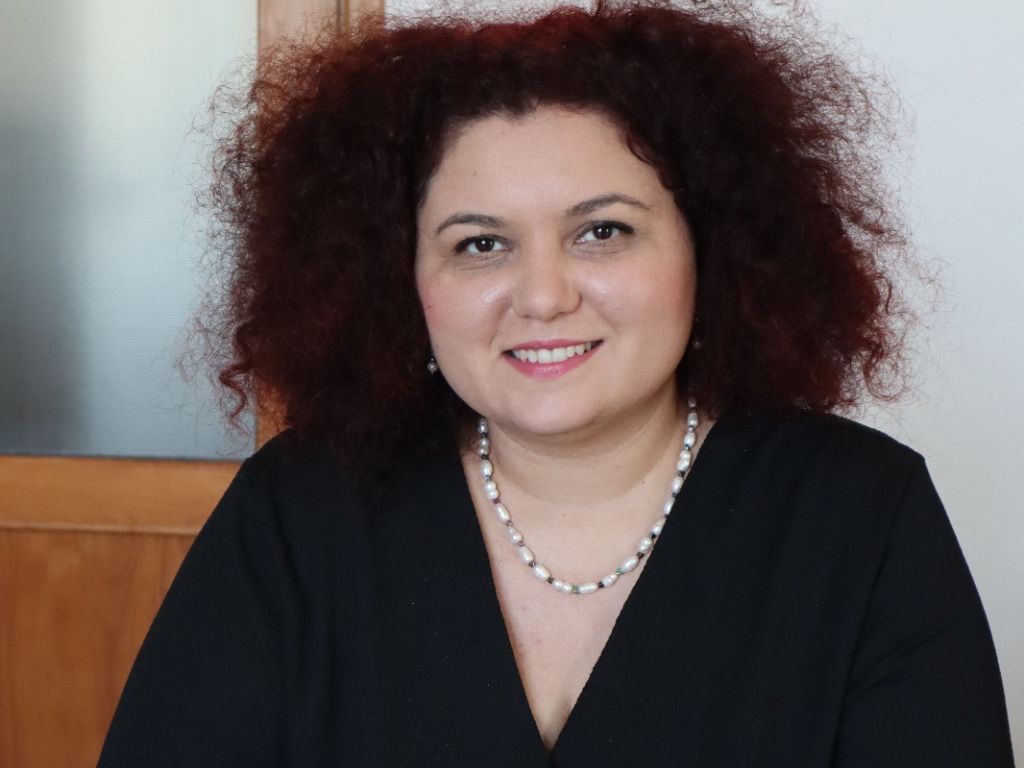
From classic marketing to fractional leadership, Teodora Adamache speaks about strategy, clarity, and building digital visibility as a true growth engine for modern organizations.
Behind brands that grow in a healthy and coherent way lies not just creativity or visibility, but a clear architecture of decisions, messages, and communication systems. For Teodora Adamache, strategic consultant and fractional marketing leader, marketing is not a set of tactics, but a tool for aligning business objectives with how a company presents itself to the world.
Through See First Marketing, Teodora works with organizations across diverse industries, helping them build digital visibility on solid foundations and turn communication into a real growth accelerator. Her professional journey did not abruptly lead to the fractional model, but rather emerged from professional maturity and deep personal clarification.
After years spent in marketing and communication — in agencies, complex projects, execution and coordination roles — it became clear that real impact happens when you work at the level of direction, not just delivery. “Fractional, for me, meant the freedom to contribute where it truly matters, without the constraints of a traditional full-time role,” she explains.
The transition was organic: expertise first, then form. As companies began to look for more than implementation — seeking clarity, structure, and vision — the fractional model became the natural framework in which Teodora could deliver real value.
What attracts her most to this way of working is the rare balance between deep involvement and an external perspective. As a fractional leader, she is not caught in internal organizational inertia, which allows her to quickly identify real bottlenecks and untapped opportunities. At the same time, the major challenge remains educating the market. The difference between “part-time marketing” and strategic fractional leadership is subtle, but essential. A fractional leader does not execute on demand, but creates direction, sets systems in motion, and optimizes performance over the medium and long term.
How to choose projects that can truly be transformed
Project selection is a deliberate process. Teodora looks for organizations with a genuine ambition for growth, openness to strategy, and compatible values. “I don’t work to check off tasks, but to drive transformation,” she says. Collaborations work only when there is an authentic desire for clarity and a willingness to own change.
A strong example of impact comes from working with a local company in an extremely competitive market. Although the offering was solid, the communication did not reflect the business’s maturity. The repositioning was profound: redefined key messages, an authentic differentiator, and a content architecture that reshaped market perception. Within just a few months, the brand began to be seen as a trustworthy, mature player, and the sales team felt the difference directly in conversations with potential clients.
Fractional versus full-time: the difference in influence
The difference between a full-time role and a fractional one is not about workload, but about the type of influence. While a full-time executive is deeply embedded in operations, a fractional leader brings clarity, direction, and decision-making power without being consumed by internal mechanics. “Fractional is not reduced labor. It is compressed leadership, focused on results.”
For skeptical CEOs, Teodora explains the value of this model through a simple analogy: a fractional leader is like an experienced surgeon — not present every day, but intervening exactly where expertise makes the difference. You pay for clarity, decision-making, and risk reduction, not for constant presence.
Mistakes that limit the value of fractional leadership
However, the success of fractional collaborations also depends on a proper understanding of the role. Superficial approaches — lack of clear objectives, failure to involve key internal teams, or expecting results without real restructuring — limit impact. Fractional leadership works only as a strategic partnership, not as a stopgap solution.
Looking ahead, Teodora sees the fractional model as still in its early stages in Romania. Cost pressure, the need for specialized expertise, and the increasingly tight integration of technology and AI will turn this type of leadership into a standard, especially in marketing, digital, strategy, and finance.
For senior professionals considering this transition, her message is clear: define your core competence, build a clear niche, and deliver real impact. Fractional work offers freedom and professional fulfillment, but it requires discipline, clarity, and ownership. In the end, it’s not availability that sets you apart, but the value you bring exactly where it matters most.
This material is an original editorial feature, developed based on a previously published interview in our niche publication, Fractional. The full interview is available here.

 UK
UK
 IT
IT
 ES
ES
 DE
DE
 FR
FR
 RO
RO
 PT
PT
 HU
HU


