


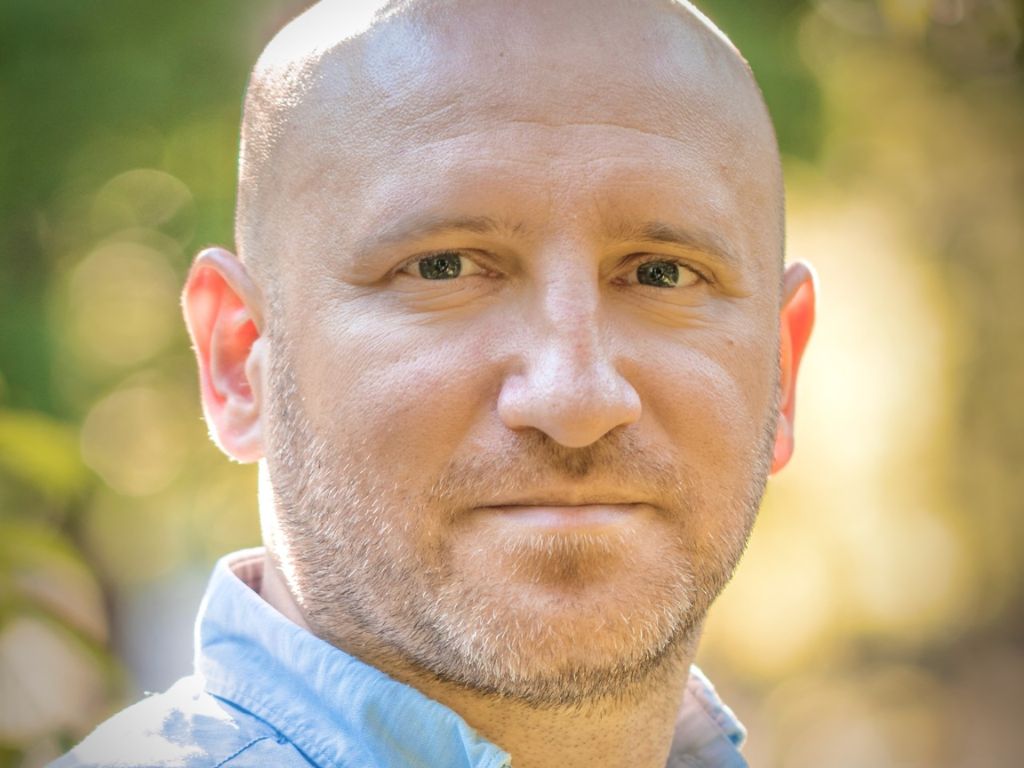
Mihai Brătășanu, Senior Product Manager and Fractional CPO, speaks about the transition to fractional leadership, strategic impact in product, achieving Product-Market-Fit, and the role of AI in accelerating product development.
From a traditional career to Fractional CPO
For Mihai Brătășanu, the transition to the fractional model was not a break, but a natural evolution. With over 10 years of experience in software product development, he has held complex roles in companies across Finance, Healthcare, and AI, building products from idea to scale.
During the period when he worked full-time, he was already involved in multiple internal initiatives—some mature, others in early stages. Early-stage projects attracted him the most. Where there is uncertainty, there is also the real opportunity to build.
At the same time, he began developing his own software products, personal projects that turned into live MVPs. This was followed by collaborations through the global platform Toptal, where he worked fractionally with multiple companies. That was when he realized that this way of working—intense, results-oriented, independent of presence—could become more than an alternative. It could become the main model.
The final step was formalizing his Fractional CPO services and diversifying his client pipeline. More importantly, there was a mindset shift: from being an employee dedicated to a single organization to becoming a strategic partner for multiple companies, focused exclusively on impact.
Product leadership as a decision accelerator
What attracted him most to the fractional model was the accelerated learning curve. Exposure to different industries, cultures, and business models constantly pushes him outside his comfort zone—a space where, he says, he performs best.
The freedom to apply accumulated experience quickly and see results in a shorter timeframe is another major advantage. Instead of gradual progress typical of a traditional role, the fractional model compresses years of experience into months of intense execution.
Of course, there are challenges. Frequent context switching, rapid integration into different organizational cultures, and the need to gain trust quickly are part of daily reality. In this model, credibility is built exclusively through clarity, structure, and measurable results.
From 0 to MVP and Product-Market-Fit
Mihai prefers early-stage projects, where impact can be significant: building a product from scratch, launching an MVP, validating Product-Market-Fit, and entering the Growth phase.
A relevant example is the development of an MVP for a fintech platform. Through a rigorous prioritization process and strategic focus, the launch timeline was reduced from 12 months to just 4. The result: a live product that quickly moved into optimization and large-scale validation, in a much shorter time and at significantly lower costs.
In another project, he took on the role of CPO and Product Coach for a company generating approximately €50 million from mobile applications. He reorganized the global team of Product Managers, implemented clear processes, playbooks, and templates, and within a few months the team was operating fully autonomously. The CEO’s direct involvement in the product vertical decreased significantly, and the company entered a phase of accelerated scaling.
For Mihai, the fractional role is that of a catalyst: he does not execute in place of the team, but accelerates decisions and optimizes processes so that the organization performs better in the medium and long term.
The real value of a Fractional CPO
When facing a skeptical CEO, the argument is simple: C-level expertise without the costs and complexity of a full-time commitment. No long-term benefits, no equity, no extended HR processes.
But beyond financial efficiency, the major difference is speed. In three months, a company can gain strategic clarity and concrete direction where an internal team might need a year.
There is also an essential element: external perspective. A fractional leader sees the organization without internal filters and can bring best practices from different industries. After working across multiple companies and cultures, you quickly identify what works and what needs adjustment.
AI and the inflection point of the fractional model
Mihai sees the fractional model at a maturation point. After accelerated growth in the post-pandemic period, the market has shifted. AI is already taking over part of the research, prototyping, and strategic decision-support activities, while the availability of full-time specialists has increased.
Yet this is precisely where competitive differentiation appears. Fractionals who integrate AI into the product-building process can significantly increase both execution speed and quality. Professionals positioned at the level of vision, strategy, decision-making, and coordination—who know how to effectively use AI agents for execution—represent a setup with enormous potential, especially in the start-up segment.
In the medium term, Mihai expects fewer operational fractional roles and more high-impact collaborations focused on strategy, product, go-to-market, and the intelligent integration of AI into business processes.
Entrepreneurial thinking, not just expertise
For senior professionals considering this path, his advice is clear: network, speed, quality of delivery, and professionalism will determine success in this model. The intensity is high, and the comfort zone becomes rare.
The fractional model requires entrepreneurial thinking: managing clients, contracts, deliverables, cash flow, and multiple engagements simultaneously. Technical expertise alone is not enough.
His recommendation is simple: build and launch a product, even a small one. Go through all the stages. Understand what “Founder Mode” means, a concept popularized by Brian Chesky, co-founder of Airbnb. Only then does the gap between consultant and founder begin to narrow.
Mihai Brătășanu’s journey reflects the maturation of a new type of leadership—one focused on rapid impact, clear strategic decisions, and measurable results. In a market where speed and adaptability are becoming decisive, fractional leadership is no longer an alternative, but a strategic option.
This material is an original editorial feature created based on an interview previously published in our niche publication, Fractional. The full interview is available here.

 UK
UK
 IT
IT
 ES
ES
 DE
DE
 FR
FR
 RO
RO
 PT
PT
 HU
HU


