


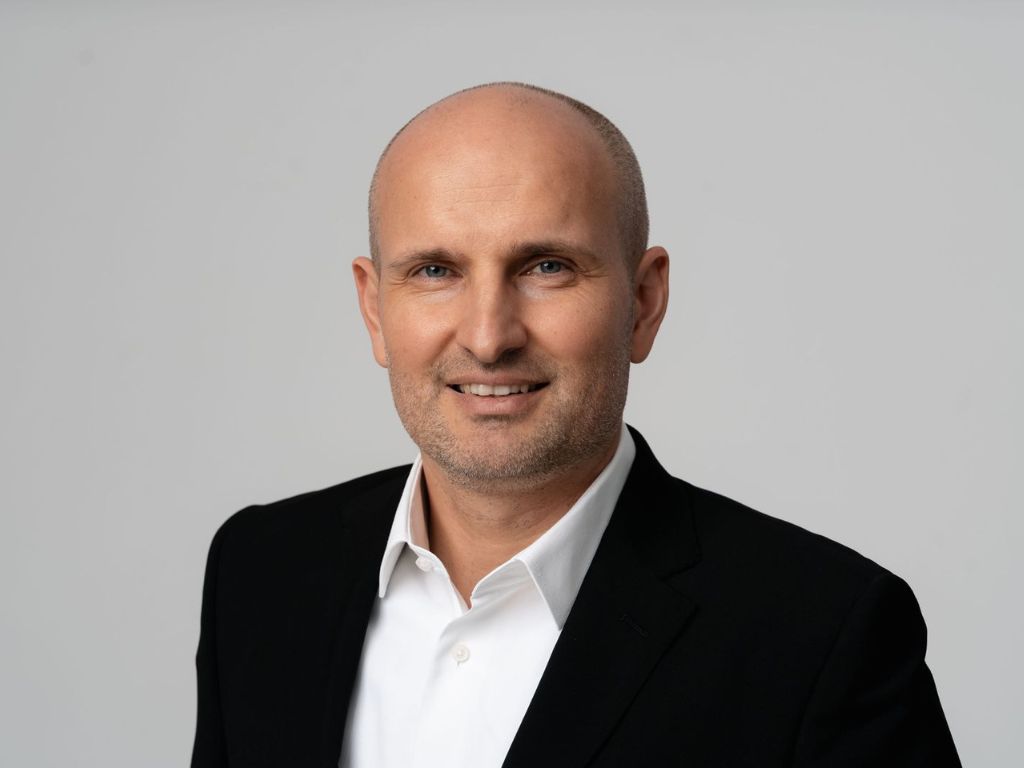
Interview with Gabriel Stoian, CEO and founder of Profeco Agriculture, on agribusiness leadership, sustainable agriculture, strategic decisions, and the transformation of the modern farmer.
Gabriel Stoian is the CEO and founder of Profeco Agriculture, an agribusiness entrepreneur with direct experience in the agricultural inputs market and in developing organic solutions for agriculture, founder of the Young Entrepreneurs in Agriculture Community, an initiative dedicated to educating, connecting, and supporting the new generation of entrepreneurial farmers, focused on transforming the farmer from an administrator into a manager and on building a modern, profitable, and sustainable agriculture in Romania.
C&B: If we were to look at a narrative thread of your career, what were the key moments that defined you?
Gabriel Stoian: We are the sum of the experiences we have gone through up to this moment; from each one we learned something and with each we added a brick to our development.
A key moment was choosing to enter agriculture and to understand this industry from the inside, not just from the outside. Another important moment was the transition from execution to leadership—when I understood that it is not enough to work hard, but that you need to build systems, teams, and processes. A third defining moment was realizing that the agriculture of the future will be driven by technology, but especially by an entrepreneurial mindset and respect for the soil. All these moments shaped me and made me see agriculture not just as an industry, but as a field where the impact is profound: on the economy, on food, and on the future.
C&B: What has been the most difficult moment in your journey so far and how did you overcome it?
Gabriel Stoian: I started from the bottom and went through many stages, learning from my own mistakes. In this entrepreneurial world, you are often alone, especially when making important decisions and when you have to take on risks.
In entrepreneurship, there are stages when you are between two worlds: you are no longer at the beginning, but you don’t yet have the stability you see in mature companies. During that period, the hardest part was to stay clear-headed, not make impulsive decisions, and not confuse pressure with failure. Whatever happens, you have to keep moving forward!
C&B: Is there a dream or ambition that has always guided you, regardless of obstacles?
Gabriel Stoian: Yes. My dream has always been to build something that lasts, to have a positive impact on people’s lives. Not just a company that sells products, but a project that changes mindsets and leaves a mark on the market. In agriculture, Romania has huge potential, but it needs farmers who think entrepreneurially, solutions that are implemented correctly, and a balance between performance and sustainability. My ambition is for Profeco to be a name associated with professionalism, intelligently applied organic solutions, and the transformation of the farmer into a manager. Obstacles exist, but when you have a clear direction, they become part of the journey—you learn to live with them.
C&B: How do you define your role as CEO in an industry heavily influenced by external factors such as climate and market volatility?
Gabriel Stoian: My role as CEO is, first of all, to create stability in an unstable industry, to set directions and take responsibility for them. Climate, prices, agricultural policy, inputs, global markets—all of these can radically change the plans of a farm or an agricultural company. In this context, a CEO must be both a builder of direction and a risk manager. I see my role as a balance between vision and pragmatism: to look ahead, but remain connected to the reality in the field. In addition, a CEO must be a good communicator—both with the team and with the market. And in modern agriculture, a CEO must understand that the future is not just about production, but about profitability, efficiency, and sustainability.
C&B: What is the most important decision you have made that changed your trajectory?
Gabriel Stoian: The most important decision was to build Profeco around an idea that is not always the easiest to sell commercially: sustainable agriculture and organic products. In a market where many are looking for quick solutions, I chose to build for the long term. It was a decision that changed my trajectory because it forced me to invest in education, consulting, and direct relationships with farmers. I understood that you are not just selling a product, but a change in mindset. And this decision defined not only the company, but also the way I see my role in the industry.
Ten years ago, very few companies chose to invest in organic products, sustainable agriculture, and solutions in this direction. At that time, I was probably considered crazy for wanting to do this, but today the direction chosen back then proved to be the right one.
C&B: How did you build your leadership style or the way you make decisions? Was it a natural or learned process?
Gabriel Stoian: It was a mix. Some things came naturally: energy, the desire to build, involvement, the ability to communicate. But true leadership is learned. It is learned from mistakes, from decisions made under pressure, from moments when you have to choose between comfort and direction. I learned to listen more, to delegate better, and to build a framework where people can perform. Leadership is not about control, but about clarity. And clarity is built over time.
C&B: What do you consider to be the main differentiator of your company in an increasingly competitive agricultural sector?
Gabriel Stoian: Our main differentiator is that we don’t just sell products, we sell correctly implemented solutions. There are companies in the market that sell technology or inputs, but the real impact is rarely seen. We believe in consultative selling, in being present on the farm, in education, and in adapting the solution to the farmer’s real needs. In addition, Profeco is built on the idea of professionalism and sustainability: organic products that deliver performance and profitability, not just a marketing “label.” We want to be the farmer’s partner, not just their supplier.
C&B: What does a typical day look like for you now and what moments of the day bring you the greatest satisfaction?
Gabriel Stoian: No day is the same as another; it’s a mix of office work, meetings, and on-site visits to farms. In the field, you have real contact with farmers, with their problems but also with their satisfactions. Few are willing to stand by farmers when problems arise, but that is what makes us human—to be there in good times, but especially in difficult ones.
C&B: What strategic decisions have had the greatest impact on the company’s development in recent years?
Gabriel Stoian: There have been several important decisions. The first was focusing on organic products and developing a coherent technology, not just a single product. The second was investing in the team and in consultative selling—because in agriculture you don’t sell from the office, you sell from the field. The third decision was focusing on partnerships and communities, because the agriculture of the future will be built in networks, not in isolation. In addition, we focused on positioning: for Profeco to stand for professionalism, stability, and real solutions, not promises.
C&B: How was Profeco Agriculture founded and what was your initial vision for this company?
Gabriel Stoian: Profeco Agriculture emerged from a real need I saw in the market: farmers had access to products and technology, but they had forgotten how to use organic products. Plants are alive, just like our products. My vision was to build a company that brings modern organic solutions, but also consulting and education. The name Profeco was designed exactly along these lines: “prof” from professionalism and “eco” from the sustainable direction. We wanted to build a brand that shows that sustainable agriculture is not more expensive, but smarter and more efficient.
C&B: What are the main needs of Romanian farmers today and how do you address them concretely?
Gabriel Stoian: Romanian farmers have several very clear needs: predictability, control, and profitability. At a time when costs are rising, the climate is becoming increasingly unpredictable, and the market is volatile, farmers no longer need just products, but a working system. The basic need is the transition from “high production” to “profit per hectare.” And this is where we come in. We respond concretely through organic products that improve soil health, reduce waste, stabilize crops, and increase input efficiency. In addition, we respond through consulting and a close relationship with the farmer: we go to the farm, analyze, recommend, and follow up. For us, modern agriculture is not about quick sales, but about long-term partnerships.
Gabriel Stoian’s journey reflects a paradigm shift in Romanian agriculture: from production to profitability, from execution to management, and from quick fixes to long-term value.

 UK
UK
 IT
IT
 ES
ES
 DE
DE
 FR
FR
 RO
RO
 PT
PT
 HU
HU


