


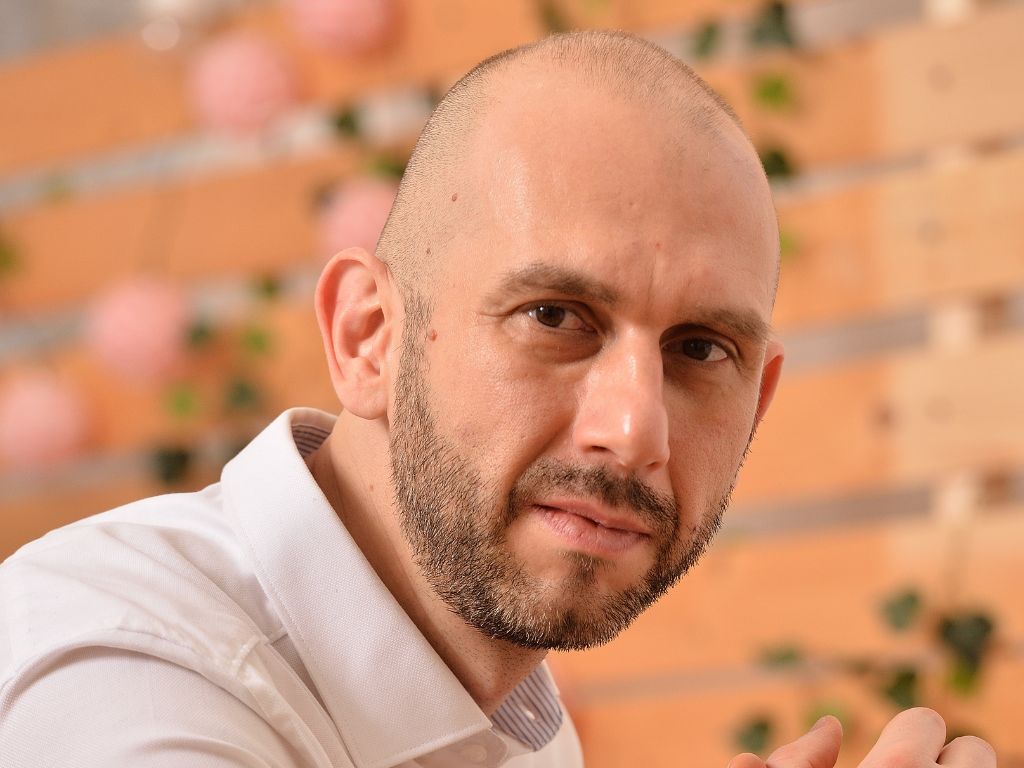
An interview with Andrei Georgescu on entrepreneurship, the evolution of email marketing in Romania, the power of data, and the lessons behind building White Image.
Andrei Georgescu is a Romanian entrepreneur and digital marketing specialist, best known as the co-founder and Managing Partner of White Image, the first email marketing agency in Romania, launched nearly two decades ago. Over the years, he has contributed to the development of the direct marketing industry and to the professionalization of data-driven communication in the digital environment.
Under his leadership, White Image has evolved from a project that started almost as a hobby into a company recognized for its expertise in email marketing, loyalty solutions, and data-driven, personalized communication strategies. In recent years, the company has also integrated new communication channels, such as WhatsApp, into modern automated marketing ecosystems.
Andrei Georgescu is considered one of the few globally certified specialists in email deliverability, a field essential to the performance of digital marketing campaigns. His expertise is frequently sought by companies looking to optimize their customer relationships through relevant and efficient communication.
In addition to his entrepreneurial work, he has been involved for over a decade in educating new generations of marketing professionals. Within the International Advertising Association, through the IAA School program, he teaches email marketing courses and shares his industry experience.
He is also a frequent speaker at major e-commerce and digital marketing events, such as GPeC Summit, Trade Marketing Congress, or ZF Events, where he discusses customer loyalty, smart data usage, and the role of new technologies—including artificial intelligence—in transforming modern marketing.
C&B: If we were to look at a narrative thread of your career, what were the key moments that defined you?
Andrei: If I were to look at my career as a narrative thread, I think there are a few moments that defined the direction I took.
The first was the very beginning. After graduating from the first class of the Advertising Master’s program at SNSPA, I really wanted to work in the communications industry. The problem was that no one was hiring me. In that context, a former university colleague, who was more attentive to industry news, told me about something that was just starting to be mentioned at the time: email marketing. The idea seemed interesting to me and, in a way, it was the spark that led to the creation of White Image. It was more of an experimental beginning, without guarantees, but with a lot of enthusiasm and the desire to build something in a field that was almost unknown at the time.
A second important moment came a few years later, when we made a major shift in perspective. At first, our activity was very execution-oriented: we sent campaigns, optimized delivery, and implemented client requests. At some point, however, we started analyzing data much more closely—campaign results, user behavior, and real performance feedback. Integrating this data into the way we think about and execute campaigns fundamentally changed our approach.
This shift influenced not only how we work, but also how we relate to clients. It led to a transformation in our sales process: from a more technical or service-oriented approach to a much more consultative one. We began discussing clients’ business objectives, user behavior, and how data could be used to optimize communication and results. Over time, this consultative approach became an essential part of how we build client relationships.
Looking back, I believe these moments—the entrepreneurial beginning born from an unexpected opportunity and the transition to a data-driven culture that later evolved into a consultative approach—have most defined my professional journey.
C&B: What was the biggest obstacle in White Image’s early years and how did you overcome it?
Andrei: In the early years, the biggest obstacle wasn’t competition, but explanation.
In 2003, when we started White Image, email marketing was almost unknown in Romania. In many meetings with potential clients, when we told them we could send emails to their customers on behalf of their company, the reaction was sometimes very simple: “We also have Outlook.” 😊
For many companies, it was difficult to understand the difference between manually sending a few emails and having a structured communication channel capable of reaching thousands of customers simultaneously, with relevant messages and measurable results. In addition, databases were rarely well organized, and the idea that customer relationships could be managed through digital communication was still in its early stages.
How did we overcome this obstacle? First of all, through a lot of market education. We explained, showed examples, ran pilot projects, and demonstrated through results that email could become an extremely effective communication channel.
Interestingly, a few years later, when the market began to understand email marketing, we faced a very similar challenge when introducing communication automation scenarios. This also required a shift in mindset: automation meant collecting and structuring data so that certain user actions or behaviors could trigger communication. Once again, it required explanations, examples, and proving the value in practice.
Looking back, I think an important part of White Image’s growth was precisely this role—not just as a service provider, but also as a market educator in a field that has evolved tremendously over the past 20 years.
C&B: Is there a dream or ambition that has always guided you, regardless of obstacles?
Andrei: Yes, I think the ambition that has always guided me is very simple: to be the best in our field.
Not necessarily the biggest, but the best in the true sense of the word—to understand this channel better than anyone else, to use data intelligently, and to help clients achieve real results from their communication.
In a field that has evolved so rapidly, this goal has actually meant a continuous process of learning and adaptation. From the early days of email marketing, when the market was just discovering this channel, to complex automation and data-driven communication, the ambition has remained the same: to better understand how it works and how it can create value for clients.
I believe this desire to do things as well as possible—not just to do them—has guided us through all stages of White Image’s development.
C&B: What were you like at the beginning of your journey, and how do you feel you’ve transformed over time?
Andrei: At the beginning, like many entrepreneurs, I was in an exploratory phase. I didn’t have all the answers and, honestly, many things started from a simple question: “Let’s see what happens if we try this too.”
We tested ideas, implemented them, then analyzed the results. If it worked, we moved forward and developed it further. If not, we tried to understand what we could learn from that experiment and restarted the process from a different angle.
Over time, I realized that this approach is very similar to what Adam Grant describes in his book Think Again: the idea of thinking more like a scientist than like a defender of your own ideas. That is, treating beliefs as hypotheses to be tested, not as absolute truths.
Today, we may be more structured and more mature as an organization, but the core philosophy has remained the same: to experiment, analyze results, and always be willing to rethink our own conclusions when data points us in a better direction.
C&B: If we met your team or collaborators, what do you think they would say about you?
Andrei: If you asked my colleagues or collaborators, the first thing they would probably say is that I can be quite stubborn when I believe in an idea. I often challenge them to do things we haven’t done before, which isn’t always comfortable for everyone.
They would probably also say that sometimes I can seem impatient or that I get frustrated quickly when things don’t go in the direction I believe is right. But I think they would also add that I’ve always tried to be fair in my relationships with the team and partners, and to stand by the ideas I believe in.
And looking back, I think they would also say one more thing: that we’ve often done certain things long before they became industry trends. Sometimes it was difficult at the beginning because it felt like we were moving in a direction few people saw at the time. But over time, many of those ideas became standard in the market.
So, if I were to summarize what they might say about me, it would probably be this: that I’m stubborn, that I push people out of their comfort zones, and that ideas that seem unusual at first often become standard a few years later.
C&B: What is the most important decision you’ve made that changed your trajectory?
Andrei: I wouldn’t say there was a single decision that suddenly changed my trajectory overnight. For me, changes have been more gradual and almost unnoticeable, built step by step through what I chose to do every day.
Each decision—whether it was about which projects to take on, how to approach a client, or how to introduce a new way of working—gradually contributed to the direction we followed. And looking back, I realize that these small decisions, accumulated over time, are what defined our evolution as an organization.
I think the lesson here is that major transformations don’t always come from a single moment of inspiration; sometimes, they are the result of consistent choices, experimentation, and the desire to continuously learn.
C&B: How did you build your leadership style or decision-making approach? Was it natural or learned?
Andrei: I think my leadership style developed more as a natural process. As I grew alongside White Image, I learned from experiences, challenges, and interactions with the team.
At the same time, I always try to learn new things—whether through reading, observation, or conversations with people in the industry. I believe a good leader is not just someone who makes decisions, but someone who can motivate people to do what needs to be done and inspire them to give their best.
For me, leadership is not about imposing, but about creating the context in which the team can perform, experiment, and grow, even when the path is not clear from the beginning.
C&B: What differentiates White Image from other agencies in Romania?
Andrei: I think the first differentiator is experience. White Image was the first email marketing agency in Romania and, over nearly 20 years, we’ve had the opportunity to see how this channel evolves and how the relationship between brands and customers transforms. This experience helps us deeply understand not just the technology, but also user behavior.
Another important element is specialization. While many agencies treat email marketing as a complementary service, for us it has always been a core pillar. We have invested heavily in data, personalization, automation, and especially deliverability—an essential factor for campaign performance.
In recent years, we’ve expanded our approach beyond email, integrating channels like WhatsApp and other messaging solutions into communication and loyalty strategies. Essentially, we aim to build communication ecosystems that use data intelligently and maintain long-term relationships between brands and customers.
And perhaps most importantly: we enjoy working very closely with our clients. We don’t see projects as simple campaign executions, but as partnerships where we constantly test, optimize, and find more effective ways to communicate.
C&B: What does a typical day look like for you now, and what moments bring you the most satisfaction?
Andrei: A typical workday for me almost always starts at 9:30—never earlier. 😊
There’s no fixed end time, though: the day ends only when all important things are done. And honestly, that’s one of the aspects that makes the job both challenging and rewarding.
The greatest satisfaction comes when a happy client gives us feedback like:
“Fast and good—it’s something rare in the agency world, but with you, it really happens.”
These moments show that the team’s work truly matters and that the effort translates into concrete results.
C&B: What lessons have you learned about leading a creative team and managing complex projects?
Andrei: I’ve learned that in a creative team, it’s very important to give every idea a chance to develop. Often, ideas that seem unusual or even crazy at first end up generating the best results—either in client relationships or in how messages reach the audience.
At the same time, I don’t think it’s healthy to classify or reject ideas too quickly without truly analyzing them. The key is to remain open and willing to rethink our own assumptions.
When it comes to projects, I’ve come to the conclusion that there aren’t necessarily “complex” projects, but rather projects that haven’t yet been analyzed clearly enough. When you break a project down into stages and clarify all aspects, it becomes much easier to manage. Sometimes implementation may take longer or require more resources, but that doesn’t mean the project is inherently complicated—it just needs more careful planning.
C&B: Was there a difficult project or period that tested your patience and resilience? How did you overcome it?
Andrei: Yes, there have definitely been moments that tested my patience. Working with multiple corporate clients, I’ve noticed that many things move more slowly because they involve numerous discussions and approval stages. It’s a normal process, but it can sometimes become frustrating—especially when you come up with new ideas you’re excited about, and their approval takes much longer than you’d like. Still, the satisfaction is much greater when the idea is finally approved and implemented.
There have also been situations where certain tenders lasted more than two years. It’s the kind of process where you’re told multiple times that “this is the final set of questions,” and then another one comes… and another one. 😊
In such situations, what helped me most was maintaining a positive mindset and a bit of humor. Energy often comes from other projects that are moving forward in parallel and, especially, from the reactions of satisfied clients when they see the results of your work.
Andrei Georgescu’s story is, at its core, about the courage to start in an unknown field, the patience to build step by step, and the discipline to keep learning.

 UK
UK
 IT
IT
 ES
ES
 DE
DE
 FR
FR
 RO
RO
 PT
PT
 HU
HU


