


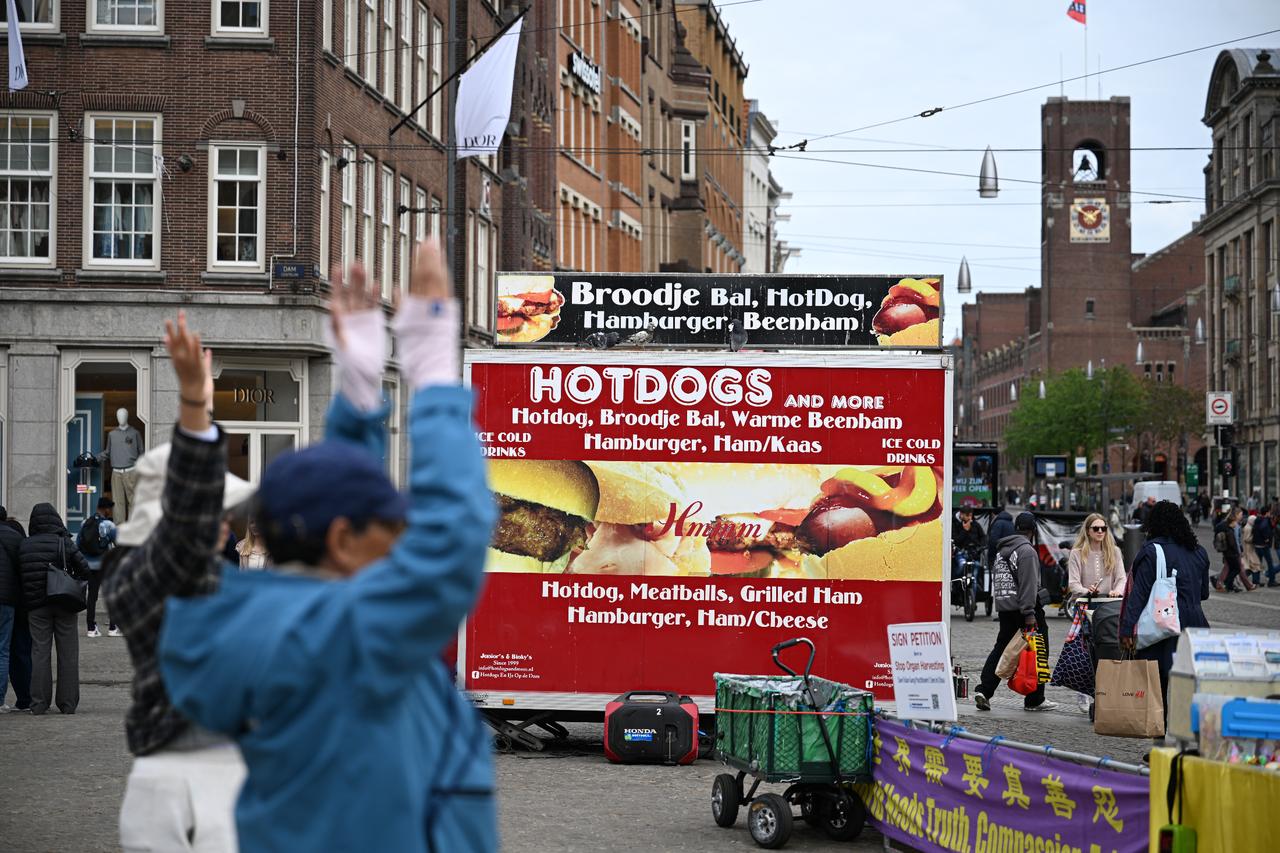
Amsterdam has become the first capital city in the world to prohibit public advertising for both meat products and fossil fuel-related industries, according to the BBC. The measure came into effect on 1 May and applies to advertising displayed on billboards, tram shelters and metro stations across the city.
The decision is part of the Dutch capital’s broader strategy to align public spaces with its environmental and climate objectives.
Public Advertising Shifts Toward Cultural Promotion
In some of Amsterdam’s busiest public transport areas, advertisements previously promoting burgers, petrol-powered vehicles, airline travel and budget holidays have disappeared.
According to the BBC, these advertising spaces are now being used to promote cultural events and institutions, including the Rijksmuseum and various music performances.
City officials argue that public advertising should reflect the municipality’s sustainability goals rather than encourage activities associated with higher carbon emissions.
Part of Amsterdam’s Climate Strategy
The policy supports Amsterdam’s long-term environmental targets, which include achieving carbon neutrality by 2050 and reducing local meat consumption by 50% over the same period.
Anneke Veenhoff of the GreenLeft said the city must ensure its public policies are consistent with its climate commitments.
“If authorities are pursuing ambitious climate policies, it makes little sense to generate revenue from advertising that promotes activities working against those goals,” she argued.
Supporters of the measure view it as a symbolic but important step toward encouraging more sustainable lifestyles and reducing the visibility of products linked to higher greenhouse gas emissions.
The move places Amsterdam at the forefront of a growing international debate over the role of advertising in addressing climate change and environmental policy.
Photo: Türkiye Today

 UK
UK
 IT
IT
 ES
ES
 DE
DE
 FR
FR
 RO
RO
 PT
PT
 HU
HU


