


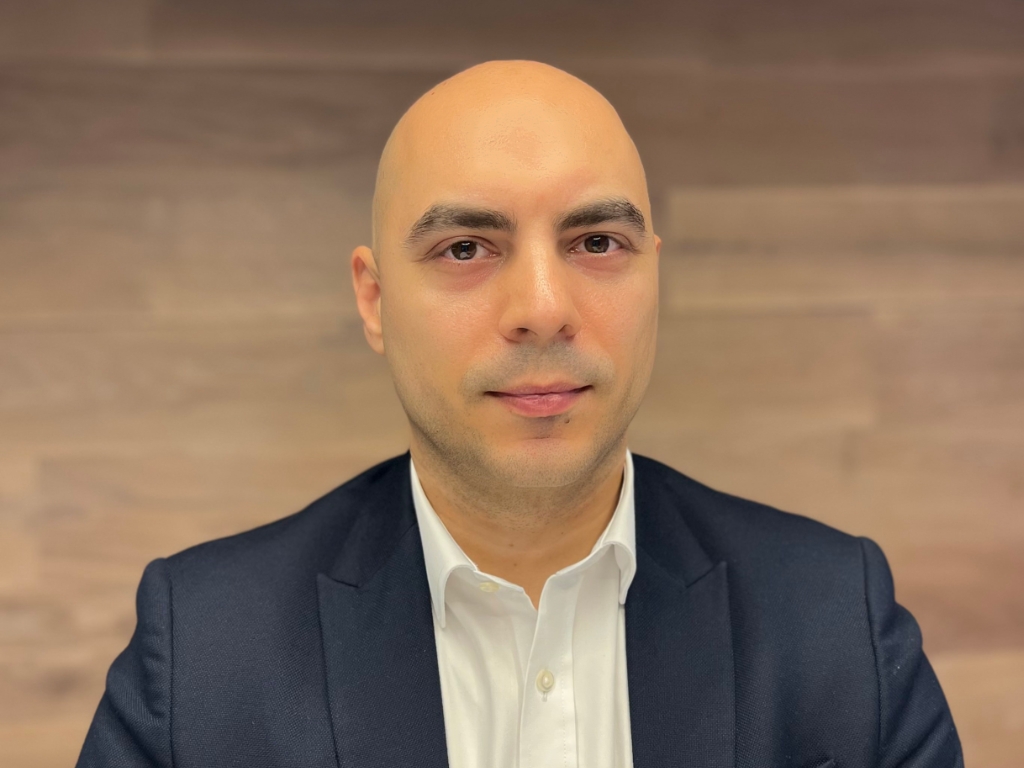
Discover an exclusive interview with Cristian Bărcan, founder of Regnet.ro, on digitizing company formation, automated accounting, entrepreneurship, business growth, and building a digital ecosystem that simplifies running a business in Romania.
Cristian Bărcan is the founder of Regnet.ro, the platform through which, since 2015, thousands of entrepreneurs in Romania have established and managed their businesses entirely online (from LLCs and sole proprietorships to automated accounting, registered office services, and trademark registration with OSIM). He is the author of several books, including an entrepreneurship education book for children, and a strong advocate of the idea that bureaucracy should never stand between a person and their business.
C&B: If you were to look back at your career as a narrative, what have been the defining moments that shaped your journey?
Cristian: Honestly, I have never thought of my career as a “storyline.” I see it more as a series of moments when I realized, “Okay, this isn’t working—it has to be done differently.” After each of those moments, I came out a little different.
The first defining moment was in 2015, when I founded Regnet. Back then, starting a company in Romania required weeks of work, piles of paperwork, and countless trips to the Trade Registry, the notary, and the tax authorities. I saw so many people give up before they even issued their first invoice simply because the process exhausted them. I told myself there had to be a simpler way. At the time, I had neither a platform nor a team—just that conviction.
The second defining moment came around 2019–2020, when the company had reached a plateau. For years, we had generated roughly the same revenue, served the same types of clients, and offered the same services. I realized I had become comfortable, and comfort is dangerous for an entrepreneur. That was when we started building our own automated accounting platform and rethinking our business model.
The third—and by far the toughest—moment was the decision in 2023 to offer company incorporation free of charge in exchange for recurring accounting services. It was a gamble. We deliberately gave up short-term revenue from company formation in order to build long-term client relationships.
C&B: Regnet has helped thousands of companies get started. What have been the most important growth milestones for your business?
Cristian: I would highlight three moments.
The first was in 2016. That was when we experienced our first real wave of growth, going from just a few thousand lei in annual revenue to more than RON 130,000. It was the moment people started actively searching Google for “online company formation,” and we were already there—with content, processes, and reviews. We didn’t create the demand; we were simply prepared when it appeared.
The second was the launch of Kreator, our proprietary automated accounting platform. That was the moment we evolved from being a “paperwork intermediary” into a true digital product. Today, a client who starts a company with us no longer needs to separately look for an accountant, a registered office, invoicing software, or a system for communicating with the tax authorities. Everything is available in one place, supported by automated processes.
The third was our shift to the “free company formation + subscription-based accounting” model. It was painful in the short term. However, the number of new clients increased significantly, and today the majority of them come through referrals and organic traffic. In practice, satisfied clients have become our primary marketing channel.
C&B: What was the biggest challenge in transforming complex administrative procedures into a simple, fully online process?
Cristian: It wasn’t the technology. Technology is the easy part. The real challenge was legislation.
When you build an online workflow, you assume the rules remain stable. In Romania, however, tax and commercial legislation changes very frequently. A form you automate today may no longer be valid three months later. A Trade Registry procedure you integrated last week may include an entirely new step by Monday morning. In practice, you need lawyers, accountants, and developers working in parallel all the time to ensure your platform never ends up submitting outdated documents.
The second challenge involved identity verification and electronic signatures. To make a process truly 100% online in Romania, documents must be signed with a qualified electronic signature. Educating clients about this took years.
The third challenge was overcoming people’s fear. Clients are accustomed to visiting offices in person, seeing stamped documents, and shaking someone’s hand. When you tell them, “You don’t have to go anywhere. You sign electronically and receive your company from home,” their first reaction is often distrust. We had to build confidence through complete transparency: genuine reviews, a process explained step by step, and real human communication behind every automated workflow.
C&B: Looking back, who were you at the beginning of your journey, and how do you feel you have changed over the years?
Cristian: In the beginning, I was a one-man band. I handled sales, answered emails at 11 p.m., went to the Trade Registry myself, wrote the website copy, and negotiated with suppliers. I had endless energy. I believed that if I was involved in everything, I controlled everything. In reality, I was limiting the company’s growth.
What changed? Very slowly—and after making many mistakes—I learned to let go. I learned that a well-documented process is more valuable than another extra hour of my own work. I also learned that if I want the company to grow independently of me, I cannot remain its single point of failure.
On a personal level, I think I’ve become calmer. At 30, I believed every decision was final and every week was as important as an entire year. Today, I would rather build something more slowly, but sustainably.
C&B: If we spoke with your team or collaborators, what do you think they would say about you?
Cristian: I think they would mention two things.
First, that I’m approachable. If someone on the team has a problem, they can message me at any time and they’ll get a reply. I don’t play the role of the “untouchable founder.”
Second, that sometimes I get too involved in the details. Even though I’ve learned to delegate, I still have moments when I slip into micromanagement. There’s a perfectionist side of me that tends to surface, especially when it comes to client communication. I don’t like seeing a hastily written email or a half-hearted response.
I’d also like them to say that I’m fair. That I pay on time, keep my promises, and don’t hide anything. It’s something I consciously work on every single day because I’ve encountered far too much unreliability in this industry.
And if you asked the people closest to me, I think they’d also tell you that I enjoy laughing. Serious work doesn’t mean you have to be serious all the time.
C&B: What is the single most important decision you’ve ever made—the one that changed your trajectory?
Cristian: The decision to offer company incorporation free of charge.
When I made it in 2023, it seemed almost absurd. The service that had been the foundation of my business model—the one I had spent eight years building—was suddenly becoming something for which we would no longer charge directly.
But the logic was simple: the very first interaction with an entrepreneur at the beginning of their journey is the most valuable one. If I charge them for a service they have to use anyway, I encourage them to compare prices, look for alternatives, and see me as just another transactional provider. If I offer it for free and solve a real problem for them, I earn their trust and become their long-term partner for accounting, registered office services, trademarks, and everything that follows.
C&B: What motivated you to digitize such a traditionally bureaucratic process as starting and managing a company?
Cristian: Frustration.
I saw so many people with great ideas getting stuck at the “let’s start a company” stage. Someone wants to open a small workshop, a pastry shop, or a consulting office, and the very first thing they encounter is a maze of forms, endless trips to public institutions, and offices where nobody explains anything clearly. As much as the Romanian state may try, it simply isn’t designed for first-time entrepreneurs. It’s designed for people who already understand the jargon.
So I thought: if the state won’t simplify the process, we will. We can’t change the law, but we can change the experience. We can take all that paperwork, all those procedures, and all those trips, and turn them into a simple workflow where a person fills out one form, signs electronically, and receives their company documents without leaving home.
C&B: What are the most common mistakes you see people make when starting their first business in Romania?
Cristian: The first is choosing the wrong legal structure. Most people automatically choose a sole proprietorship because they believe it’s “simpler.” In reality, for many entrepreneurs it’s the worst possible choice due to unlimited personal liability, restrictions on business activity codes, or an unsuitable tax regime. There’s also the Individual Enterprise structure, which almost nobody knows about even though it’s a better fit for many cases. Too often, people choose a legal form based on what a neighbor recommended rather than what actually suits their business.
The second mistake is believing that once they’ve registered the company, they’ve “done the hard part.” Company registration is actually the easiest step. After that come tax filings, accounting, e-Invoice, RO e-Transport, cash registers, permits, and numerous ongoing obligations. Many entrepreneurs are shocked to receive fines three to six months later simply because they didn’t know they were required to submit certain documents.
The third mistake is failing to separate business finances from personal finances. They use the company’s bank card at gas stations, supermarkets, and restaurants exactly as they use their personal card. Then, at the end of the year, the accountant is left trying to distinguish legitimate business expenses from transactions that may create problems with the tax authorities.
The fourth mistake is trying to save money in the wrong places. A good accountant, a reliable tax consultant, and a lawyer who properly explains contracts are worthwhile investments. I’ve seen people spend RON 3,000 on a logo designed by a graphic designer but only RON 50 on a “promotional accounting service”—and then wonder why they ended up having problems with the tax authorities.
The fifth mistake is failing to learn about available tax incentives. Despite its shortcomings, Romania offers several advantageous tax regimes, such as the microenterprise regime, VAT on collection, tax incentives for the IT sector, and more. Entrepreneurs who don’t know about these opportunities lose money without even realizing it.
The biggest mistake of all, however, has nothing to do with paperwork: giving up too early. The first 12 to 18 months are difficult for everyone. Those who persevere and continue learning are the ones who eventually build real businesses.
C&B: What does a typical day look like for you now, and which moments of the day bring you the greatest satisfaction?
Cristian: My day starts around 7:00–7:30 a.m., with family time.
From 9:00 a.m. until noon, I focus on work that requires deep concentration: strategy, major decisions, long-form writing, and platform reviews.
After lunch, my attention shifts to the team and our clients. Short meetings, conversations with partners, resolving issues for key clients, and product decisions usually fill the afternoon.
Around 5:00 p.m., I try to wrap up my workday. I don’t always succeed, but that’s the goal. Evenings are dedicated to my family.
C&B: What values or principles guide you in everything you do, and how do you apply them in your day-to-day work?
Cristian: Transparency. I don’t hide things from clients, I don’t hide things from my team, and I don’t even hide things from myself. If I make a mistake, I admit it. If I don’t know something, I say so. If a service costs more than a client expected, I explain exactly why, with complete transparency. Unfortunately, this industry has been built for years on hidden pricing, surprise fees, and unexplained procedures. Regnet strives to be the exact opposite.
Simplicity. I enjoy taking complicated things and making them simple. A contract that can be read in two minutes instead of twenty. An email that communicates one clear message instead of three confusing ones.
Respect for other people’s time. I don’t arrive late for meetings. I reply to messages as quickly as possible. To me, that’s a form of respect that Romanian society needs now more than ever.
C&B: How did the idea behind Regnet come about, and what specific problem did you set out to solve for entrepreneurs in Romania?
Cristian: In the years before founding Regnet, I helped several friends and acquaintances start their companies. Every trip to the Trade Registry, every incorrectly completed form, every return visit just to correct a comma, every day wasted standing in line—I experienced all of it firsthand dozens of times. And every single time I had the same thought: “It simply can’t be right that in 2015 we have to lose an entire week just to register a company.”
The specific problem I wanted to solve was exactly that: turning company incorporation from a painful bureaucratic process into a simple digital operation. At least in the beginning, it wasn’t about making money. It was about a principle.
Over the years, however, the problem naturally expanded. I realized that entrepreneurs don’t only struggle when starting a company—they continue struggling afterward. Their first tax return. Their first shareholder amendment. Their first employee. Their first tax audit. That’s how Regnet evolved from a company formation platform into a complete ecosystem that includes company incorporation, automated accounting, registered office services, OSIM trademark registration, consulting, and practically everything an entrepreneur needs, all in one place.
Today, the problem we solve is no longer “How do I start my company?” but rather “How do I run my company without wasting time and without making costly mistakes?”
C&B: How has the profile of the Romanian entrepreneur changed over the years?
Cristian: When we launched Regnet in 2015, the “typical Romanian entrepreneur” was a man over the age of 35, experienced in his field, who wanted to establish a company so he could continue practicing his profession independently. He wanted a traditional business—with an office, a company stamp, and physical paperwork. Online solutions didn’t interest him at all; in fact, he viewed them with suspicion.
Today, we see a completely different entrepreneur. The entrepreneurial landscape has become much more diverse, especially in terms of gender, with significantly more women starting businesses in recent years. Entrepreneurs now come from entirely new fields: content creators, software developers, remote consultants, people earning income from abroad, and skilled tradespeople who no longer want to work in the informal economy. They are naturally digital. For them, electronic signatures are not an innovation—they’re a basic expectation.
Another major change is the rise of the part-time entrepreneur: people who keep their full-time jobs while launching a business on the side, whether for a passion project, an additional source of income, or a long-term entrepreneurial ambition.
There are also some negative trends. I believe the current generation is more impatient. People want immediate results, become discouraged quickly, and have less patience for the difficult early years of building a business. That’s where Regnet tries to make a difference. We don’t just help people start a company—we also help them understand that entrepreneurship is a long journey, not a sprint.
Cristian Bărcan’s interview provides valuable insights into how digital transformation can reshape entrepreneurship. From simplifying company formation to automating accounting and building a complete business ecosystem, the Regnet story shows how innovation and transparency can remove bureaucratic barriers.

 UK
UK
 IT
IT
 ES
ES
 DE
DE
 FR
FR
 RO
RO
 PT
PT
 HU
HU


