


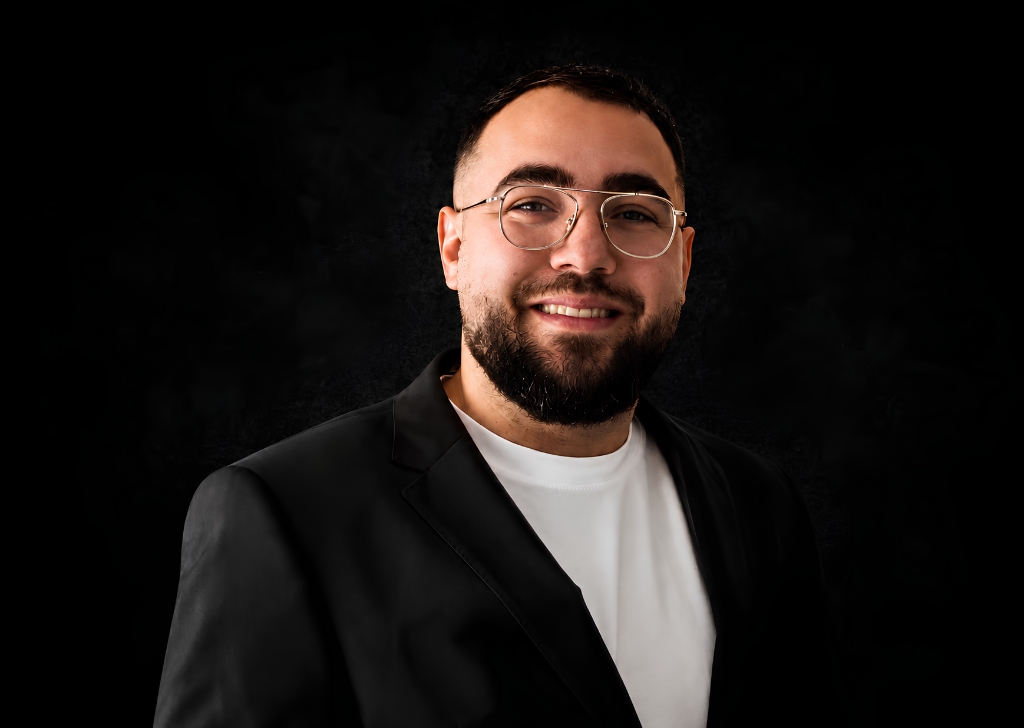
Codrin Jieanu, founder and CEO of Uni Sports Gym, talks about the development of an accessible Romanian fitness brand, relationships with trainers, customer experience and the sustainable expansion strategy of the network.
Codrin Jieanu, 27 years old, is the founder and CEO of Uni Sports Gym, a Romanian fitness brand with three active locations in Bucharest and a fourth one currently being prepared for opening. The network was built around a simple idea: accessible fitness, strong local communities and a fair collaboration model for trainers.
C&B: Who are you and how did Uni Sports Gym come about? What problem in the market did you want to solve?
Codrin: I am a Romanian entrepreneur who chose to build a business in the fitness industry, although I did not start out as a trainer. I first looked at the market as a customer and then as an operator.
I noticed that the market was beginning to split between premium clubs, which were inaccessible to part of the population, and gyms that competed mainly on price. At the same time, many spaces had become impersonal, and people were buying access to equipment without necessarily feeling that they belonged to a community.
I also noticed an imbalance in the relationship between gyms and trainers. In many cases, trainers pay significant rent or commissions, even though they directly contribute to customer retention and the atmosphere inside the gym.
That is how Uni Sports emerged: an affordable model for customers and a fair one for trainers. We have a single membership, access to all locations and a system through which trainers keep all the income generated from personal training.
At present, we have three locations in Bucharest: Cotroceni, Mărgeanului and Dristor, and the next stage is the opening of Uni Sports Titan.
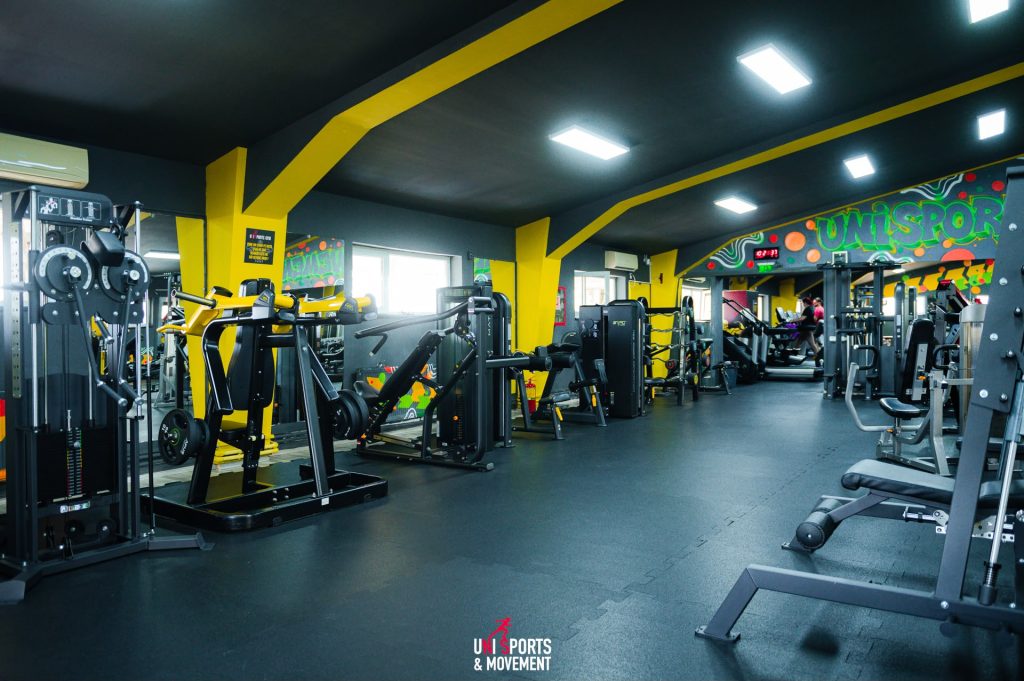
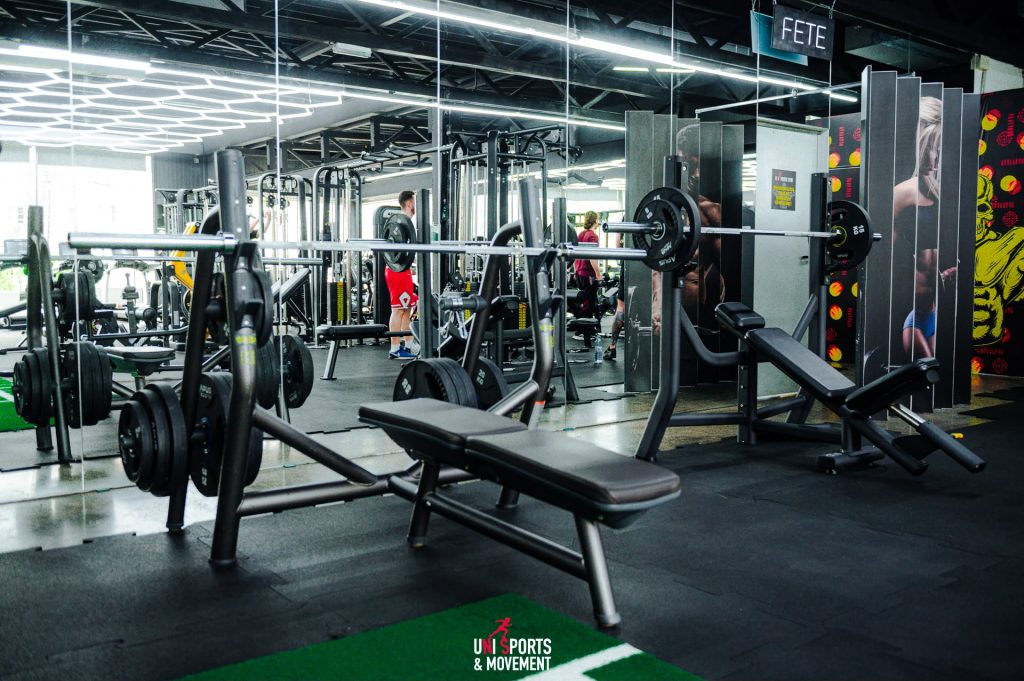
We do not want to build an exclusive club, but an accessible Romanian brand where people come for results and stay for the community.
C&B: The fitness market is becoming increasingly competitive. How did you manage to build a Romanian brand that stands out in a field dominated by international chains?
Codrin: We did not try to copy the international chains. That would have been the wrong battle. They have much larger resources and structures, so we chose to compete through the advantages of a local brand: proximity, flexibility and speed of response.
I speak directly with members, trainers and the team. If we identify a real problem, we can make a decision quickly.
Uni Sports’ differentiation is based on several clear elements: affordable pricing, access to the entire network, constant investment in equipment, the 0% commission model for trainers and the involvement of members in the development of the gyms.
When we prepare a new location or add equipment to a gym, we directly ask the community for its opinion. Some of our purchases have been influenced by member feedback.
We have also invested in our online community. We grew from approximately 200 followers to nearly 6,000 and achieved millions of views through content about people, trainers and the brand’s real evolution.
I believe the advantage of a local brand is that it can understand the neighborhood, the people and the needs of the community surrounding each location very well.
C&B: Uni Sports Gym promotes a collaboration model with 0% commission for trainers. How did this idea come about and what impact has it had?
Codrin: The idea started from a simple observation: a good trainer brings real value to a gym. They help clients achieve results, motivate them to keep going and directly contribute to retention.
In many gyms, trainers pay a fixed rent or give part of their income to the club. We chose to let trainers keep 100% of the income they earn from personal training.
The gym earns from memberships, not from the trainer’s work. Our interest is for trainers to have as many satisfied clients as possible, because those people will continue working out and will recommend the community to others.
The model has helped us attract ambitious specialists and build a different kind of relationship with them. We treat them as partners who develop their own activity within the Uni Sports community.
However, 0% commission does not mean a lack of standards. We require professionalism, respect toward clients, hygiene and proper conduct. Freedom must come together with responsibility.
For us, this model also says something about the way we want to do business: the company should grow without limiting the development of the people who contribute to its success.
C&B: What were the most difficult decisions you had to make during the expansion process, and what lessons did you learn?
Codrin: Some of the most difficult decisions were not the ones in which we chose to open a location, but the ones in which we chose to give one up.
During the expansion process, many spaces may seem attractive at first glance: good rent, a large surface area, a well-known area. But a gym does not become profitable simply because the space looks good.
You have to analyze the density of the area, accessibility, competition, fit-out costs, equipment investment, rent and the period in which the location can reach break-even.
We have given up on projects after weeks or months of analysis. It is not easy to withdraw after investing time and energy, but I have learned not to confuse the effort already invested with an obligation to keep moving forward.
Another lesson is that expansion should not be financed with enthusiasm. We analyze every project through pessimistic, realistic and optimistic scenarios: what happens if the construction work is delayed, costs increase or sales in the first few months are below estimates?
Accounting profit is not enough. A company can have good prospects and still run into difficulties if it does not protect its liquidity.
That is why we negotiate grace periods, phase investments and finance equipment over longer periods when this protects cash flow.
I prefer controlled expansion, with healthy locations, rather than rapid growth carried out simply to increase the number of units. Expansion must strengthen the company, not make it more fragile.
C&B: How can we work together to help people, companies and communities develop better?
Codrin: I believe a company becomes truly relevant when it does not limit itself to selling a service, but becomes part of the community in which it operates.
In our case, the goal is to make exercise more accessible and easier to integrate into everyday life. That is why we keep our prices at a reasonable level and try to develop locations as close as possible to the areas where people live, study or work.
We have partnerships with student associations through which we try to bring sports closer to young people and encourage the development of healthy habits from university onward.
Through platforms such as 7Card and Wellhub, we also reach corporate employees. But the real value is not the existence of the benefit itself, but the fact that people use it and turn movement into a habit.
For me, community should not be just a marketing message. It should be visible in the way we treat people, in the partnerships we build and in the decisions we make for the long term.
C&B: What role does customer experience play in Uni Sports Gym’s strategy, and how do you measure member satisfaction?
Codrin: Customer experience is essential because in fitness, financial results come from continuity. It is not enough for a customer to buy a membership. They need to want to come back.
The experience starts with the basics: cleanliness, the right temperature, functioning equipment, well-maintained changing rooms, easy access and proper behavior from the team and trainers.
We track the number of visits, membership renewal rates, referrals, online reviews and complaints received. But direct conversations with members are equally important.
When several customers report the same problem, we no longer treat it as an isolated opinion, but as an operational signal. We try to correct the cause, not just the specific situation.
We have even made equipment purchases and reorganized gyms based on member feedback and equipment usage levels.
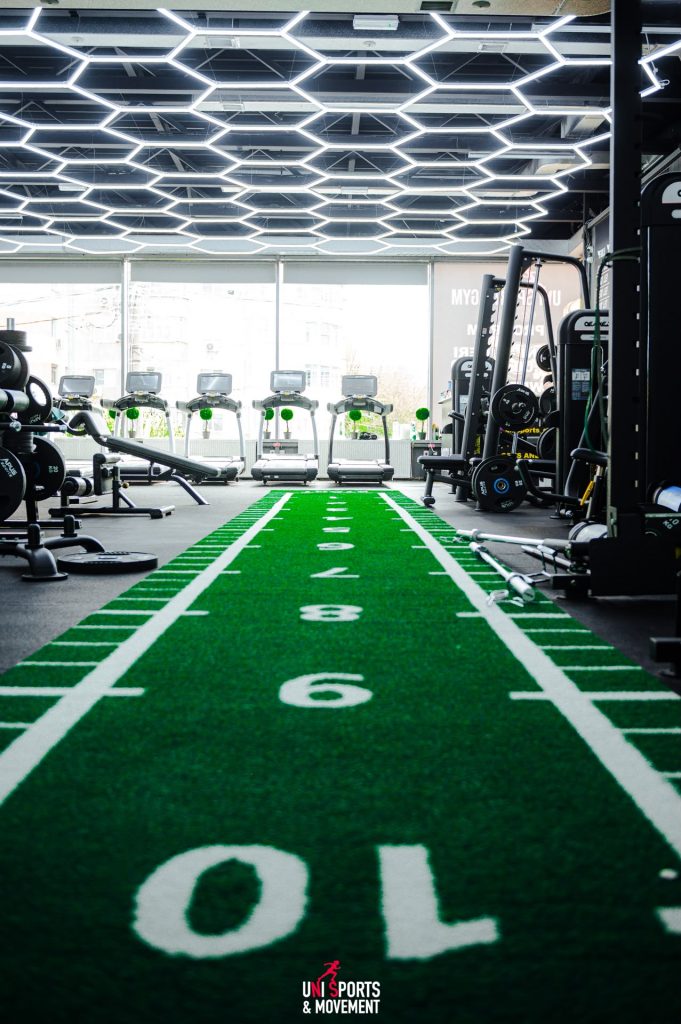
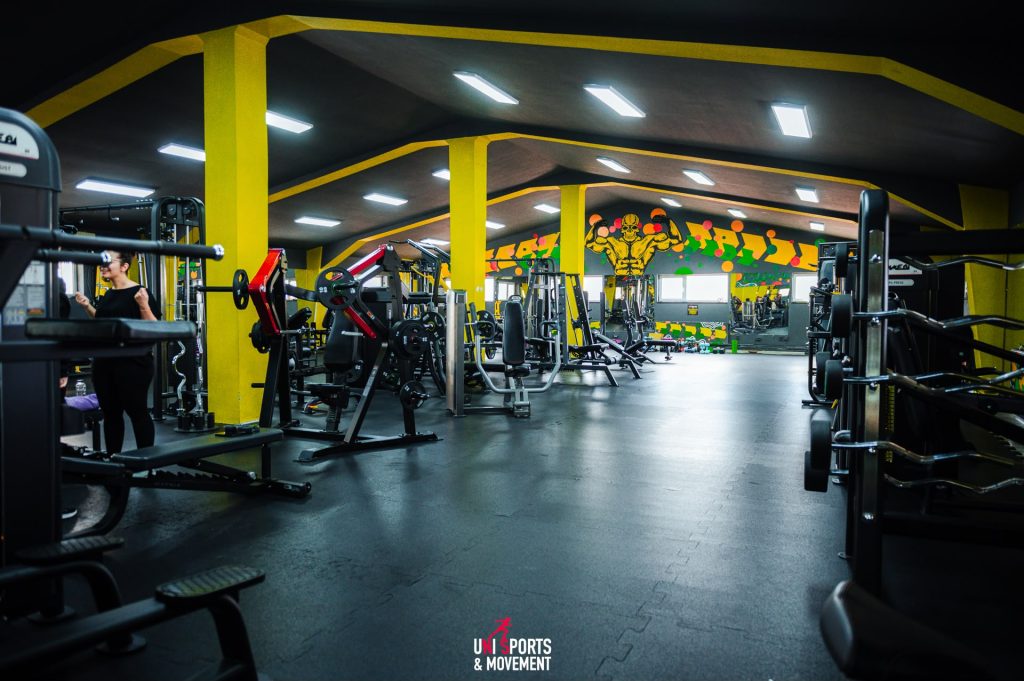
For us, satisfaction does not mean having no complaints at all, but having the ability to listen to them, respond quickly and avoid repeating the same problem.
C&B: The fitness industry is going through rapid changes. What trends do you think will redefine the market in the coming years?
Codrin: I believe three directions will matter greatly: flexibility, automation and closeness to the customer.
People will want fast access, digital payments, mobile apps, more options and the ability to work out close to home or their workplace.
We will see more automated gyms, with turnstile access and more efficient operational structures. This will make it possible to develop smaller, “gymbox”-type locations directly in neighborhoods where a very large club would not be sustainable.
At the same time, equipment quality will matter more and more. Customers are better informed and are beginning to recognize the differences between types of equipment. It will no longer be enough to have a lot of machines; what will matter is how well they are selected and adapted to the community.
Corporate platforms will continue to bring operators volume, but I believe gyms must also maintain their own customer base. Excessive dependence on a single intermediary can become a risk.
Digitalization will make operations more efficient, but it will not eliminate the human element. People will continue to choose places where they feel good and feel that they belong to a community.
C&B: What strategy do you have for future expansion, and how do you ensure that growth remains sustainable?
Codrin: The strategy is to gradually build a well-positioned Romanian fitness network, first consolidating Bucharest and later expanding the model to other cities.
The next stage is Uni Sports Titan, the network’s fourth location. For this project, we have built a strategic partnership with Wellness Solutions INC, a distributor of professional fitness equipment and representative of several major international brands, such as Nautilus, Star Trac, Freemotion, StairMaster, Throwdown, BH Fitness, Toorx and Schwinn.
Through this partnership, we aim to open the first official Nautilus center in Romania in Titan. We want this location to raise the Uni Sports standard in terms of equipment and training experience, without giving up our core principle: quality fitness at an accessible price.
In the long term, the partnership allows us to choose the right equipment configuration for each type of location, depending on its size, community and budget.
However, we do not want to open gyms simply to increase their number. Every project must have an area with real potential, sustainable rent, an investment proportionate to the local market, a realistic break-even point and sufficient liquidity for the stabilization period.
We analyze every location through pessimistic, realistic and optimistic scenarios. If a project only works in the optimistic scenario, the risk is too high for me.
At the same time, we are standardizing procedures and building teams capable of making decisions without every situation depending on me. For Uni Sports to become a valuable and scalable business, locations must operate on the basis of clear systems, responsibilities and indicators.
We will use automation wherever it reduces costs and simplifies the customer experience, but we will keep people in the areas where their presence creates value.
Our goal is not to become the largest network in the shortest possible time, but to build a healthy, profitable Romanian brand that is organized well enough to preserve its identity and quality as it expands.
The Uni Sports Gym story shows how a Romanian brand can build a different model in a competitive market: accessible fitness, commission-free collaboration with trainers, community involvement and an expansion strategy based on financial discipline.
With the opening of its fourth location and the preparation of the next stages of development, Uni Sports’ challenge is no longer simply to grow, but to turn that growth into a scalable and sustainable system.

 UK
UK
 IT
IT
 ES
ES
 DE
DE
 FR
FR
 RO
RO
 PT
PT
 HU
HU


