


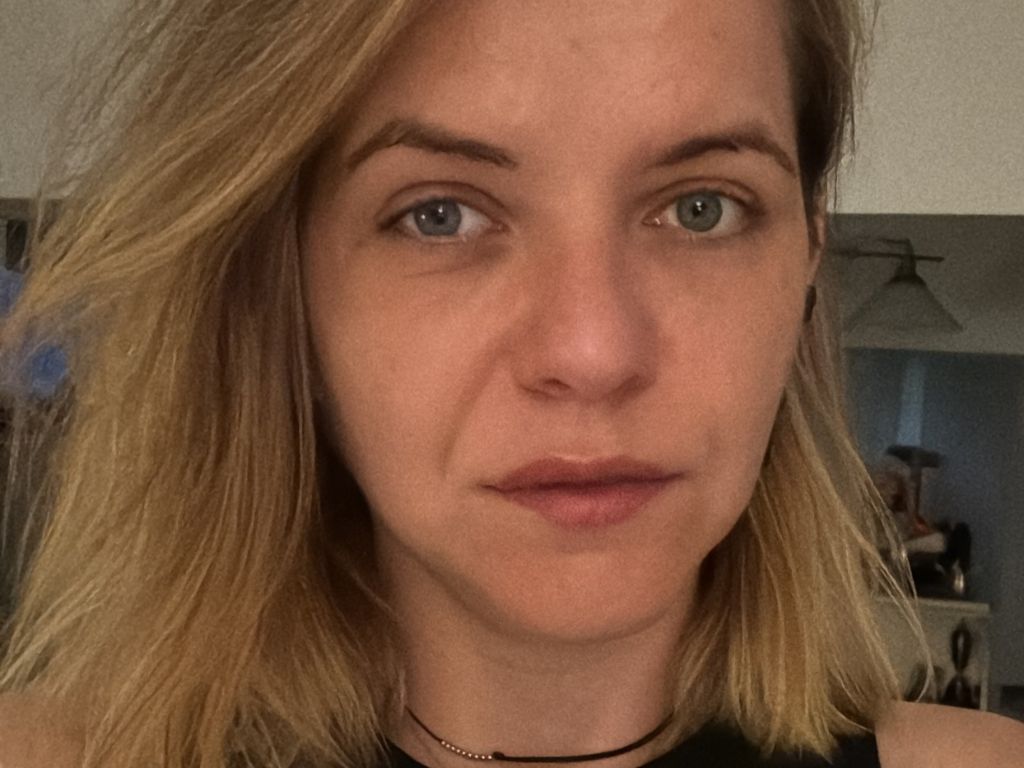
A conversation with Anca Mirona Constantinescu, founder of First Concept, about her journey in interior design, the balance between aesthetics and functionality, and how she creates spaces that are not only seen, but truly felt.
Anca Mirona Constantinescu is the founder of First Concept and an interior designer with a vision built around the balance between aesthetics and functionality. A graduate of the “Ion Mincu” University of Architecture and Urban Planning in Bucharest, she shaped her professional path guided by authentic ambition and a deep passion for beauty and visual expression.
Drawn to art, aesthetics, and organization since childhood, she chose to follow a path that reflects not only competence but also a genuine connection to what she creates. Guided by the belief that she cannot create things she does not truly believe in, she transformed this passion into an authentic professional direction, developing projects where every detail is designed with meaning, coherence, and emotion.
C&B: How did your journey in interior design begin and what drew you to this creative field?
Anca Mirona Constantinescu: I don’t think there was a single moment when I decided “this is what I want to do,” but rather a continuous thread that started in childhood. I was always drawn to art, harmony, and the idea of creating something that lasts—something tangible, that holds meaning over time. I like to believe that every time I shape a space, I leave a part of myself there, in a place that becomes “home” for someone else.
Initially, I chose a safer path and started studying Tourism Management. I was 19 and, realistically speaking, I didn’t believe I could build a career in the creative field. But along the way, I started to feel more and more clearly that I wasn’t in the right place—I found myself sketching and drawing even during classes. It was a very honest signal that I could no longer ignore.
I then decided to completely change direction and pursue architecture. It was a bet on myself, without guarantees, but a necessary one. After graduating, I consciously chose to start in the technical area, working as a custom furniture designer. It was an extremely important stage because it taught me how things actually work—materials, execution, limitations, and solutions. Later, after gaining experience, I took the step toward starting my own company. Looking back, every stage played its role in building what I do today.
C&B: What has been the most difficult moment in your journey so far and how did you overcome it?
Anca Mirona Constantinescu: The pandemic period was, without a doubt, the most difficult. I was just starting my business, still in the process of learning and adapting, and that context came with a lot of uncertainty and pressure.
It was the first time I truly felt a lack of control and constantly asked myself “what’s next?” I didn’t know whether projects would continue or if everything would come to a halt. In that moment, I chose not to refuse any opportunity and to keep moving forward, even without having all the answers.
It was a very intense period, during which I worked a lot, sometimes up to 14 hours a day, without real breaks. It wasn’t easy, but it helped me develop discipline, resilience, and the ability to function under pressure. It was the kind of experience that changes you and makes you more aware of how much you can actually handle.
C&B: Which projects or experiences have defined your style so far?
Anca Mirona Constantinescu: I believe that, in reality, my style is not defined by a type of project, but by people. Each client comes with a different energy, with distinct needs and expectations, and I like to build around them.
I always try to create spaces that represent them, not just spaces that look good. At the same time, I take into account the budget and the real limitations of each space—because good design must also be applicable, not just aesthetic.
There have been projects where I had complete creative freedom, and those were defining for me. Especially in the HoReCa sector and in clinic projects, where I was able to leave a clearer personal mark and explore concepts that truly represent me. That’s where you feel the difference—when you’re not just solving a space, but actually creating it from scratch.
C&B: If we met your team or collaborators, what do you think they would say about you?
Anca Mirona Constantinescu: I think they would say I’m a creative person who constantly tests her limits and tries to bring something different into every project. I’m involved and attentive to detail—sometimes maybe too attentive—but I believe that’s exactly where the difference is made.
At the same time, I enjoy working in a team and having real communication, not just formal exchanges. I believe that good projects come from collaboration, not from a single imposed direction.
And they would probably mention a more personal aspect—that I function much better after 9:30 in the morning. Until then, things move… a bit slower. :)))))))))
C&B: Is there a dream or ambition that has always guided you, regardless of obstacles?
Anca Mirona Constantinescu: It wasn’t a very clearly defined dream from the beginning, but there was always the desire to build something of my own—something authentic that represents me in the long term.
Over time, I realized that I don’t just want to create beautiful spaces, but spaces that convey a feeling. For me, a successful project is not just about aesthetics, but about that moment when you enter a place and feel that it represents you—that it “clicks” with you.
I think that’s actually my ambition—to create spaces that are not just seen, but felt.
C&B: What is the most important decision you’ve made that changed your trajectory?
Anca Mirona Constantinescu: The moment I decided to give up my initial path and move toward architecture was, without a doubt, the most important. It was a difficult decision, because it came with a lot of uncertainty and no guarantees.
The second important decision was starting my own company. That’s where the real part begins—when it’s no longer just about creativity, but also about responsibility, organization, and daily accountability.
These two moments defined me the most and pushed me completely out of my comfort zone.
C&B: How did you build your leadership style or the way you make decisions?
Anca Mirona Constantinescu: It’s a process I learned over time. In the beginning, I relied heavily on instinct, but experience taught me that it’s important to maintain a balance between intuition and analysis.
I learned to listen more, to consider the opinions of those around me, and not to rush decisions. At the same time, I learned to fully own them, even when they are not the easiest ones.
I believe my style was shaped by real experiences, mistakes, and a constant desire to evolve and do things better from one project to the next.
C&B: How would you describe your design style and what sets you apart?
Anca Mirona Constantinescu: I don’t believe in a rigid style, because every project comes with a different story. My style is more about balance—between aesthetics and functionality, between the client’s wishes and the reality of the space.
I don’t try to impose a style, but to discover it together with the client. I believe good design is the one that represents you, not the one that follows a trend.
What sets me apart is attention to detail and the way I think of each project as a whole. Because, most of the time, details are what transform a space from “okay” into something memorable.
C&B: What does a typical day look like for you?
Anca Mirona Constantinescu: I don’t think there is a typical day in the classic sense. Every day is different and comes with its own challenges—from client meetings to working on concepts or visiting construction sites.
I enjoy this dynamic because it keeps me connected to all stages of the project. The most satisfying moments are when I see an idea starting to take shape in reality.
But beyond that, the most important moment remains when the client sees themselves in the final space. That’s when I feel the whole process made sense.
C&B: What values guide you?
Anca Mirona Constantinescu: Authenticity is the most important to me. I can’t create something I don’t truly believe in.
Beyond that, I’m guided by integrity and attention to detail. I try to maintain them in every project, even when it would be easier to choose the quicker option.
I believe the real difference is made exactly in these small things, which, put together, define the quality of a project.
C&B: What does your working process look like?
Anca Mirona Constantinescu: Everything starts with a conversation where I try to understand the person, not just the space. I find it essential to understand the client’s lifestyle, needs, and expectations.
Then comes the concept phase, visual development, selections, and finally implementation. It’s a process that may seem simple on the surface, but in reality involves many adjustments.
What matters is that, regardless of changes, the initial direction remains coherent and the final result reflects both the vision and reality.
C&B: What are the most common mistakes people make without a specialist?
Anca Mirona Constantinescu: The most common mistake is the lack of an overall vision. People choose elements that look good individually, but don’t work together.
Functionality is also often ignored. A space shouldn’t just look good—it needs to be easy to live in and respond to real needs.
From my experience, the biggest problems appear in the details—proportions, lighting, materials. Exactly where they are not immediately visible, but where the difference is felt the most.
Anca Mirona Constantinescu’s journey is defined by the courage to follow her intuition and build, step by step, an authentic path. Beyond aesthetics, her projects speak of emotion, coherence, and attention to detail—elements that transform each space into a personal experience. For her, design is not just about how a place looks, but how it makes you feel.

 UK
UK
 IT
IT
 ES
ES
 DE
DE
 FR
FR
 RO
RO
 PT
PT
 HU
HU


