


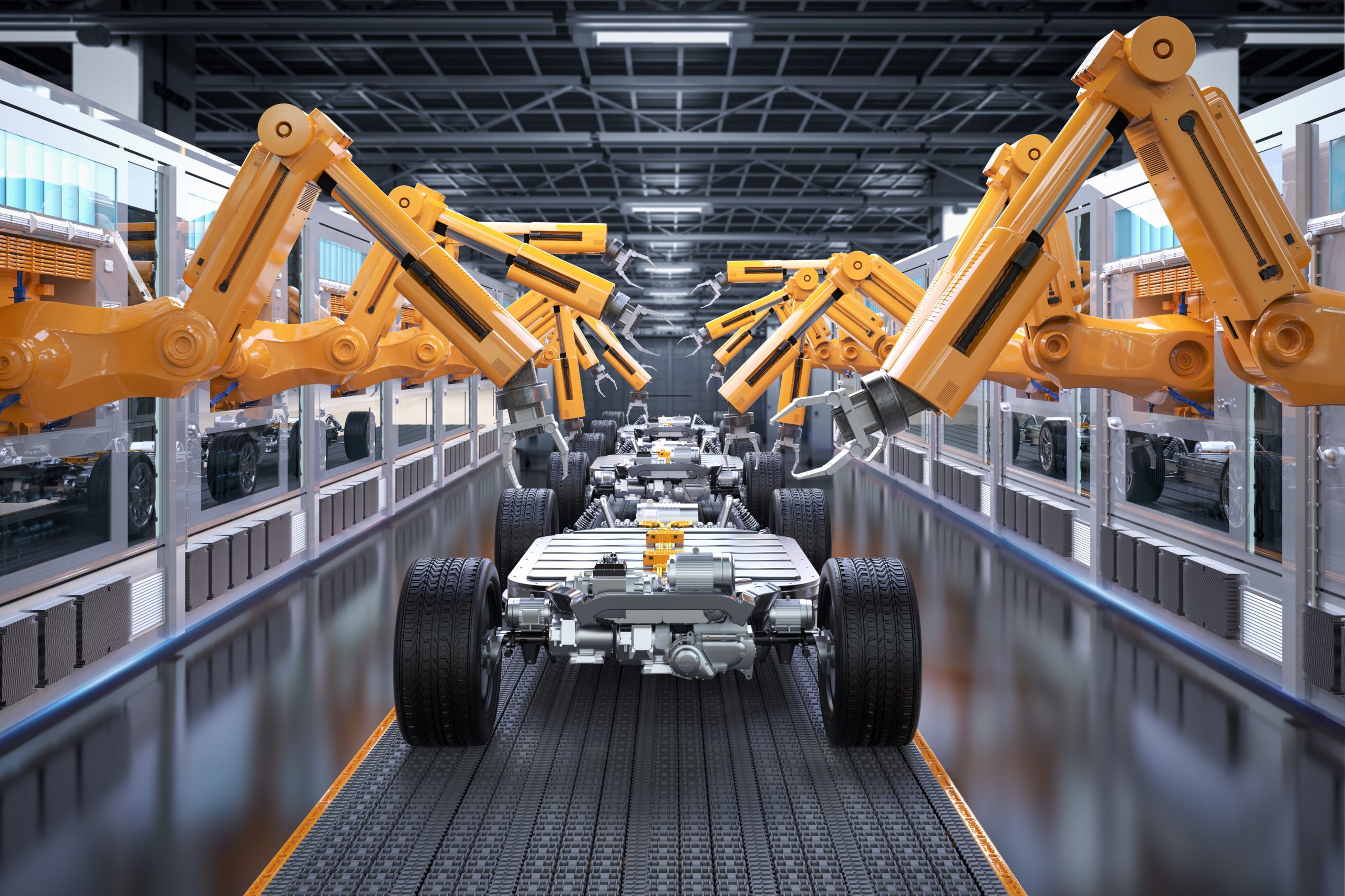
China and the US race toward total automation in auto manufacturing
The vision of a fully robot-run car factory is no longer science fiction. Driven by rapid advances in artificial intelligence and robotics, major automakers in China and the United States are investing heavily to become the first to achieve complete production automation, according to Automotive News.
A study by Gartner & Warburg Research suggests that at least one major automaker could open a fully robotic plant by the early 2030s. While automation levels have steadily increased over the years, no factory currently operates without human involvement. Reaching full automation requires ultra-advanced robots, powerful AI systems and a comprehensive digital twin of the plant, enabling all processes to be simulated and optimized before real-world deployment.
Read also: Schaeffler bets on humanoid robots and automation by 2035
The potential benefits are significant. A fully automated plant can operate faster, more efficiently and at lower cost. Vehicle design itself can be rethought, removing constraints imposed by manual labor and reducing development and time-to-market cycles.
According to analysts, either a US or a Chinese automaker is closest to reaching this milestone. Despite frequent references in the media to so-called “dark factories” in China, fully automated plants do not yet exist, although some areas—such as welding, painting and pre-assembly—already rely entirely on robots. Other global players are also investing heavily. At CES 2026, Hyundai unveiled plans to deploy Boston Dynamics robots in its factories and to manufacture around 30,000 robots per year. Mercedes-Benz, meanwhile, favors a human-robot collaboration model, with mixed teams expected to work together starting around 2030.
Automation could also benefit consumers. Accenture estimates that digital innovation and AI-driven robotics could cut vehicle development times by up to 50%. McKinsey estimates the economic potential of advanced automotive robotics at up to $150 billion. Still, workforce disruption remains a key concern. Experts argue that jobs will evolve rather than disappear, with reskilling and lifelong learning becoming critical as roles shift toward maintenance, AI supervision and advanced manufacturing support.
Photo: freepik.com

 UK
UK
 IT
IT
 ES
ES
 DE
DE
 FR
FR
 RO
RO
 PT
PT
 HU
HU


