


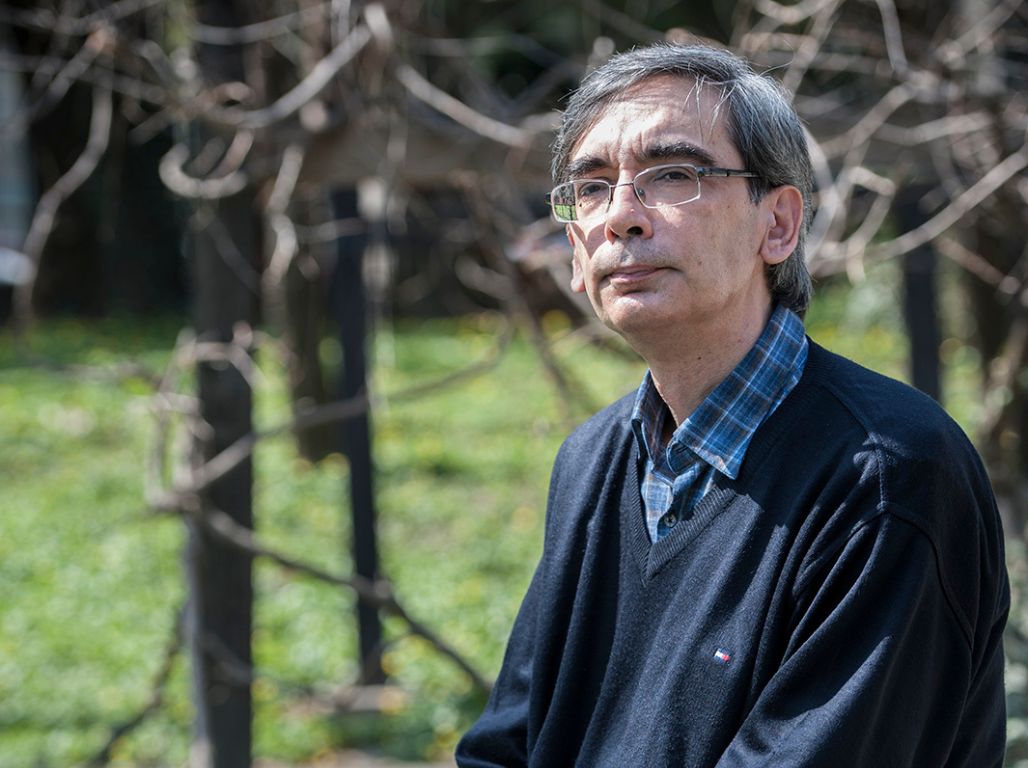
An interview with journalist and writer Petre Barbu, senior editor at “Forbes Romania,” about his beginnings in the press, the key moments of his career, the challenges he faced, the principles that guide him, and the importance of reading in an era dominated by technology.
Petre Barbu is a journalist and writer. He is currently a senior editor at Forbes Romania and a columnist for the newspaper Libertatea. He has 35 years of experience in the press. He made his debut as a reporter for the magazine Flacăra (1990), then worked for the publications Cuvântul and Capital. In 2007, he became a senior editor at the newspaper Adevărul. In 2009, he joined the editorial team of Forbes Romania.
C&B: If we were to look at a narrative thread of your career, what were the key moments that defined you?
Petre Barbu: The most important moment in my life happened in February 1990, when I gave up my engineering career and entered the press. At the time, I was a trainee engineer at IPEE Electroargeș in Curtea de Argeș. A friend from Bucharest told me that the editorial office of the magazine Flacăra was hiring. I didn’t hesitate for a moment, I got on the train the next day and went to the editorial office with my job application. Flacăra needed “fresh blood.” I was hired on the spot. Thus, I fulfilled my dream of becoming a journalist. In March 1990, I said goodbye to engineering and enthusiastically plunged into journalism.
Until 1989, as a student at the Faculty of Mechanical Engineering and as an engineer, I had written articles for the publications Orientări (Galați) and Viața studențească (Bucharest). I had also published short stories in Amfiteatru, Convorbiri literare, and other cultural magazines.
Therefore, the moment in February 1990 was decisive in my life. I believe I showed courage by giving up years of technical studies and choosing a liberal, stressful, and dangerous profession. I have no regrets. I followed my passion.
C&B: What has been the most difficult moment in your journey so far, and how did you overcome it?
Petre Barbu: In 1992, I was an editor at the magazine Cuvântul in Bucharest. It was a time of galloping inflation and political, social, and economic turmoil in Romania. My salary at Cuvântul simply wasn’t enough anymore. I lived through desperate moments. I didn’t know which way to turn or what to do to survive. It felt as though I had reached a dead end. In November 1992, I received a job offer from the financial-economic magazine Capital, which was just being launched in Romania as an investment of the Ringier press group (Switzerland). I hesitated for a while (about two weeks), because I had no financial-economic background and felt like an intruder, an impostor. Need and hunger eventually convinced me to enter the Capital newsroom. I began learning the basic concepts of finance and economics and grew together with the magazine and with capitalism in Romania. Capital was my second school. Moreover, I worked with competent people from whom I had a lot to learn.
C&B: Has there been a dream or ambition that has guided you throughout, regardless of obstacles?
Petre Barbu: My concern has always been to be honest. In journalism, I have always aimed not to lie and not to manipulate readers. Of course, I have made mistakes, small or large, but I made them either because I wasn’t paying enough attention, or I was in a hurry, or I didn’t approach the subject correctly. But I always sought the truth and tried to present it honestly, without arrangements or obscure maneuvers.
I never wanted to become “big,” “famous,” or “celebrated.” I tried to do my duty correctly, without forced publicity, without bragging for no reason. I wanted the results of my work to be what I desired them to be. For my work (articles, books, plays) to speak to the public, not for me to insist on promoting it. In the end, in this profession, what remains are the texts—how valuable, memorable, and relevant they remain in the public consciousness.
C&B: What were you like at the beginning of your journey, and how do you feel you have transformed until now?
Petre Barbu: At the start of my career as a journalist and writer, I was very enthusiastic. In my naivety, I believed journalism was the greatest profession in the world. Wrong! Over the years, the enthusiasm faded. What remained was the passion. More importantly, the faith remained. Without faith, there are no lasting or memorable things. Faith in what you do. Not arrogance, not pride, not obscure interests! Faith in my work has accompanied me throughout these three decades.
C&B: If we were to meet your collaborators, what do you think they would say about you?
Petre Barbu: I think they would say both good and unpleasant things. But I believe they would tell the truth about my work. I have made mistakes, done foolish things, written weak texts, behaved incorrectly—not out of malice or spite, but simply because I slipped in those moments. In general, I am open to any criticism. I don’t like being praised. I want my texts to be judged as if the author no longer existed.
C&B: What is the most important decision you have made that changed your trajectory?
Petre Barbu: Aside from the difficult moment in 1992, I have not lived through existential, life-or-death situations in my professional career. There have indeed been moments in journalism related to editorial decisions that either pleased or frustrated me, but with time, they lose significance. Journalism is a profession of the ephemeral. A piece of news lives very briefly, being swallowed up by the avalanche of news that follows it that same day.
C&B: How did you develop your leadership style or the way you make decisions? Was it a natural or learned process?
Petre Barbu: I only spent a few months as deputy editor-in-chief at Capital, so I cannot speak about a leadership career or experience. However, when I decide to write about a subject, I take into account the documentation I have done up to that point. Documentation is essential in journalism. Moreover, I must judge whether the result of that documentation is relevant to the public. In this way, I can say it was a learning process in which I had to be patient and curious. Yes, I have learned constantly to be attentive, patient, and not to fall into the barrel of… superficiality.
C&B: What does a typical day look like for you now, and what moments bring you the most satisfaction?
Petre Barbu: Every day I write news, articles, and I make sure to read books. Reading plays an important role in my life. Without reading, a journalist becomes stagnant. Books and culture make the difference in the press. Each good text that appears in the press is a joy. A brief one. I cannot “revel” for days after a successful article. A good article is a benchmark-one I aim to surpass with the next text. Of course, I don’t always manage to surpass myself. I have bad days, like anyone else. But the important thing is not to disappoint my readers. That is my biggest commitment: not to disappoint those who read me. That is why I am demanding with myself and with my texts. I don’t write something unless I believe in that idea.
C&B: What values or principles guide you in what you do, and how do you apply them daily?
Petre Barbu: Honesty, truth, good faith, documentation, and the belief that I am doing something useful for those around me.
C&B: If you were to send a message to people who follow your example, what would it be?
Petre Barbu: Read books! From any field. Reading makes the difference! Between two journalists who are equally well-prepared professionally, I choose the one who reads books, who has richer reading experiences. In an era dominated by Artificial Intelligence and social networks, books make the difference.
A profound dialogue with journalist and writer Petre Barbu about giving up engineering for a career in the press, the crises that shaped him, the principles that guide his work, and the role of reading in a career spanning more than three decades.

 UK
UK
 IT
IT
 ES
ES
 DE
DE
 FR
FR
 RO
RO
 PT
PT
 HU
HU


