


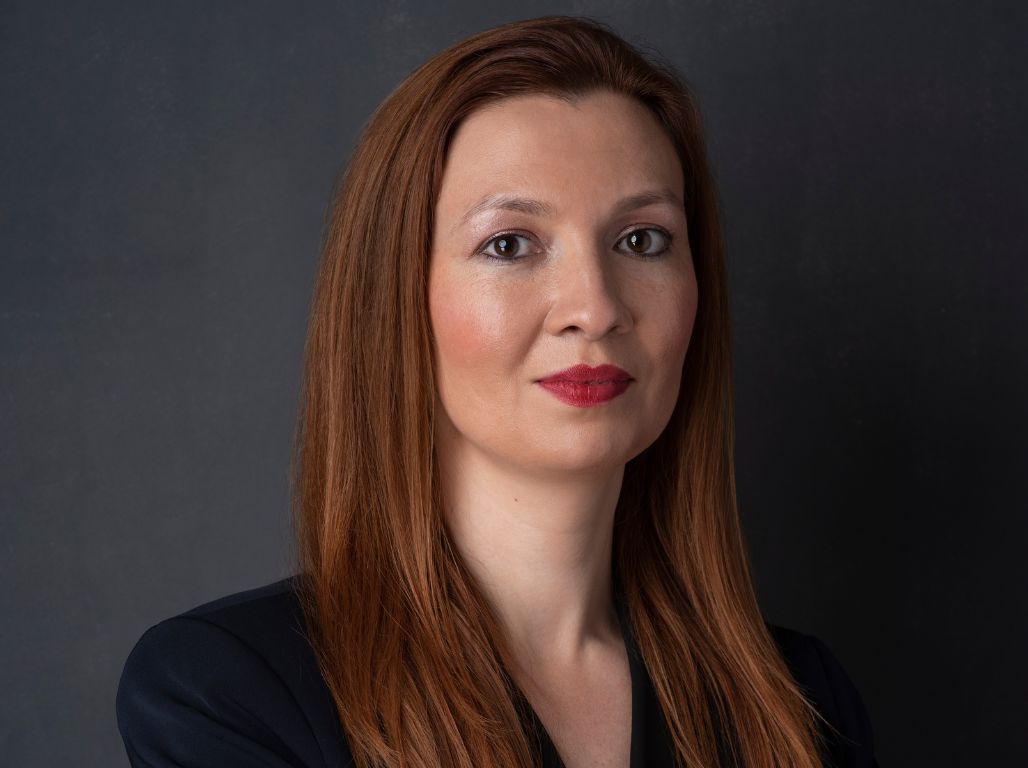
Interview with Ramona Tatarici, attorney at law and member of the Bucharest Bar, on her professional journey, legal leadership, malpractice cases, and the role of clarity in high-impact decisions.
C&B: If we were to look at a narrative thread running through your career, which key moments have defined you?
Ramona Tatarici: The narrative thread of my career is closely tied to the gradual assumption of responsibility and the clarification of my professional direction. I began with practical training in a law firm at a time when I already knew clearly that I wanted to become a litigation lawyer. Direct contact with case files and courtroom reality confirmed that this field suited me, as it involves legal reasoning, strategy, and the ability to manage situations with real stakes for individuals or companies.
Passing the bar admission exam was an important moment for me, not only as an academic achievement, but as validation of sustained effort. It confirmed that the work and discipline of the previous years had meaning.
Later on, establishing my own law practice was the step where I felt I brought together the experience accumulated up to that point and transformed it into a fully assumed project. I did not see it as a “final achievement,” but rather as the beginning of a stage in which responsibility toward clients and toward my own professional decisions became much more direct. Autonomy comes with rigor and with a constant need to learn and adapt.
C&B: What has been the most difficult moment in your professional journey so far, and how did you overcome it?
Ramona Tatarici: The most difficult moments in my professional journey are those in which the human stakes are extremely high, and medical malpractice cases are the clearest example. In such cases, we are not discussing only law or procedure, but real suffering, loss, trauma, and very high expectations from those involved. Clients often come after having gone through dramatic medical experiences and reach the lawyer as a last hope for clarification and, sometimes, redress.
These cases involve a dual challenge: on the one hand, the legal rigor required to build a solid case in a highly technical and evidence-driven field; on the other hand, interaction with a medical and institutional system that has its own defense mechanisms. There is, in reality, a battle on two fronts, legal and medical, and the balance between them is delicate.
I have managed these cases through extensive research, collaboration with specialists, and a clear distinction between empathy and legal analysis. Empathy is necessary to understand the client’s situation, but strategy must be built lucidly, on evidence and solid arguments. In such cases, there are no easy victories and no quick solutions. There is only serious work, patience, and honesty toward the client regarding the real chances of success.
These experiences have taught me that the lawyer’s role is not only to advocate a legal position, but also to bring clarity to a context that is both emotionally and technically charged.
C&B: Is there a dream or ambition that has always guided you, regardless of obstacles?
Ramona Tatarici: There is indeed a constant ambition that has guided me: to build a practice based on genuine competence and results that speak for themselves. I have always believed that a well-constructed legal solution is the best calling card for the next client. In this profession, reputation is not built through discourse, but through consistency and seriousness in every case.
I cannot pinpoint an exact moment when it all began, but I know that I wanted to become a lawyer from a very young age, around six or seven years old. It was a natural desire, without direct influence or a specific role model in my family. I simply felt that this profession suited me through its components of analysis, argumentation, and responsibility.
Over time, ambition did not translate into a desire for visibility, but rather into the desire to become a professional clients can rely on. Real satisfaction comes when you know your work has had a concrete impact on someone’s life or on the development of a business. In time, I came to understand that long-term stability and credibility are worth more than any isolated success.
In the long run, I aim to further develop a well-structured practice in the areas in which I already operate, with an emphasis on quality and genuine specialization.
C&B: What were you like at the beginning of your journey, and how do you feel you have transformed up to the present?
Ramona Tatarici: At the beginning, I was probably more focused on proving that I had mastered the theoretical aspects and that I could meet the rigor of the profession. This is a natural stage for any young legal professional. I wanted to learn as much as possible and not miss any opportunity to get involved in cases, even when the workload was very heavy.
At the same time, I was constantly aware that professional discipline and perseverance are key in this profession. I never viewed legal practice as a path to quick results, but as a long-term construction. I understood early on that every detail matters and that the way you handle a small case says a lot about how you will handle a major one.
Transformation came gradually, with experience. Today, I am more attentive to the essence of problems and to the strategy behind each decision. If at the beginning the focus was on doing a lot, now the focus is on doing things well and with purpose. Experience has taught me that it is not the volume of work that impresses, but the quality of decisions and consistency in approach.
I believe my professional evolution has been more a process of refinement than of radical change, the core values have remained the same, but the way I apply them has become more mature and nuanced.
C&B: If we were to meet your collaborators, what do you think they would say about you?
Ramona Tatarici: If you were to meet my collaborators, I believe they would say that I place great importance on seriousness, clarity, and honoring commitments. I ask for involvement and rigor in work, but I do so because I offer the same in return. I believe it is fair that the standards I have for others are the same ones I apply to myself.
They would probably also say that I am direct and solution-oriented. In legal practice, ambiguity or postponing decisions does not help anyone, and my collaborators know that I prefer honest discussions and realistic assessments of situations.
At the same time, I think they would note that I take responsibility for the projects I am involved in and that I do not treat matters superficially. I try to create a working framework in which everyone knows what they have to do and why their contribution matters. For me, professional collaboration means mutual trust and clear standards, not just a division of tasks.
C&B: What is the most important decision you have made that changed your trajectory?
Ramona Tatarici: The decision to establish my own law practice was undoubtedly the turning point in my professional trajectory. It was the moment when I moved from building experience within existing structures to fully assuming responsibility for my professional direction and for the relationship with each client.
It was not an impulsive decision, but one that came after a period of accumulation and reflection. I felt it was the natural step that would allow me to work in the way I believe in: with attention to detail, time dedicated to analysis, and genuine involvement in every case. Having my own practice means professional freedom, but also much greater responsibility, toward clients, reputation, and the standards you set for yourself.
It was also the moment when I truly felt I had built something of my own, as a result of the work and path up to that point. Not as a “final destination,” but as an important stage in a long-term construction. I see this construction as a continuous process of development and specialization, adapted to clients’ real needs and to the evolution of the legal environment.
This decision changed my perspective on the profession: I began to view legal practice more in terms of strategy, continuity, and professional relationships based on trust. It is a step that matures you professionally and clarifies your values.
C&B: How did you develop your leadership style and decision-making approach? Was it natural or learned?
Ramona Tatarici: My leadership style and decision-making approach were built over time, through experience, rather than naturally or intuitively. Law school provides a theoretical foundation, but it does not prepare you for decisions that can have major economic impact on a company or serious personal consequences for a client. These things are learned in practice.
Perseverance and seriousness have been constants in my way of working from the very beginning. I have treated every project and every case as a real responsibility, not merely a professional task. Over time, this way of working became part of my decision-making style.
Continuous analysis is probably the central element. I form my decisions based on available information, risk assessment, and long-term consequences. I do not believe in rushed decisions, especially in the legal field, where effects can be difficult to reverse. Often, the process involves weighing several scenarios and choosing the most sustainable option, not necessarily the fastest one.
There have also been situations from which I learned what I would do differently next time. I consider these moments essential to professional maturity. My style was thus shaped gradually, through practice, reflection, and a constant desire to improve the way I manage responsibilities toward clients.
C&B: What does a typical day look like for you now, and which moments bring you the greatest satisfaction?
Ramona Tatarici: A typical day for me is usually well structured and divided between court or prosecutor’s office activity and analytical and preparatory work at the office. The first part of the day is often dedicated to court hearings, examinations, client meetings, or specific legal consultations. This is the part of the profession where the pace is intense and where you must be present, focused, and adaptable.
The second part of the day is most often reserved for preparing cases for the upcoming period: case analysis, drafting, strategic assessment, and research. This work is less visible from the outside, but essential to the quality of legal representation. Good courtroom results are, in fact, built during these hours of preparation.
The moment that brings the greatest satisfaction is not necessarily the end of a trial, but the client’s reaction when they feel heard, understood, and properly represented. Appreciation from a client, especially after a difficult journey, is confirmation that the work invested had meaning. For me, this remains one of the most valuable forms of professional validation.
C&B: What values or principles guide you in what you do, and how do you apply them day to day?
Ramona Tatarici: The value that guides me most is professional responsibility toward the client and toward the consequences of each legal decision. I believe that in legal practice, trust is built over time and is based on transparency. That is why I strive to offer clients an honest assessment of their legal situation, even when the circumstances are not in their favor.
I do not promise impossible outcomes, nor do I downplay risks merely to create short-term comfort. Experience has shown me that a well-informed client makes better decisions and can consciously assume the chosen strategy. The lawyer’s role is not only to support a case, but also to provide clarity in a context that is often complex and emotionally charged for the client.
I apply these principles daily through the way I prepare cases, through attention to detail, and through constant communication with clients. I try to maintain a balance between empathy and objectivity: understanding the human stakes of each situation, while building strategy on solid legal arguments.
Essentially, I believe that seriousness and consistency in small things inevitably reflect in major results. These values are not merely declarative principles, but practical benchmarks by which I organize my daily work. I have learned that sometimes the lawyer’s role is to tell the truth the client does not want to hear, but needs to know.
C&B: If you were to convey a message to those who follow your example, what would it be?
Ramona Tatarici: If I were to convey a message to those who wish to pursue this path, I would say that it is essential to genuinely love what you do. Legal practice is not a profession you can perform well out of inertia or purely for material reasons. It requires real involvement, emotional investment, and constant responsibility toward people and toward the consequences of your decisions.
I also believe that a lawyer must, to some extent, be a good “psychologist” for their own client. Many clients come to a lawyer during tense or difficult moments in their lives, and the ability to listen and understand the human context of the situation is important. At the same time, the lawyer must remain the point of balance, the one who brings the discussion back into the rational and legal realm, offering clear and realistic guidance.
The profession is not about spectacle, but about sustained work and responsibility. Reputation is built over time and can be easily lost. Ultimately, I believe that law is a profession in which you cannot cut corners in the long run, work, seriousness, and reputation are what endure. In legal practice, time always confirms who has built on substance and who has built on appearances.
Ramona Tatarici’s professional path reflects a legal approach grounded in rigor, accountability, and clarity. Through a practice built on competence and responsibility, legal counsel becomes a process of lucid guidance within a complex legal landscape, where well-reasoned decisions make a long-term difference.

 UK
UK
 IT
IT
 ES
ES
 DE
DE
 FR
FR
 RO
RO
 PT
PT
 HU
HU


