


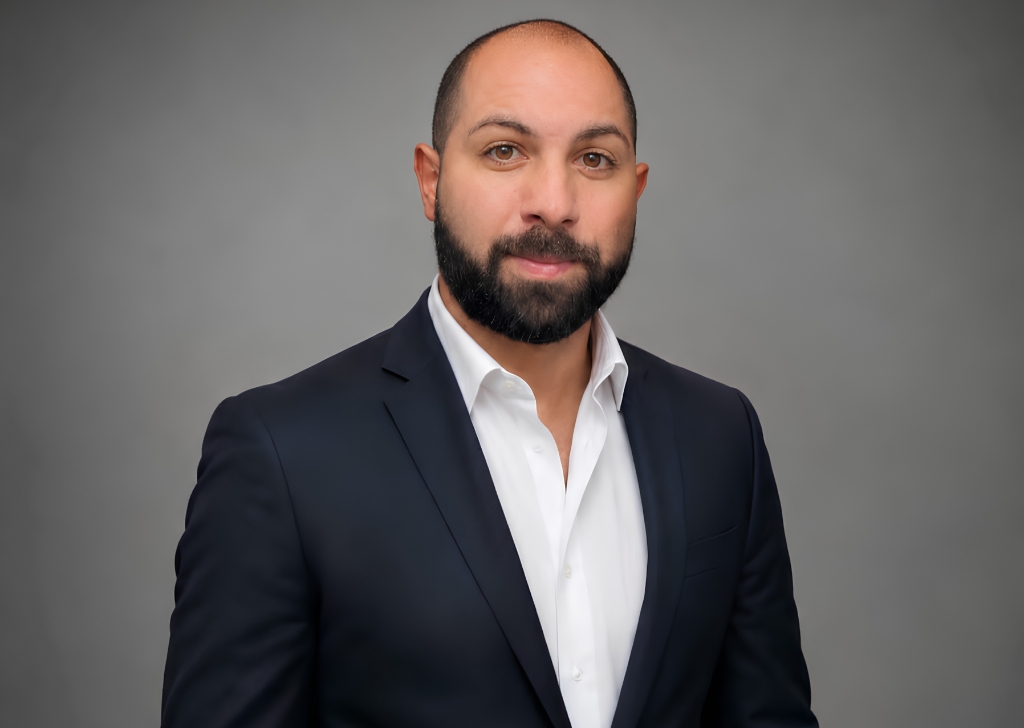
The founder of OBSwim and co-initiator of Kzilla talks about EroulMeu.ro and building Synterra, the digital ecosystem in development for organizations working with children, young people, and families.
Cătălin Obretin is the founder and director of the OBSwim Sports Club Association, co-initiator of the Kzilla festival and the EroulMeu.ro project, a cultural and digital project built around storytelling, as well as the founder of Synterra. His story begins in performance sports, where he learned that a result is not built in a single day, but through hundreds of small choices, repeated until they become character. Later, working directly with children, he noticed that their development follows the same rule. A child may go to school, play sports, attend a cultural workshop, or participate in a volunteering project, but each of these worlds sees them for only a few hours and from a single perspective. The experiences accumulate, but they are rarely connected into a journey that shows them who they are, what they can become, and where they need support. From this observation came his entrepreneurial vision: to build an ecosystem that connects these stages, transforms isolated participation into real progress, and accompanies children step by step toward adulthood. Not with the promise of a life without mistakes, but with the opportunity to have reference points, people, and tools that help them become autonomous, responsible, and aware of the value they can bring to their community.
C&B: What is the mission you have taken on through your work?
Cătălin: My mission is to help children build a path that has meaning and continuity.
A child goes to school, plays sports, takes part in a cultural workshop, or participates in a community project. In each of these places, someone sees a part of them. The teacher knows their results, the coach observes their discipline and relationship with effort, the family knows their fears, while a cultural experience may bring their creativity to the surface. Most of the time, these observations remain separate.
I encountered this disconnect in our projects as well. Children were having valuable experiences, but after each stage, they seemed to start again from zero. What they had discovered about themselves, how they had progressed, and sometimes even the opportunity that should have followed was lost.
Through OBSwim, I understood how much sports, discipline, and a sense of progress can change the way a child sees themselves. Through Kzilla, I saw what happens when you give them the freedom to experiment, meet specialists, and discover fields they might not normally have access to.
EroulMeu.ro takes this vision into the area of culture, identity, and creative exploration. It is a project currently in development, built around the idea that a child can become an active part of a story, use their imagination, and begin to better understand who they are.
Synterra was born from the desire to gradually create a thread connecting these experiences. A thread that preserves the meaning of the journey they have taken and makes visible their results, effort, courage to try again, and the things they are beginning to discover about themselves.
All our projects start from the same belief: a child cannot be reduced to the grade in their school report, the time achieved in a race, or the position they hold in a ranking. It is important for them to discover what motivates them, what they enjoy, where they feel valuable, and in which direction they can build their own path.
This mission is also about access. There are children with extraordinary potential who do not reach sports, culture, mentoring, or other educational experiences because they do not have the information, resources, or the right person beside them at the right moment.
I want us to contribute to raising young people who understand who they are, what they can do, and what value they can bring to those around them. For me, this is the most important form of achievement.
C&B: What is the most important problem you see today in the field in which you work, and how do you believe it can be solved?
Cătălin: The most important problem is the lack of continuity.
We are not lacking good people or valuable initiatives. We have schools, clubs, NGOs, and specialists producing results. Yet, once a project ends, we are often left with a list of participants, a few photographs, and a report. We know how many children attended, but we know much less about what changed for them and what should come next.
I understood this limitation through Kzilla. The project reached 16,400 participants and 63 workshops. I saw children who, within a few hours, discovered something new, gained confidence, or gained access to a different experience for the first time. The energy was there, and the immediate result was visible. After the event, however, it was very difficult to find out how many continued, what skills they had discovered, or what the next suitable opportunity for them would have been.
The same problem existed in sports activities. The coach had their observations, the parent knew about the child’s changes, while the organization had data about attendance, bookings, and results. The information was divided between conversations, spreadsheets, documents, and different systems.
When you work with many beneficiaries, good intentions are no longer enough. Information gets lost, errors appear, and too many things end up depending on the memory of a few people.
At first, we tried to address each need with a different tool: a spreadsheet, a form, a scheduling app, or a messaging group. Some worked for the specific problem they had been chosen to solve, but they did not communicate with one another. I learned that simply digitizing a weak process does not automatically make it better. Sometimes it just moves the disorder from a folder onto a screen.
This experience led to Synterra. Synterra is the digital ecosystem we are building to gradually connect the activities of organizations with the educational, sports, cultural, and social experiences of children and young people.
What we currently have is an MVP, a first functional version through which we are testing part of this vision within OBSwim’s activities. The MVP does not represent the entire ecosystem or its final form. It is the first concrete step through which we are checking whether the idea works in a real environment.
The first version is being tested within OBSwim’s current workflows, in the relationship between the organization, team, members, and families. We are looking at whether it can reduce administrative errors, simplify workflows, and provide a clearer picture of scheduling, attendance, and activities. For now, these are the objectives we want to measure, not results we can claim.
Testing shows us what needs to be kept, simplified, or abandoned. Some features we considered secondary have proven more useful than much more ambitious ideas.
If this stage produces the results we are pursuing, the next step will be to test certain components together with other clubs, NGOs, and educational organizations. We do not want to force organizations to work in the same way. We need to see whether we can build a common foundation that is flexible enough for different realities.
The true measure of success is not only how many children have gone through a project. It is how many moved forward because of that experience, how many discovered a skill, and how many found the next door that was open to them.
We need to move from counting participation to understanding journeys.
C&B: What is the most valuable lesson you have learned throughout your experience and that you believe is worth passing on?
Cătălin: The most valuable lesson I have learned is not to let other people’s “no” become my “no.”
Performance sports shaped me in this way. It taught me that a result that is not what you expected is not a sentence. It is an experience from which you need to understand what did not work and what you need to change. Some people learn from other people’s mistakes. I have mostly learned from my own mistakes.
Kzilla is the example that best expresses this lesson. The project started from an idea that I developed together with Radu Mateescu. Initially, we were supposed to organize it in a different context, but things evolved differently from what we had imagined. Instead of giving up, we chose to continue on our own and build the event in the form we believed in.
There were approximately two weeks left until the scheduled date of the event. It was just the two of us, without the initial framework, without the resources we had relied on, and with only the idea we believed in.
We looked at each other and asked ourselves: “Can we do it ourselves?” The answer was “yes.”
At that moment, other people’s “no” became our “yes.”
Within two weeks, we organized the first edition of Kzilla, starting almost from scratch. It was not perfect, and I learned an enormous amount along the way, but the project grew and reached 16,400 participants and 63 workshops.
This result does not mean that we were right in every decision. It means that we were willing to listen to reality, correct what was not working, and continue without losing sight of the reason why we had started.
This is also where the difference between perseverance and stubbornness lies. Perseverance does not mean repeating the same solution endlessly. It means keeping the direction while having the courage to change the path. Listening to criticism, acknowledging when you are wrong, and rebuilding without allowing others to decide for you how much the dream you believe in is worth.
Sports taught me that performance is also built on days when you are tired, results are delayed, and those around you tell you that perhaps it cannot be done. Sometimes a dream requires more time, more sacrifices, and more patience than you anticipated. It is not enough to believe in it today. You must be prepared to believe in it five years from now as well.
However, I also learned that perseverance does not mean putting projects before people, regardless of the circumstances. This year, we chose to put Kzilla on hold for personal reasons. Family was more important than an event or a professional goal.
A pause does not mean giving up. It means stopping, understanding what we need to change, and returning with a stronger project that is closer to the values we want to pass on to children.
The lesson I would pass on is simple: listen, verify, learn, and adapt, but do not abandon your dream just because someone else cannot see it yet.
And if I had to describe myself in one word, I would say without hesitation: perseverance. Not because I have never fallen, but because I have chosen, every time, to get back up and continue.
C&B: If you had the opportunity to change just one thing in Romania, what would it be and why?
Cătălin: If I could change just one thing in Romania, I would change the way we build for the long term.
We have good ideas, valuable people, and initiatives that start with energy. However, too many of them depend on one person, one term in office, one source of funding, or the enthusiasm of a particular moment. When one of these conditions disappears, the project stops and we start again from zero.
Romania does not lack beginnings. It lacks continuity.
We change leadership, teams, and priorities, and with them we lose processes, relationships, and experiences that had begun to work. Instead of improving what already exists, we tend to erase and rebuild. We consume energy repeating stages that others have already gone through.
A good project should be able to continue even if the person who initiated it changes. A program for children should not disappear when funding ends. An organization should not lose its experience when an important person leaves.
I would like us to build with the understanding that valuable things need to last longer than our momentary enthusiasm. This requires clear processes, organizational memory, responsibility, and patience. It means leaving behind something that those who come after us can understand and carry forward.
Sports taught me that performance does not appear after a single training session. The same is true in entrepreneurship, education, or public administration. Important things need time, consistency, and the ability to correct without destroying everything that was built before.
If we managed to transform good initiatives into structures that continue, we could use more energy to grow what already works instead of constantly starting over.
C&B: How can we work together to help people, companies, and communities develop better?
Cătălin: We can help more effectively when we give up the idea that everyone has to solve everything on their own.
Companies, NGOs, institutions, and communities have different resources. Some have capital, technology, or access to networks. Others know the field very well and can say what actually works in real life.
The best results in our projects have emerged when each partner had a clear role. We brought direct experience working with children and implementation expertise. Institutions provided access and legitimacy. Specialists brought expertise, while private partners made expansion possible.
We need to move away from the model in which a company provides money, the NGO implements the project, and at the end everyone receives a report. A company can bring expertise, technology, mentors, and access to people. An NGO can turn an idea into a program that works. An institution can create continuity and take a successful pilot to a larger scale.
The question we should ask ourselves is simple: what remains in the community after the project ends?
Do better-prepared people remain? Does a solution remain that can be used again? Does a relationship between partners remain, or only a one-off activity? If nothing remains, we probably have not built well enough.
Our projects are at different stages, but they are part of the same direction. OBSwim is where we work daily with families and test real processes. Kzilla showed us that we can build educational experiences for a large audience, while EroulMeu.ro takes this experience into culture and storytelling. Synterra is the framework through which we want to gradually connect what we learn from all these projects.
For companies, social involvement can become an investment in the people and skills that communities will need several years from now. A child who learns discipline, empathy, and responsibility today will carry these qualities into their profession and relationships with others later.
Partnerships must be sincere. Not every idea works, and some need to be changed or stopped. We must be able to say what worked, what did not work, and why. We need to test, listen, and expand only what has demonstrated its value.
People and communities must be listened to and involved in the solutions that concern them. Otherwise, we risk building projects that are very well presented but do not solve the problem for which they were created.
I believe good partnerships begin when everyone honestly says what they can bring to the table and what they still have to learn. We know the problem from the field and have a real environment in which we can test solutions. This is where any serious construction should begin.
A project built around children starts with an idea, but grows through continuity, collaboration, and perseverance. The story of Cătălin Florin Obretin, from OBSwim and Kzilla to EroulMeu.ro and Synterra, shows how sports, education, culture, and technology can be connected to create experiences with a real impact.

 UK
UK
 IT
IT
 ES
ES
 DE
DE
 FR
FR
 RO
RO
 PT
PT
 HU
HU


