


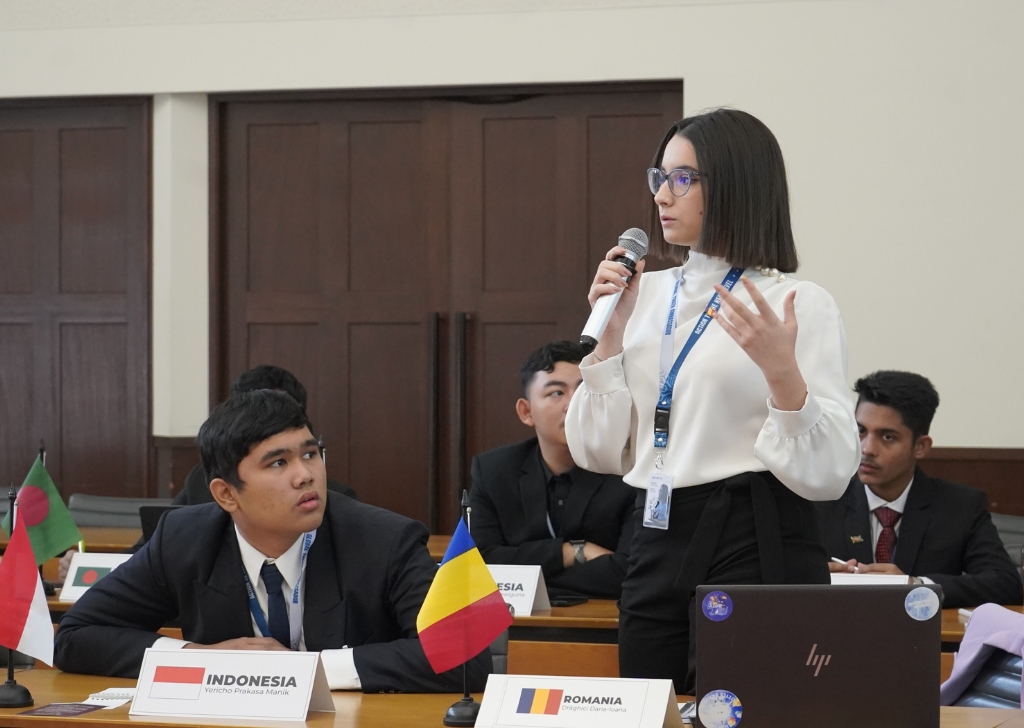
Daria Drăghici, founder of STEP and LittleBrave mentor, discusses robotics, leadership, STEM education, AI, entrepreneurship, and creating real impact for young people.
At just 17 years old, Daria Drăghici is the founder of the Association We Change Time with Energy and Progress (STEP), mentor of the LittleBrave robotics team, and a member of the BraveBots team. Through the projects she develops, she aims to bring young people closer to technology, leadership, and STEM education, building initiatives that create real change in the community.
C&B: How would you describe yourself in a single sentence, so as to capture the attention of someone who does not know you?
Daria: I am the kind of person who, when she sees a problem, does not ask who should solve it, but starts building a solution.
C&B: If you look back, what is the “common thread” that has guided your professional journey?
Daria: Paradoxically, it all started by chance.
I signed up for the LittleBrave recruitment because my younger brother wanted to participate, but he was too young to apply. I did not have high expectations, nor did I think that robotics would become such an important part of my life.
After the first test, I achieved a very good result and made it to the interview. At that point, I told myself that, since I was already there, I wanted to give it everything I had. I joined the team as a non-technical leader, and the responsibility I was given at 13–14 completely changed my perspective.
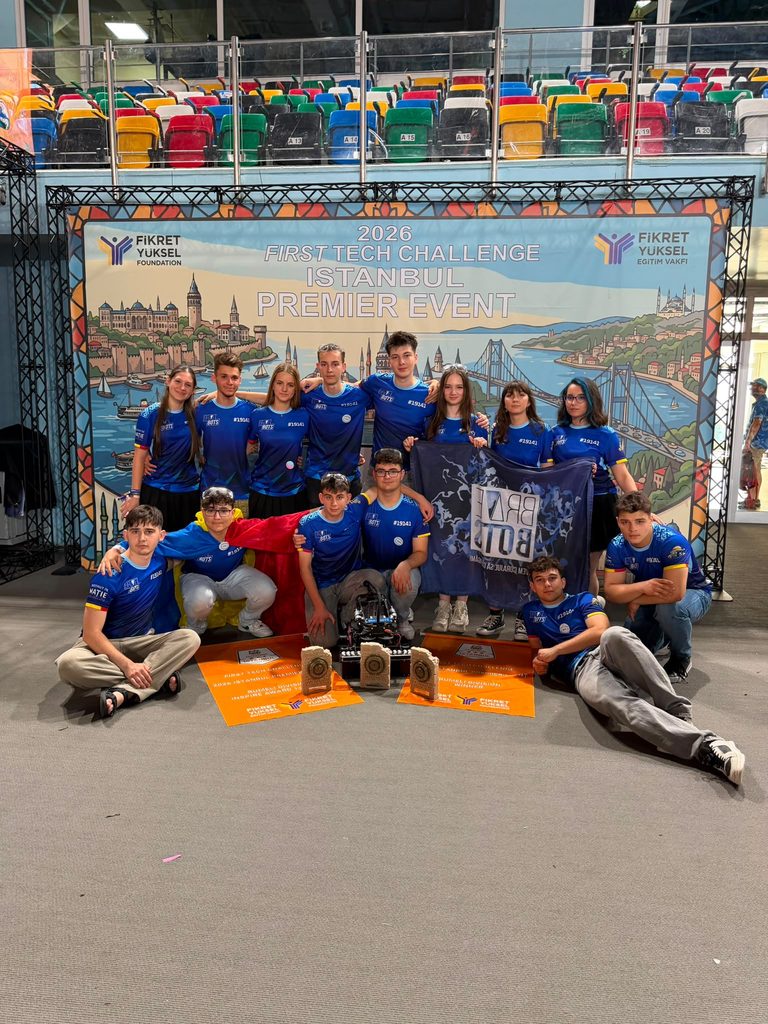
Looking back, I realize that the common thread was not robotics. It was the choice to make the most of every opportunity I was given. From LittleBrave I moved on to BraveBots, and later I founded STEP. Each stage made me want not only to participate in projects, but to create contexts in which other young people could grow as well.
C&B: What was a difficult moment or failure that truly changed you?
Daria: At first, I believed that if you worked hard enough and had a good idea, things would work out on their own. I discovered quite quickly that this was not true.
I had projects in which the technical side was well developed, but communication, organization, and team coordination were not at the same level. The result was that the impact was much smaller than we had imagined.
It was frustrating, but also one of the most important lessons I have learned. Today, I invest just as much time in people, planning, and partnerships as I do in developing a project. A good idea changes nothing if you fail to build the right team and context around it.
C&B: What is a bold (or counter-intuitive) decision that significantly influenced your trajectory?
Daria: In ninth grade, I had to choose between moving to FTC with BraveBots or staying for another season as a leader at LittleBrave in FIRST LEGO League.
Many people told me that the logical choice was to move forward. And they had good arguments. If I had taken that step, I would have even participated in the European Championship.
However, I felt that I still had something to build at LittleBrave and chose to stay. It was one of the hardest decisions I have made so far.
Looking back, I think it was also one of the best. That year gave me the time and experience needed to start developing the WaveMotion project and shaped my desire to create STEP. I lost an important opportunity, but I gained a direction.
C&B: How have you changed over time as a leader / professional?
Daria: The first time I was put in a leadership position, I was 13–14 years old. I was convinced that a leader had to know everything, solve everything, and always be one step ahead of everyone.
Today, I no longer believe that.
I have understood that leadership means, first and foremost, creating an environment in which others can evolve. I am still demanding and I still like things to be done well, but I have learned to trust people more and accept that I do not have to control every detail.
I think the biggest change is that today I enjoy the team’s achievements more than my own results.
C&B: What do you think the people who work directly with you say about you — beyond your public image?
Daria: Probably the first thing they would say is that I am strict. Sometimes even too strict. I have high standards and find it difficult to accept superficiality, and that can be difficult for those who work with me.
At the same time, I think they would also say that I am one of the first people they come to when they have a problem. Not only related to a project, but also with school, family, or personal matters. I try to be there for people when they need help.
I do not believe that a leader has to be liked by everyone. I believe they have to be fair, consistent, and close enough to people so that they know they can trust them.
C&B: What truly differentiates you in the way you build or lead?
Daria: I try to build projects that continue to produce effects even after the event or competition has ended.
I am not only interested in the immediate result. I am interested in how many people have learned something new, how many have gained the courage to start their own projects, and how many will pass on what they have received. If a project ends with the last photograph, for me, it has not truly achieved its purpose.
C&B: How has the current context (technology, AI, the economy) changed the way you work?
Daria: Technology and artificial intelligence have changed my pace of work considerably. Processes that used to take me several hours can now be solved in a few minutes.
However, I believe that value no longer lies in access to information, but in the ability to ask the right questions, filter information, and make good decisions. AI is an extraordinary tool, but it cannot replace responsibility, creativity, or empathy.
C&B: Is there a habit or routine that has significantly influenced your performance?
Daria: I am quite a workaholic and I admit it without hesitation. If I am passionate about a project, I can work for hours without realizing how much time has passed. My best ideas often come to me in the evening or at night.
That is precisely why, lately, I have started imposing breaks on myself. I have a simple rule: between 4:00 and 5:00 p.m., I am not allowed to work. That hour is reserved exclusively for relaxation. It may seem like little, but for me it is an exercise in discipline.
I have realized that I do not perform better when I work continuously, but when I manage to preserve my energy over the long term.
C&B: What principles do you follow when making important decisions?
Daria: I am quite a workaholic and I admit it without hesitation. If I am passionate about a project, I can work for hours without realizing how much time has passed. My best ideas often come to me in the evening or at night.
That is precisely why, lately, I have started imposing breaks on myself. I have a simple rule: between 4:00 and 5:00 p.m., I am not allowed to work. That hour is reserved exclusively for relaxation. It may seem like little, but for me it is an exercise in discipline.
I have realized that I do not perform better when I work continuously, but when I manage to preserve my energy over the long term.
C&B: How do you see the evolution of your field over the next 3–5 years?
Daria: I believe we will see fewer and fewer boundaries between education, technology, and entrepreneurship. Artificial intelligence will become an ordinary tool, and the difference will be made by people who know how to collaborate, think critically, and turn ideas into solutions.
At the same time, I believe there will be an increasing need for organizations and communities that provide young people with practical experiences, not just information.
C&B: What role do you aim to have in this evolution?
Daria: I want to contribute to changing the way young people learn and discover their potential. Through STEP, I want to develop projects that help them experiment, create, and understand that they can have a real impact even during high school.
If, in a few years, I can say that because of the projects I have worked on, more young people have had the courage to start their own initiatives, then I will consider that I have achieved my goal.
C&B: What real advice would you give someone who wants to build something relevant today?
Daria: First of all, do not wait for the moment when you will feel ready. Most likely, it will never come.
Secondly, build around a real problem, not around an idea that sounds good.
And perhaps most importantly, surround yourself with people who are better than you. The most important lessons I have learned did not come from books or courses, but from the people I had the chance to work alongside.
C&B: What is an uncomfortable truth about your field that few people talk about?
Daria: I think that sometimes we focus too much on image and too little on impact. It is easy to organize an event that looks good in photographs or to collect likes on social media. It is much harder to build something that still produces results one year or five years later.
For me, success does not mean how many projects you have done, but how many people have remained braver, better prepared, or more confident because of them. If the answer is “very few,” then I think we should have the courage to tell ourselves that we still have work to do.
Daria Drăghici proves that age is not a limitation when initiative, courage, and the desire to build are present. Through STEP, her experience in robotics, and her involvement in projects dedicated to young people, she promotes leadership, STEM education, technology, and community development.

 UK
UK
 IT
IT
 ES
ES
 DE
DE
 FR
FR
 RO
RO
 PT
PT
 HU
HU


