


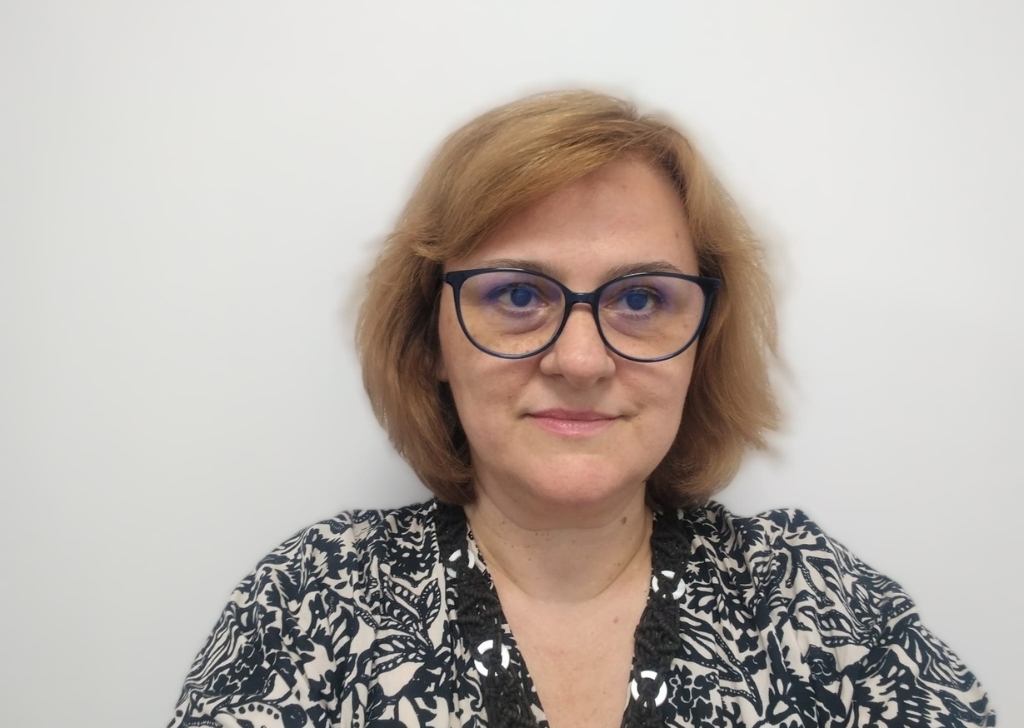
Mihaela Păuna, CFO and financial consultant, discusses financial education, cash flow, profitability, strategy, and the fractional CFO model, offering entrepreneurs practical insights for clearer financial decisions and sustainable business growth.
Mihaela Păuna is a CFO and financial consultant with over 18 years of international experience in FP&A, controlling, audit, and financial reporting transformation, gained in multinational companies in technology, engineering, and services. Today, she puts this expertise at the service of entrepreneurs and small and medium-sized companies in Romania, building a bridge between corporate rigor and the real needs of growing businesses.
C&B: What is the mission you have taken on through your work?
Mihaela: My mission is to turn numbers into decisions. I take what seems to many entrepreneurs like a closed language, full of accounting terms, and translate it into clear answers to simple questions: “Can I afford this investment?”, “Why do I have a profit on paper but no money in the bank account?”, “What happens if sales drop by 20%?”
The clearest example comes from a specialized equipment distribution group, where the company paid foreign suppliers in foreign currency but collected revenue in RON. The foreign exchange exposure had existed for years, but it had never been quantified — it was treated as an unavoidable reality of the market. We measured it: approximately €1 million in annual payments exposed to EUR/RON fluctuations. The conclusion was that hedging this risk, combined with serious negotiations with the bank, could substantially change the annual result.
What worked: quantification. The discussion changed completely once the risk stopped being a feeling and became an amount that anyone in management could understand. A measured risk can be acted upon; an intuitive one is postponed indefinitely.
My background in psychology added a dimension that I did not have at the beginning of my career: behind every financial decision there is an emotion — most often, fear. Ultimately, my mission is to replace the fear of the unknown with the clarity that comes from knowing your own numbers.
C&B: What is the most important problem you see today in the field you work in, and how do you think it can be solved?
Mihaela: The biggest problem I see in Romanian companies, especially SMEs, is that they treat accounting as an obligation to the state, rather than as a decision-making tool. The month is closed, the declarations are submitted — and that is about it. The result: entrepreneurs who confuse profit with the money in their bank account, who discover a liquidity problem only when they can no longer pay their suppliers, and who run their businesses by looking in the rear-view mirror rather than through the windshield.
I have experienced this transition from both sides. In a group with operations in several Central and Eastern European countries, I led, in Romania, the implementation of an FP&A tool and the transition to a new ERP system, together with colleagues from the European Union and outside the EU. The most visible result: the monthly accounting close moved from the 25th to the 5th of the following month, while forecast accuracy gradually increased from 65% to 96% over six months.
The fundamental decision was not technological, but process-related: I moved forecasting responsibility from finance to each department head, who presents and supports their own figures every month in a variance analysis meeting. The close was shortened through simultaneous measures — a calendar with an owner and deadline for each activity, a firm cut-off date for supplier invoices, estimates for predictable recurring expenses instead of waiting for the document, and automated reconciliations in the system. The hardest part was not technical, but accepting the idea that a good figure delivered on time is worth more than a perfect one delivered three weeks late. The effect was that management discussions shifted from “what happened last month” to “what are we going to do in the coming quarter?”
The twenty days gained do not mean twenty man-days saved, but that management information reaches leadership three weeks earlier. The real effect is on how the team’s time is structured: the same people spend much less of the month collecting and checking data and much more time analyzing it. I measured accuracy as the average deviation from actual results, based on the forecast frozen at the beginning of the month — at aggregate level, it reached 96%, while dispersion at individual line level remained, naturally, higher.
What did not work from the beginning: implementing a new tool changes nothing if people continue working in parallel in their own Excel files. The first few months were consumed not by configuration, but by adoption. The lesson: a financial transformation project is 20% software and 80% organizational habit, and planning should follow the same proportion.
The second component of the solution is discipline — which almost always pays for itself. At a global IT services and business process outsourcing provider, through rigorous control of audit and inventory processes, I recovered €3 million in VAT that otherwise would have remained unutilized. It was not a spectacular discovery, but the result of systematically reconciling records, something no one had done before.
The good news is that today this expertise has become accessible. The fractional CFO model and artificial intelligence tools allow even a small company to access financial thinking that, ten years ago, was available only to corporations.
C&B: What is the most valuable lesson you have learned throughout your experience and believe is worth passing on?
Mihaela: The most valuable lesson is that profit is an opinion, but cash is a fact. You can have a profitable company on paper that shuts down because it has run out of money — and, conversely, you can get through a difficult period if you take care of liquidity.
I learned this most profoundly at an engineering services company, where I took over as CFO after several consecutive years of losses. The transition to profitability took place after five years of losses, gradually, beginning with the first year in which the way of thinking changed, while operating margins also recovered incrementally, starting in that same first year.
The turnaround had two stages. First: a cost optimization plan, built not through uniform percentage cuts, but by eliminating expenses that produced no identifiable benefit — the across-the-board scissor approach is the fastest way to weaken precisely the areas that generate revenue, and I am not a fan of this practice. Second: a revenue-focused business plan, in which the CEO became directly involved, supported by continuously updating the cash-flow position.
What worked: the direct involvement of operational leadership in the revenue plan. A turnaround plan led exclusively by finance inevitably turns into a cost-cutting exercise and stops there.
What did not work: something I initially considered extremely important as a factor in reducing general and administrative expenses — changing the company’s location, meaning giving up an excessively expensive lease under a contract that I still consider commercially unbalanced. Why did we not change location? Because the employees liked it. It was a business decision that was financially difficult to sustain, but we found other avenues, and opened them in time to stop the bleeding.
An essential indicator to monitor in a rolling forecast is net working capital. It answers a simple but vital question: if the company were to pay all its short-term liabilities tomorrow, would it still have enough money to operate? And, if so, for how long?
The second part of the lesson, which I only fully understood later, is that finance is about people, not spreadsheets. The most valuable thing I leave behind in any organization is not the reports, but the fact that the people I have worked with come to understand the real situation of their business.
C&B: If you had the opportunity to change one single thing in Romania, what would it be and why?
Mihaela: I would introduce real financial education — both in schools and for entrepreneurs. I believe many of the difficulties I see every day, among both people and companies, do not come from a lack of intelligence or hard work, but from the fact that no one taught us, at the right time, how money works: what a budget is, why cash flow matters, how to read financial statements, and what it means to consciously take on a risk.
A young person graduates from university knowing how to solve equations, but without knowing how to create a personal budget. An entrepreneur starts a business out of passion and technical expertise, but stumbles when it comes to the financial side — not because they are incapable, but because no one has ever shown them the map. I believe the transfer of knowledge is the most lasting thing you can leave behind.
C&B: How can we work together to help people, companies, and communities develop better?
Mihaela: I believe in three things, in exactly this order: access, education, and trust.
Access means making high-level expertise available even to those who cannot afford it on a full-time basis. Until recently, an experienced CFO was a luxury reserved for corporations. The fractional consulting model is changing that: a small company can now have, for a few days a month, the same strategic thinking that a large player benefits from. Concretely, a small company can obtain a budget, a 12-month forecast, and a monthly dashboard for a fraction of the cost of an employed CFO.
Education means not keeping knowledge only to ourselves. That is why I write and explain things publicly. The only condition for people to learn is to be curious and willing to put in the effort to understand new things. Curiosity, when used correctly, opens doors you would never expect.
Trust means working transparently and putting the client’s interests before our own short-term gain. Real development does not come from quick solutions, but from relationships built on honesty and results that become visible over time. Trust follows a simple formula: I do what I promised, I keep my word, and I do not leave things unfinished simply because, at some point, the situation is no longer convenient for me.
Not every entrepreneur is emotionally prepared for this level of transparency, and the absence of real communication makes a business relationship impossible. I have ended collaborations for this reason, and I believe it was the right decision: a financial consultant who does not see the real numbers does not help anyone, but merely legitimizes an illusion. That is why I believe true development begins the moment we choose the courage to face the numbers — together.
With over 18 years of experience in finance, Mihaela Păuna promotes an approach in which numbers become tools for decision-making rather than simply reports. From cash flow and profitability to financial education and the fractional CFO model, her perspective highlights the importance of financial discipline, transparency, and strategies built on real data. For entrepreneurs and SMEs in Romania, access to financial expertise can become a key advantage for sustainable growth and long-term development.

 UK
UK
 IT
IT
 ES
ES
 DE
DE
 FR
FR
 RO
RO
 PT
PT
 HU
HU


