


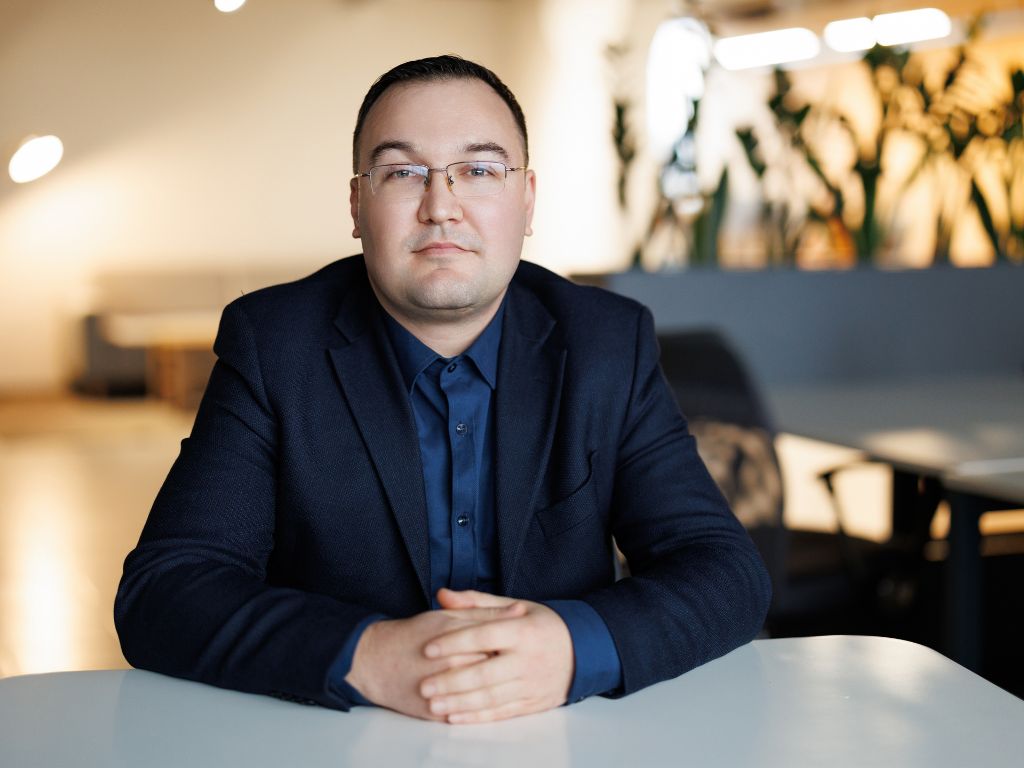
With over 20 years of experience in management and digital transformation, Adrian Savciuc talks about fractional leadership, the data-centric approach, and how organizations can prepare responsibly for AI through interoperability and clarity.
For many organizations, digital transformation still means a list of applications, successive implementations, and the promise that “technology will solve the problem.” For Adrian Savciuc, however, real transformation starts with a far more uncomfortable question: what data do we have, how well do we understand it, and how well does it communicate across systems?
Digital Transformation & Program Manager at Meaningfy, an IT consulting company headquartered in Luxembourg, Adrian has spent more than a decade working at the intersection of business and IT, within a career that totals over 20 years in management, process optimization, and change projects. In recent years, his focus has shifted increasingly toward a data-centric approach and interoperability, elements he sees as foundational for healthy digital ecosystems and for the responsible use of AI.
From operational processes to digital ecosystems
His professional journey did not begin in technology, but in classic management and operations roles in retail, services, and manufacturing. There, he learned what real-world processes look like, what operational pressure means, and the difference between solutions that work on paper and those that work in practice. His move into IT came gradually, through defining business requirements, business analysis, and coordinating the implementation of digital solutions.
A key turning point came with his role at Meaningfy. The conversation there was no longer about “which applications to implement,” but about data models, semantic layers, knowledge graphs, and interoperability—about how an organization defines its core concepts and how these can support coherent decision-making, including in contexts where AI becomes part of the ecosystem.
When clarity becomes more important than technology
Alongside his full-time role, Adrian began to receive more and more invitations to trainings, workshops, and targeted consulting projects. Entrepreneurs and organizations from Romania, the Republic of Moldova, and other European countries shared a common need: not another manager in the org chart, but a partner who could bring clarity. What problem are we solving? What data do we have? What is missing? What is worth automating, and what is not?
This is how the fractional leadership model took shape naturally. Adrian remains deeply involved in Meaningfy’s projects, while dedicating part of his time to part-time collaborations, with clearly defined roles: consultant, trainer, or sparring partner for management teams.
Why the fractional model works in digital transformation
Regardless of industry or level of digital maturity, the patterns he encounters repeat themselves. Unclear processes, data scattered across multiple systems, excessive reliance on Excel, and an application-centric approach in which business and IT speak different languages. When the conversation turns to AI, it becomes obvious that the foundation is not ready.
His role as a fractional leader is precisely to make these blockages visible and to shift the conversation from point solutions to a coherent vision. For Adrian, digital transformation is not an IT project, but a process of organizational maturation, in which data and processes are placed at the center, not treated as side effects.
A concrete example of impact comes from a collaboration with a distribution company within a larger agri-food group. The apparent problem was simple: incorrect invoices that needed constant correction. In reality, the errors triggered chain reactions—unnecessary deliveries, delayed reporting, and decisions made on data no one fully trusted.
The intervention did not involve replacing systems, but a full end-to-end analysis of the flow, from sales to reporting. Through clear rules, dedicated reports, and accountability KPIs, the results were measurable: 2.5 times fewer incorrect invoices, over 700 hours of work saved per month, and a significant reduction in logistics costs. Just as important, the internal mindset shifted—from “who made the mistake?” to “how do we make sure the data is correct from the start?”
The difference between a full-time executive and a fractional leader, Adrian explains, is not about competence, but about perspective. A fractional leader enters the organization with “fresh eyes,” works at the level of direction and structure, and helps the management team clarify priorities, roadmaps, and realistic next steps for the coming years. Impact appears only when the organization assumes its share of the work.
For skeptical CEOs, the value of the fractional model is not proven through promises, but through early, tangible results. A few hours or days per month can be enough to bring order to a critical area, define a coherent plan, and avoid costly investments made without a solid foundation.
Looking ahead, Adrian sees the fractional model becoming a normal option, especially in the areas of digital transformation, data, and AI. Cost pressure, difficulties in recruiting senior talent, and the need for applied expertise will push more organizations toward flexible solutions tailored to their real stage of maturity.
For senior professionals considering this path, his message is clear: clear positioning, a focus on results, and a gradual entry into the model. Transformation—whether digital or career-related—does not happen overnight. But when built on data, clarity, and consistency, it can deliver real and lasting impact.
This material is an original editorial feature, based on an interview previously published in our niche publication, Fractional. The full interview is available here.

 UK
UK
 IT
IT
 ES
ES
 DE
DE
 FR
FR
 RO
RO
 PT
PT
 HU
HU


