


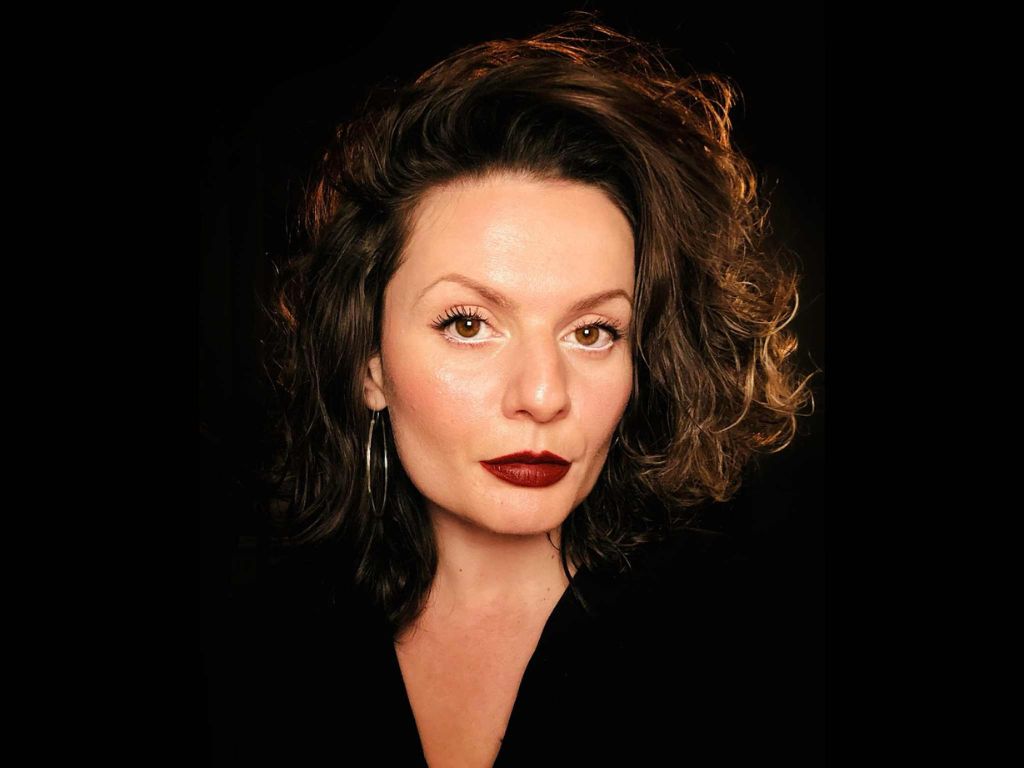
Alexandra Dumitrescu, visual artist and cultural manager, talks about Eforie Colorat – a project that transforms art into a tool for regeneration, education, and community engagement by the seaside.
Alexandra Dumitrescu has a uniquely creative profile. Her practice combines artistic and managerial qualities, successfully translating the needs of the creative process while strengthening a still-fragile environment in which artists learn to build and complete their projects. She is a visual artist and cultural manager with experience in photography, video, tufting, and the design of artistic and community projects. In her art, she aims for a minimalist and iconic aesthetic, while also pursuing a holistic vision of art as a tool for development. Alexandra is the co-founder and coordinator of several international interdisciplinary projects and exhibitions with social and ecological impact. At the same time, she and her team have developed long-term cultural initiatives such as the Eforie Colorat festival. Through these projects, Alexandra transforms art into a platform for collaboration and regeneration, combining cultural program design with reflection on the relationship between art, the environment, and society.
C&B: How would you describe yourself in a single sentence that would make those who don’t know you curious?
Alexandra Dumitrescu: I am Alexandra Dumitrescu, a visual artist and cultural manager. I build bridges between art and community, turning ideas into projects that bring people together and give shape to shared stories.
C&B: If we were to look at the narrative thread of your career or business, what were the key moments that defined you?
Alexandra Dumitrescu: I started by studying political science and looked for ways to see how theory is put into practice. My interest in the visual sphere began with the experience of producing music videos. Gradually, however, I wanted more substance and more freedom of expression, and I felt the need to find my own language. That’s how I came to a minimalist visual style and the desire to essentialize—to do a lot with minimal resources. My path then expanded toward projects like Eforie Colorat, international formats, and European collaborations, and now I am consolidating it through an MBA at Bucharest Business School – ASE, to bring coherence and stability to the entire journey. I have the artistic language, but I also want to translate creativity more easily into implementation.
C&B: What are the biggest challenges in organizing an independent cultural festival in Romania?
Alexandra Dumitrescu: The challenges of an independent cultural festival in Romania—from unpredictable funding and bureaucracy to team building and attracting audiences—are at the same time opportunities to find creative solutions, adapt, and grow, but also threats that make you vulnerable if you don’t have a backup plan. They force you to refine your strategies and offer an increasingly relevant and valuable cultural product to your audience.
C&B: Is there a dream or ambition that has always guided you, regardless of obstacles?
Alexandra Dumitrescu: The dream that has always guided me is the belief that art and culture are meaningful indicators of quality of life and of how people grow together. I believe in a stronger presence of art in public spaces, as it is a living mirror of everyday life. It addresses contemporary themes—far from cryptic ones—that each artist frames in their own way, offering new perspectives and generating dialogue.
C&B: How did you look at the beginning of your journey, and how do you feel you’ve transformed since then?
Alexandra Dumitrescu: I started by being guided by research and documentation, which helped me develop my projects. Over time, I felt the need to move from intuition and practical experience to a more coherent structure that would allow me to think long-term, consolidate results, and open new directions for growth. A good artist and manager must listen to and follow their instincts, but for their work to carry weight, they must constantly check it against theory and what other practitioners in the field are doing.
C&B: If we met your team or collaborators, what do you think they would say about you?
Alexandra Dumitrescu: I think they would say that I am someone who brings energy and direction, that I have vision but also the patience to build step by step. This year, I’ve placed even more focus on the volunteer team. I’m very proud to see children and young people returning year after year, growing alongside the project. Their responsibilities and skills also develop and become more sophisticated as they learn, gain confidence, and find the resources to get directly involved.
C&B: What is the most important decision you’ve made that changed your trajectory?
Alexandra Dumitrescu: In the field I work in now, what changes my trajectory is precisely the need to learn and develop at a strategic level. I realized that beyond the experience I’ve gained in artistic and cultural projects, I need tools that allow me to think strategically in the long term, consolidate results, and create a sustainable model. I believe that starting the MBA at ASE is a decision that will change my trajectory.
C&B: Can you share a memorable moment from previous editions of Eforie Colorat?
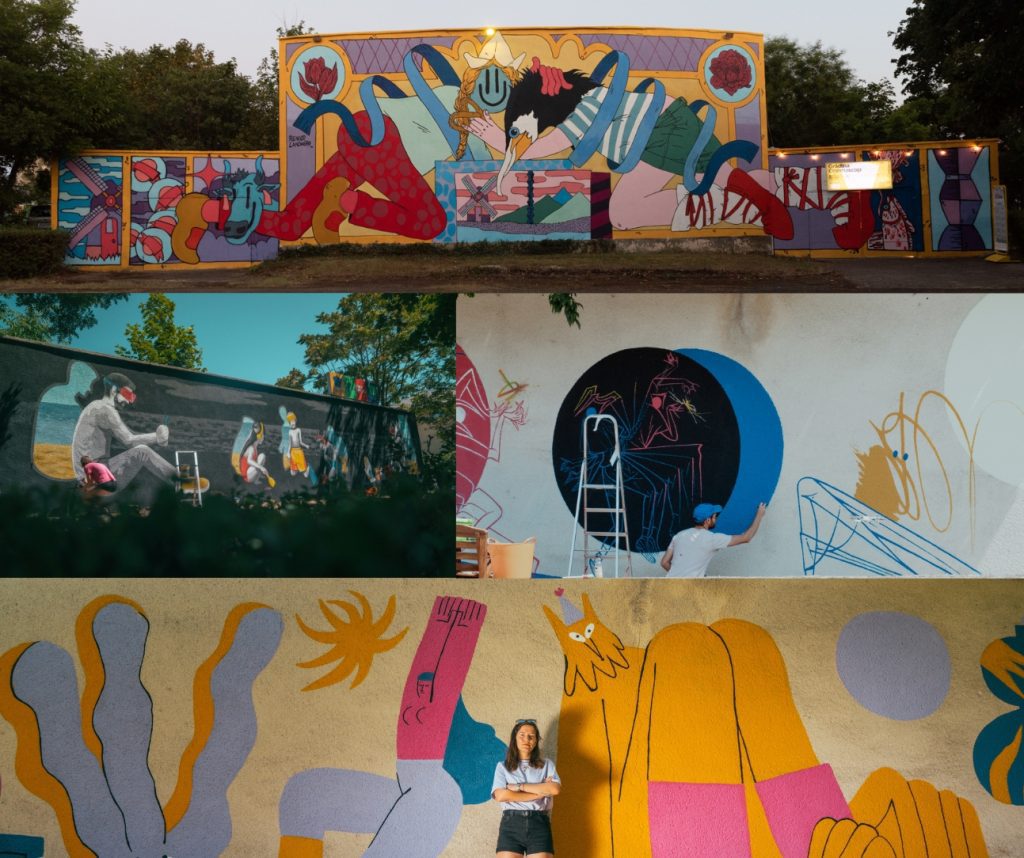
Alexandra Dumitrescu: The first day of Eforie Colorat, in 2021. I remember it was full of emotions and joy—we were happy that a project we had worked on so much was coming to life and that the community was there from the very beginning. We were moved to see the support from institutional and private partners who embraced our mission, and we felt that our hard work was starting to show tangible results. We already had a three-month program planned, with activities six days a week, but we knew something intense was ahead. That first day was filled with the excitement of a beginning and the confidence that we were on the right path. Looking now at before-and-after pictures of the space, I can hardly believe how many artists “colored” the summer garden.
C&B: What do you think differentiates Eforie Colorat from other festivals of its kind?
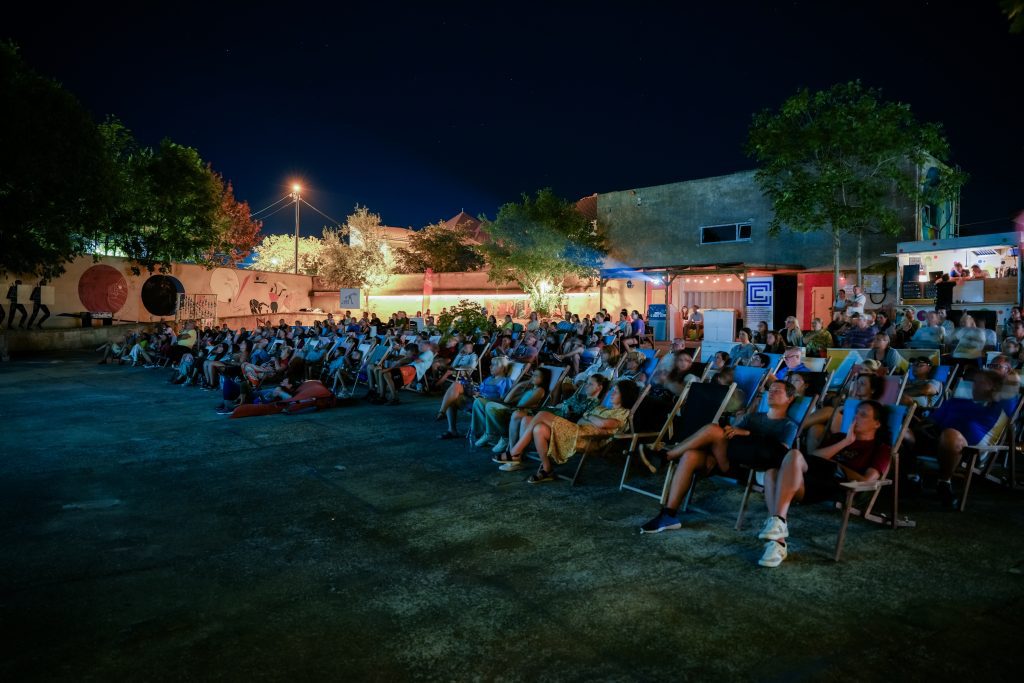
Alexandra Dumitrescu: Eforie Colorat has become an umbrella under which our seaside projects—artistic, ecological, educational, and community-based—develop. What began as a festival has gradually evolved into a unique cultural and creative hub on the coast: a revived summer garden where we host contemporary art by the sea and put it in dialogue with local heritage, urban regeneration, and community involvement. And the fact that we remain open and available for collaborations and the public makes it truly distinct.
C&B: What does a typical day look like for you now, and what moments bring you the most satisfaction?
Alexandra Dumitrescu: A typical day for me means juggling between vision and detail. The greatest satisfaction comes when I feel that ideas become reality—when a project takes shape, when the community shows up, or when art manages to create dialogue where there was none before. Sometimes I spend the whole day at the computer, replying to emails and joining calls. The difference between that and a corporate job is that my activity often extends into the evening with a vernissage, a workshop, or a meeting with other artists.
C&B: What values or principles guide you in what you do, and how do you apply them every day?
Alexandra Dumitrescu: I am guided by the idea that art should be alive and close to people. I believe in honesty, in work done with care and commitment, and in the role of culture as a strategic resource for sustainable development. Every day, I try to put these principles into practice—whether it’s in the way we make decisions, how I collaborate with the team, or the attention I give to the details of a project. Practically, I have artworks on my walls—either made by me or by artists I admire—I read books, and I watch films. I like to practice what I preach.
C&B: How did the Eforie Colorat initiative come to life, and what was the main motivation behind the project?
Alexandra Dumitrescu: The Eforie Colorat initiative arose naturally after the experience of the Cinemascop Festival organized by the Czech Center Bucharest, which in 2018 reopened the Cinemascop Summer Garden. Later, together with my colleague Emil Cristian Ghiță and our then team, we felt the need to keep the space alive and active throughout the summer. The idea was to bring artistic and educational programs to an area with limited access to culture, to create a meeting place for the community, and to demonstrate that contemporary art can play a real role in the regeneration of a seaside town. Thus, what began as a seasonal festival has evolved into a cultural platform that grows year after year.
C&B: How do you envision the evolution of Eforie Colorat in the coming years?
Alexandra Dumitrescu: I see Eforie Colorat evolving from a festival coordinated by us into a cultural platform increasingly embraced by the community. In the coming years, we want the projects to be taken over, developed, and continued locally so that Eforie becomes an example of good practices and a cultural and creative hub on the seaside, built together with the community. For us, the true success will be the moment when the people of Eforie Sud recognize the festival as their own and carry it forward.
Through Alexandra Dumitrescu’s vision, Eforie Colorat has become more than a festival – a living platform where art, education, and community come together to transform spaces, people, and perspectives.

 UK
UK
 IT
IT
 ES
ES
 DE
DE
 FR
FR
 RO
RO
 PT
PT
 HU
HU


