


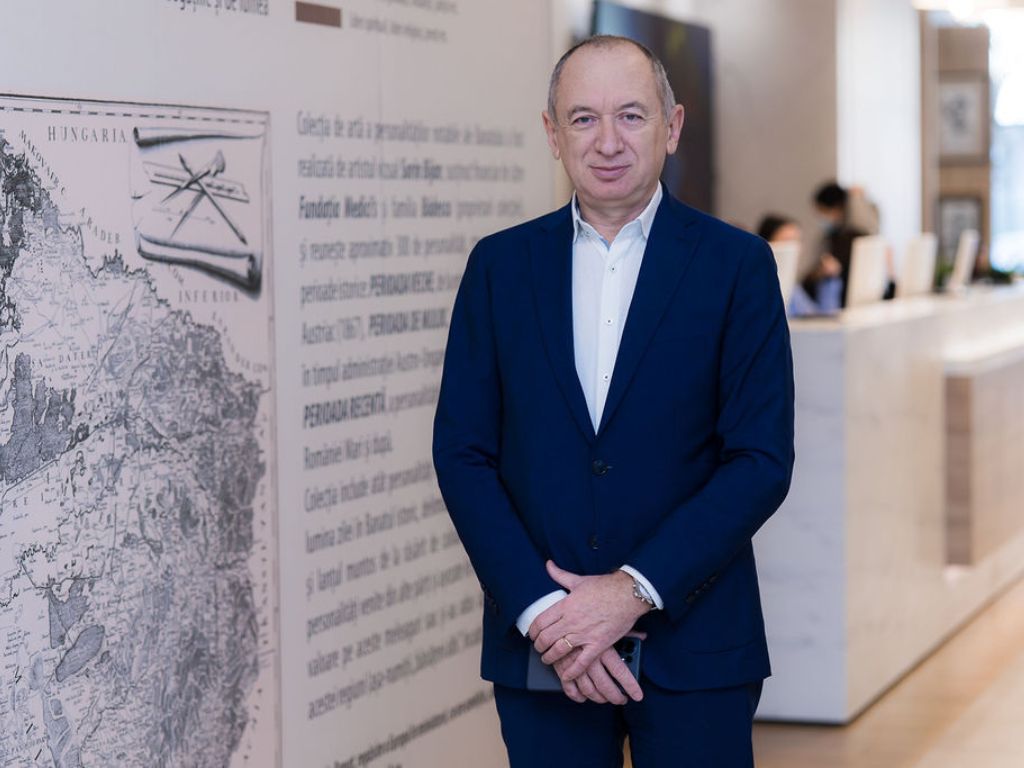
Interview with Dr. Adrian Bădescu, doctor and entrepreneur from Timișoara, about medical leadership, the development of the Medici’s network, innovation, medical entrepreneurship, and impact on Romania’s healthcare system.
Adrian Bădescu, a physician and entrepreneur from Timișoara, is the founder and CEO of the Medici’s clinics, hospital, and maternity unit in Timișoara – one of the most important private healthcare networks in western Romania, part of the MedLife group, with over 40,000 permanent subscribers, more than 100,000 annual visits, and over 3,000 surgical interventions per year. Actively involved in the development of the regional business and academic environment, Honorary Consul of the United Mexican States in Timișoara, founder and honorary president of the North-American Economic Club Timișoara, and a consistent promoter of medical entrepreneurship and international partnerships.
C&B: If we were to look at a narrative thread of your career, what were the key moments that defined you?
Dr Adrian Bădescu: I rarely look back. I live in the present and the future. My professional path, the narrative thread of my career, can be structured around a few key moments that defined my identity as a physician and entrepreneur.
The first essential moment was choosing medicine and my training at the “Victor Babeș” University of Medicine and Pharmacy in Timișoara. That period strengthened not only my professional skills, but also my interest in the human and social dimension of medical practice. Residency and my work as a family doctor gave me direct contact with the reality of the Romanian healthcare system in the 1990s.
The second defining moment was the decision to enter entrepreneurship, initially in 1997, in family medicine, and later in founding and developing the Medici’s Clinics in Timișoara. Transforming a small practice into a complex medical network, with thousands of subscribers and hundreds of corporate partners, meant for me the shift from individual practice to building a scalable business model based on trust, quality, and corporate partnership.
Medicine taught me to listen; entrepreneurship taught me to decide. A professional treats cases; an entrepreneur treats systems.
Another inflection point was the orientation toward professional management and continuous education – my experience within the American company MSD, master’s degrees in management and health, international certifications, and exposure to Western business models. All of these contributed to the professionalization and consolidation of the Medici’s brand in an increasingly competitive context.
The integration of the network into the MedLife group and the development of the MedLife Medici’s hospital and maternity unit in Timișoara also represented a major strategic milestone, marking the maturation of my entrepreneurial project and its validation at a national and, hopefully, euro-regional level.
In parallel, assuming public and community roles – involvement in the academic environment, in the Rotary movement, my mandate as Honorary Consul of the United Mexican States in Timișoara, and the founding of the North-American Economic Club Timișoara – expanded my impact beyond the strictly medical field, toward economic diplomacy, regional leadership, and institutional building. I am involved in the leadership and administration of eight non-governmental organizations with impact, often channeled in common directions, amplifying each other’s energy. I call this “social architecture.”
In essence, my career is defined by three constant axes: medicine as vocation, entrepreneurship as a tool for building, and civic involvement as responsibility.
C&B: What was the most difficult moment in your journey so far and how did you overcome it?
Dr Adrian Bădescu: My career was not a straight line, but a spiral construction. One of the most difficult moments in my professional path was undoubtedly the 2020 pandemic, when medical pressure, legislative uncertainty, and economic blockages overlapped with direct responsibility toward patients, employees, and corporate partners. In that context, the challenge was not only medical, but deeply managerial and moral: how do you keep a private clinic network functional in a climate of generalized fear, with sudden drops in activity in certain segments and the urgent need for investments in epidemiological safety? It was a moment when I had to make rapid decisions, with incomplete information, but with major impact on the team and community.
I overcame that moment through three clear directions: transparent communication with the team and partners, accelerated investments in safety protocols and technology – including digitalization and telemedicine – and active community involvement, from information campaigns to concrete initiatives supporting the healthcare system and family doctors. For me, the crisis became a catalyst for internal consolidation and for reaffirming fundamental values: responsibility, adaptability, and solidarity. Instead of weakening the Medici’s project, the pandemic period matured it, strengthening its organizational culture and long-term strategic positioning.
A crisis does not test numbers, but character; leadership begins where comfort ends.
C&B: Is there a dream or ambition that has always guided you, regardless of obstacles?
Dr Adrian Bădescu: Risk tolerance is part of the DNA of any true entrepreneur. There has always been a constant ambition guiding my path: to build, in western Romania, a solid, credible, and modern private medical model capable of competing through quality and professionalism with Western standards, while remaining deeply rooted in the community. From the early years of entrepreneurship, I wanted more than a successful clinic; I aimed to create an integrated medical ecosystem where medicine, efficient management, and organizational culture function coherently over the long term. My ambition was not only growth in revenue or expansion of the network, but the consolidation of a brand that inspires trust and becomes a regional benchmark.
At the same time, I have constantly been guided by the idea of demonstrating that Timișoara can position itself through a relevant entrepreneurial project at a euro-regional level, without compromising ethics, consistency, or commitments. I have never been, and will never be, just a manager, just as I was never interested in building only a business. I will remain a social architect and an entrepreneur, often rowing against the current for a greater purpose. In essence, my dream has been – and remains – to leave behind a durable project, a social construction, truly contributing to the health and development of the community, and to positioning Timișoara and Romania on the euro-regional map of medical performance.
I have never pursued success, but coherence – success came as a byproduct.
C&B: How did you start your journey, and how do you feel you have transformed until today?
Dr Adrian Bădescu: At the beginning of my journey, I was above all a young, curious, and idealistic doctor, with a lot of energy and a sincere desire to do good. I came from a Romania in transition, in a healthcare system with many limitations but enormous potential. I did not have a sophisticated business plan, but rather a conviction: that something correct, solid, and durable can be built through consistent work and kept promises. I was heavily involved in everything – from direct patient care to administrative decisions. I learned as I went, made mistakes, adjusted, and moved forward. Entrepreneurship was, for me, a continuous school of maturation.
Today I feel more grounded, more strategic, and more aware of my responsibility toward the team, partners, and community. If at the beginning I was mainly an executor and instinctive visionary, now I am more of a systems builder and a cultivator of leaders. I have not changed in values, but in depth. I learned to delegate, to think long term, to approach scenarios, and to turn crises into consolidation opportunities.
My transformation was not a change of values, but a refinement of them. I remained the same in terms of belief in consistency, partnership, and keeping commitments, but I gained experience, balance, and a broader perspective on the impact an entrepreneurial project can have when built with vision and patience.
To build locally and think euro-regionally is a form of responsibility.
C&B: If we met your team or collaborators, what do you think they would say about you?
Dr Adrian Bădescu: You should ask them. Joking aside, I believe they would consider me a fair partner. I have high standards and put pressure on performance, but at the same time I am loyal to the team and take responsibility for difficult decisions. Exigency without loyalty is pressure; exigency with loyalty is leadership. For me, keeping commitments is essential, whether toward patients, corporate partners, or my own team. I think they would also say that I think strategically and long term, sometimes even slightly ahead of the times, which can create discomfort in the short term but brings stability over time.
I prefer authentic respect over easy popularity. I like dynamics, I like new projects, and I am not afraid of change. At the same time, I believe they would recognize that I invest in people, encourage professional development, and aim to grow leaders, not executors. If I were to summarize, I would like to think they see me as a “builder” – not only of business, but of teams, partnerships, and social projects.
C&B: What is the most important decision you have made that changed your trajectory?
Dr Adrian Bădescu: The most important decision was entering entrepreneurship and building my own medical project step by step. I would choose the risk of construction over the comfort of predictability any time. I am comfortable with choices that take me out of my comfort zone, placing me in a space of risk, full responsibility, and continuous learning. When I decided to develop Medici’s, I was no longer just a doctor; I became also a manager, strategist, negotiator, and team leader. That decision changed not only my career, but also the way I think. A true entrepreneur gives up control to gain the future.
Later, another major decision was the integration of the network into the MedLife group. It was a strategic step that meant maturation and national validation, but also the partial loss of direct control in favor of a larger structure with broader resources and ambitions. It was not an emotionally easy decision, but it was a rationally correct one. No organization grows without a reduction of ego. Looking back, I realize these decisions shared a common denominator: the courage to think long term and to prioritize institutional building over personal ego.
C&B: How does the Medici’s team manage to maintain high standards of professionalism and medical safety?
Dr Adrian Bădescu: The most difficult part is building a real organizational culture. Maintaining high standards of professionalism and medical safety is the result of a series of carefully aligned and consistently applied measures. An organization is raised on values, not on concrete. Procedures are the backbone of trust, but medical safety starts with culture, not with protocols.
First, we placed major emphasis on team selection and training. We brought together doctors, managers, and specialists who share the same values of ethics, responsibility, and respect for patients. At the same time, we continuously invest in medical education, conferences, best practice exchange, and professional updates.
Second, we work with clear procedures and well-defined protocols. Medical safety means standardization, traceability, and quality control. We have internal audit processes, periodic evaluations, and constant attention to legal compliance and good practice standards.
Another essential element is investment in technology and infrastructure. Modern equipment, digitalized workflows, integrated IT systems, and, where applicable, telemedicine solutions contribute to reducing risks and increasing medical efficiency. We are proud to have one of the most modern hospitals in Eastern Europe in terms of technology and medical performance.
Last but not least, internal communication and a culture of responsibility are fundamental. We encourage transparent reporting of incidents or risk situations without stigma, because only in this way can we correct and prevent. For me, professionalism does not mean the absence of errors, but the ability to manage them correctly, correct them quickly, and learn from them. Standards are not a fixed goal, but a continuous process of refinement, adaptation, and consolidation.
C&B: How does Medici’s differ from other medical units in Timișoara and Romania, and what ensures the quality of its services?
Dr Adrian Bădescu: Our differentiation does not come from a single spectacular element, but from a model built coherently over time. First, Medici’s Clinics grew organically, from within the community. We did not emerge as a speculative project, but as a medical entrepreneurial initiative developed step by step, which allowed us to understand the regional specifics and the real needs of patients and companies. This local anchoring, later combined with integration into the MedLife group and the development of one of the most performant private surgical hospitals in Romania, gives us both regional flexibility and national strength.
Secondly, we have a strong focus on the corporate segment and occupational medicine, where we built long-term relationships with hundreds of companies. This required efficiency, predictability, scalability, and high organizational standards. Working with the business environment brings an additional level of rigor.
Another differentiator is organizational culture. We emphasize responsibility, communication, and accountability. Service quality is not only the result of technical equipment, but also of team attitude. Medicine is culture, not just devices. Ethics is non-negotiable, regardless of context. We continuously invest in professional training, standardization, and internal audit to maintain a high level of medical safety.
We have also developed as an integrated medical ecosystem – clinics, laboratory, imaging, hospital, and maternity unit – which allows continuity in medical care. The patient remains within a coherent circuit. In essence, the difference comes from the combination of authentic entrepreneurship, professional management, constant technological investment, a high-performing medical team, and a culture of seriousness built over three decades. Quality has nothing to do with marketing; it is a daily responsibility.
C&B: What does a typical day look like for you now, and what moments bring you the greatest satisfaction?
Dr Adrian Bădescu: No two days are the same in an entrepreneur’s life, especially when you are involved not only in business but also in the community. I operate mainly along three axes: strategic, social/relational, and operational. True strategy is the art of deciding what NOT to do.
I am fortunate to have an exceptional team that handles most operational matters responsibly. Mornings are dedicated to communication and solving ongoing issues – projects in progress, meetings, analyses, etc. A medical system is built on rigor and anticipation.
In the second part of the day, the agenda is often filled with meetings: corporate partners, doctors, academic or associative collaborators. My role today is more about orchestration and strategic alignment than direct operational intervention.
There is also a public representation component – conferences, events, institutional meetings, sometimes extending late into the evening or weekends – which is part of the responsibility of properly positioning the organization and contributing to the broader dialogue on healthcare and entrepreneurship.
The greatest satisfactions come from two types of moments. The first is when I see a project conceived months or years ago taking shape and functioning. The second is when I observe the growth of people around me – when a doctor or manager in the team takes on a new role with maturity and performs well. For me, this is confirmation that we are not only building medical services, but also a strong organizational culture and a healthy community.
Real satisfaction comes from the feeling that we are taking concrete, coherent steps forward and that the project is evolving sustainably over the long term.
C&B: What values or principles guide you in everything you do, and how do you apply them daily?
Dr Adrian Bădescu: The values that guide me are relatively simple, but very firm: consistency, responsibility, keeping commitments, and long-term orientation.
Consistency means not reacting impulsively to every change in context, but staying faithful to a strategic direction. I have said it before: it is not the storm that sinks the ship, but the moment the captain loses direction. In business and medicine, stability and predictability are built over time, not through spectacular decisions.
Responsibility is essential, especially in healthcare. Every managerial decision impacts patients, the team, and partners. I try to carefully weigh options, assume consequences, and not unfairly shift pressure onto others. Keeping commitments is, for me, a form of practical ethics. If I promise something – to a patient, partner, or colleague – I do everything possible to deliver it. Reputation is built on credibility.
Finally, I believe in partnership and institutional building. I apply this through strong collaborations, constant dialogue, and investment in people. I do not believe in individual long-term success, but in teams and projects that transcend personal egos. Every day, these principles translate into concrete decisions: how I choose partners, manage conflicts, allocate resources, or set priorities.
Reputation is the sum of kept promises.
C&B: How did you come up with the idea to start this business and choose its name?
Dr Adrian Bădescu: The idea of starting this business came naturally from direct contact with the reality of the healthcare system in the 1990s. I was a doctor and saw daily both the real needs of patients and the structural limitations of the public system. I felt there was room for an alternative model: more organized, more predictable, more patient-oriented, and more focused on the corporate environment. It was not a spectacular plan at the beginning, but rather a natural evolution. I started with the desire to practice medicine in a framework I could build and control in terms of standards. Gradually, I realized I could create more than a clinic – I could build an organization.
As for the name, “Medici’s” was chosen deliberately. The Medici family in Florence contributed to the beginning of the Renaissance and changed Europe and the world forever. Humanism and the Renaissance did not begin with buildings, but with ideas. I wanted a name that suggests community, a professional family of physicians. The apostrophe and slightly atypical form subtly reference tradition and cultural patronage – a symbolic reference to the Medici family. I wanted the brand to express not only medical services, but also organizational culture, vision, and long-term construction. For me, the name was not just a commercial label, but a statement of intent: to build an institution, not just a medical business.
I never wanted Medici’s to be just a brand, but a statement of belonging.
C&B: What recent projects or innovations implemented at Medici’s have significantly improved patient experience?
Dr Adrian Bădescu: In recent years, we have worked extensively on projects that may not appear visually spectacular, but that fundamentally change patient experience: speed, clarity, continuity, and safety.
A first major impact came from digitalizing the patient relationship: simpler scheduling, clearer confirmation and rescheduling flows, faster access to information, and, where possible, electronic delivery of results and documents, reducing unnecessary travel and waiting time.
A second important area was better integration of services – a more coherent circuit between consultations, investigations, and laboratory services. For the patient, the difference is immediate: fewer steps, less ambiguity, and better coordination between specialties.
A third direction, with direct impact on comfort, was optimizing in-clinic flows: better-controlled waiting times, more efficient triage, standardized procedures and protocols, ensuring a predictable and safe experience regardless of location or specialty.
We also focused on feedback mechanisms and a culture of continuous improvement: I care not only about the medical act itself, but also about how the patient understands, feels, and experiences the entire process from first contact to final recommendations.
I would also address a very sensitive topic: Artificial Intelligence. Doctors and organizations that ignore the impact of artificial intelligence will not simply fall behind – they will become irrelevant. Not in ten or twenty years, but very soon, in the next few years. AI is profoundly transforming healthcare and education systems, assisting doctors and reshaping digital platforms into simpler and more efficient tools. In front of AI, professional ego becomes vulnerability. AI will not destroy medicine, but mediocrity.
Those who treat AI as a trend will be treated by the market as a memory.
In short, the innovations with the greatest impact on patients are those that reduce friction: more clarity, more speed, more coordination, and more safety.
Dr. Adrian Bădescu’s story reflects the transformation of Romanian healthcare through entrepreneurial vision, discipline, and innovation. From a young physician to the founder of one of the most important private medical networks in western Romania, his journey is defined by consistency, responsibility, and long-term construction.

 UK
UK
 IT
IT
 ES
ES
 DE
DE
 FR
FR
 RO
RO
 PT
PT
 HU
HU


