


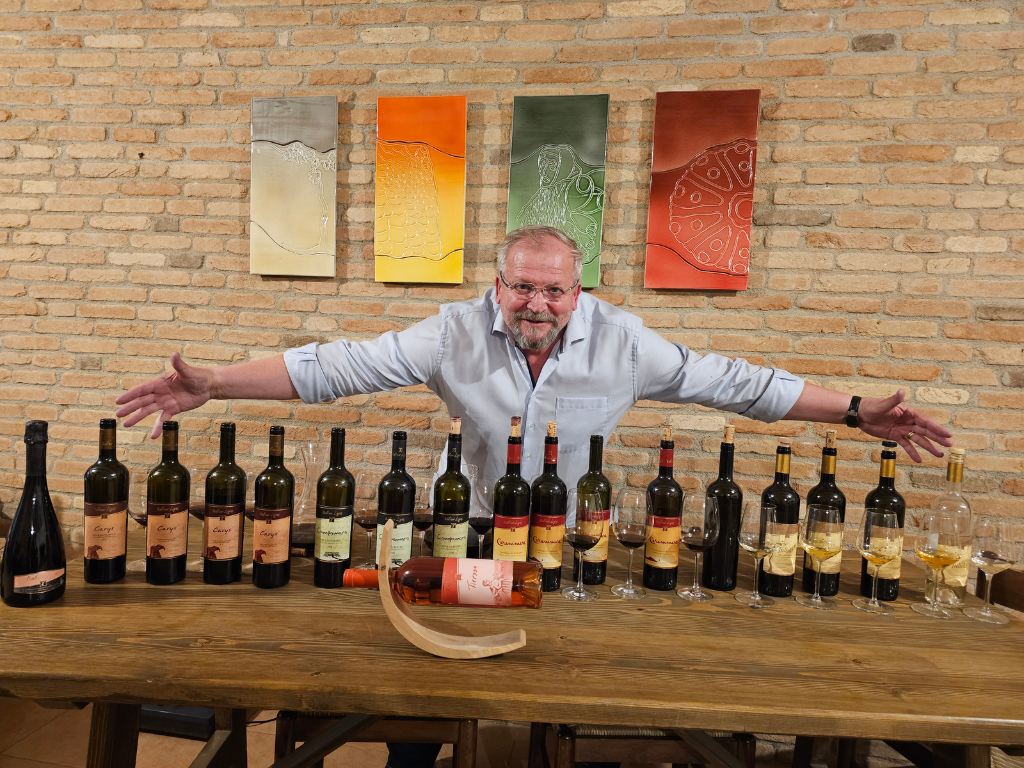
Discover Marian Timofti’s journey, sommelier and sensory analyst, FNDA founder, and his mission to establish the certified taster profession in Romania.
Mr. Marian Timofti, sensory analyst, sommelier, certified taster of wine, coffee, and other food products, founding president of the National Federation of Certified Tasters, founder of the Organization of Sommeliers in Romania 2011 (www.osr2011.ro), which he led for two terms as president, co-founder of several associations that now make up the FNDA (www.fnda.ro).
At present, he is also the representative of the European School of Sommeliers (www.eurosommelier.com) in Romania, holding the mandate to open a school, a mandate that also includes organizing branches throughout the country, an objective currently in progress.
C&B: How would you describe yourself in a single sentence, in order to spark the curiosity of those who do not yet know you?
Marian Timofti: Through tasting and evaluation, you will discover that taste represents emotion, culture, new discoveries, that it is an art that helps you savor and understand taste, a taste that embodies knowledge, that helps enrich your vocabulary, enjoy more what you taste, travel through cultures and traditions, developing a special sensitivity toward what you eat and drink. Taste can be educated at any age and may even become a profession.
C&B: If we were to follow the narrative thread of your career or business, what were the key moments that defined you?
Marian Timofti: The first moment took place in Cluj Napoca, at a gastronomic festival, when I built, together with a local colleague, the largest pyramid made of Champagne flutes, and I let him, being younger, fill it with rosé sparkling wine. When building it, I was refused help by another sommeliers’ association, present in large numbers at the event, who did not want to take the risk that this pyramid might collapse. But it stood firm.
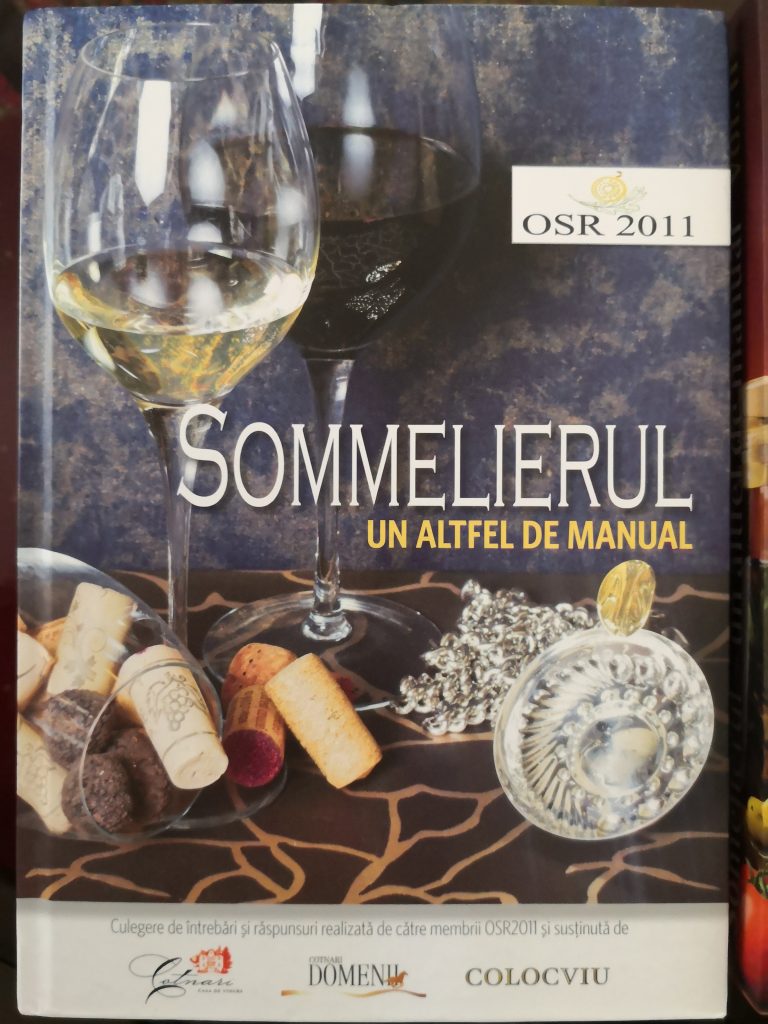
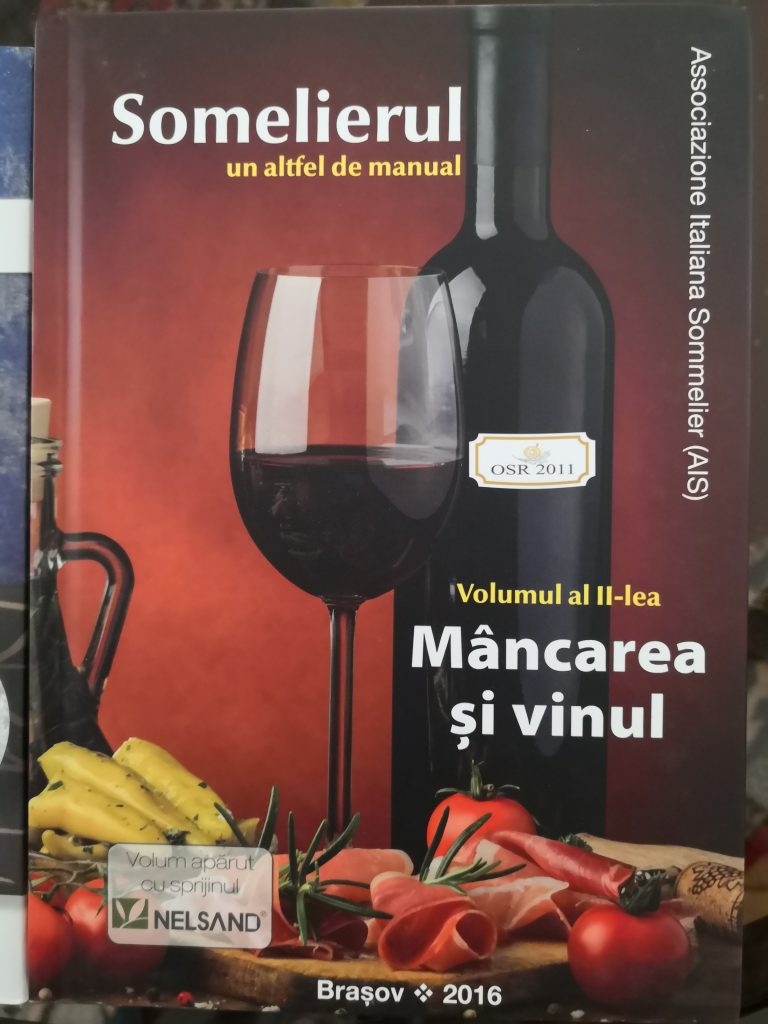
Then came the printing of two volumes for sommeliers and beyond, entitled A Different Kind of Manual (vol. 1 and vol. 2). One was written out of necessity, as I needed a manual with thousands of questions and their answers, with which sommeliers in Romania could prepare for national or even world championships. The second is the most important book for sommeliers, which I translated from Italian with the approval of AIS – Italia (Associazione Italiana Sommelier), an association I have been a member of for about 30 years and where I completed my courses in Siena.
Undoubtedly, the moment that pushed me to reach this level was the struggle with the Romanian educational system, which does not include in the Occupational Code (COR) the occupation or profession of taster—something inconceivable for me after 20 years working abroad, where I trained and from where I returned to help develop this branch of various industries. I say “various industries” because even an interior or fashion designer, or an architect, is in fact a… taster, who analyzes only the visual part of his creations—a visual that influences through the pleasure of harmonious lines, colors, and ensemble. In music, only the sense of hearing is analyzed, the pleasure of the sequence of musical notes being decisive for immersion into the melody, closing your eyes and letting your imagination “run wild.” Then we decide whether we liked the music or not.
C&B: What was the biggest obstacle at the beginning of the National Federation of Certified Tasters project, and how did you overcome it?
Marian Timofti: There were obstacles, and there still are many, because putting up barriers seems to be in the DNA of our nation. The biggest obstacle is that of the ministries (Labor, Education, Tourism), which make no effort to introduce this occupation or profession into the Romanian Occupational Code (COR), claiming they lack professionals. Instead of sending a few professors of food chemistry, sensory analysis, etc., abroad to specialize and then create a professional path that would culminate in a legalized diploma of graduation, or instead of granting the title of Social Interest Association to those who have already trained, thus enabling them to issue their own diplomas—as is the practice abroad—they block the process. Other obstacles come from other associations who think we are their rivals, from certain producers, and from petty people who like to “share their opinions.” But we don’t take these into consideration—we move forward.
C&B: Is there a dream or ambition that has always guided you, regardless of obstacles?
Marian Timofti: The ambition not yet fulfilled, but which seems close to realization, has been, is, and will be the opening of a school of taste, for children, young people, and not only, through the creation of an internationally accredited sensory analysis laboratory—a facility that does not currently exist in Romania.
The creation of this starting point could become a “national gateway” for launching this profession, an educational hub for understanding food and its consumption, a training center for artisanal producers in Romania, and even a way to influence production practices toward quality and citizen health, rather than to their detriment, as is too often the case now.
C&B: How did you look at the beginning of the road, and how do you feel you have transformed until now?
Marian Timofti: At the beginning, the road seemed easy. Everything changed when dealing with institutions on which the creation of development pathways depends. Then I decided to work with internationally accredited institutions, schools abroad, that have ministerial recognition in their countries, where I followed courses for certified tasters. Thus, we call ourselves “certified” even without this profession existing in Romania, since we are accredited by schools recognized in Europe. I invited 2 to 4 university professors, specialized in various fields, to Romania and organized courses based on European programs. During the pandemic, we even took part in an online course on sausages and cold cuts, receiving weekly boxes with the products dedicated to each session. It was proof that it can be done, that willpower has no limits, and all participants were very enthusiastic.
C&B: If we were to meet your team or collaborators, what do you think they would say about you?
Marian Timofti: It is hard to know what they think privately, but I do know that we respect each other, we support one another at events, they participate in the competitions we organize together, and in the international sensory analysis conference—the only one of its kind in Romania—held at Valahia University in Târgoviște, a partner who has supported us and continues to do so. I know that everything I have done was for the entire collective, for newcomers, for promoting this profession, and for developing this community. And I feel fulfilled.
C&B: What is the most important decision you have made that changed your trajectory?
Marian Timofti: Total dedication, I believe, was the most important decision. The support of my family was crucial, because everything we earned, we reinvested into developing the federation, creating training notebooks, manuals, tasting sheets, renting office space, and so on. If we had found more understanding and funding, we might already be in another “hemisphere” and would not have the same concerns about development. But we live with hope.
C&B: What does it concretely mean to be a certified taster, and what skills are necessary?
Marian Timofti: As I said earlier, anyone can become a taster at any age. Taste can be trained and refined—unless someone has a congenital anomaly, or one resulting from a serious illness, such as anosmia, the absence of smell and taste. Not the temporary loss that comes with a cold, but the congenital condition, which is rare but dangerous. Otherwise, anyone can train their taste. We tasters avoid colds, because we cannot participate in competitions during those times.
The necessary skills are, first of all, to attend a course, to have determination, and afterward to participate in as many training sessions as possible, just like an athlete’s training. To join tastings on various occasions and not be influenced by others’ opinions. Respect for minimum rules (especially in competitions where you are part of a jury) is essential. These include: not drinking coffee two hours before a competition, not wearing lipstick or perfume, not using scented deodorants, not smoking, and trying to taste between 10:00 a.m. and 2:00 p.m., when our taste buds function at their best. It’s not difficult, so… we are waiting for you!
C&B: What are the main objectives of the Federation, and how do you manage to put them into practice?
Marian Timofti: We already have several associations: Acqua Sommelier, Euro Sommelier, Italian Espresso Tasters, Olive Oil Tasters, Sausage and Cheese Tasters. We want to open courses for beer, spirits, chocolate, and honey. We also have an association, ACCDMB (Association of Quality Controllers and Food & Beverage Tasters), with a rather amusing history that perhaps we will share one day. Through this last association, we want to have tasters of zacuscă, mici (traditional grilled rolls), certain traditional soups, and other specific dishes, so that recipes and local cooking methods are respected.
C&B: What does a typical day look like for you now, and what moments bring you the greatest satisfaction?
Marian Timofti: A workday is divided into short tasting sessions (not daily, but quite often, 2–3 per week, lasting about 1–1.5 hours) at the FNDA headquarters, preparing training courses, delivering courses (when we have participants), and preparing competitions: the National Sausages and Cold Cuts Competition, the National Cheese Competition, the Mineral Water Competition, etc. My greatest satisfaction is when we organize a competition and discover new producers we have never heard of, with exceptional products that are not yet promoted. At the cheese competition, we discovered an association in Timișoara, supported by a Catholic priest, that cares for abused and abandoned women. The woman who manages the house donated by the church (an Italian lady about 55 years old) teaches them how to make cheese… One of their cheeses won the Grand Gold Medal. No one knew their story until we personally delivered the Diploma and Medal, when we heard their history and visited their small cheesemaking facility. That was the greatest satisfaction so far, although we have had many joys working with small producers.
C&B: What values or principles guide you in what you do, and how do you apply them day by day?
Marian Timofti: Dedication, integrity, the joy of sharing knowledge, and the desire to legally establish and recognize this profession—for me, these are unwavering. Every day I try to fulfill some of them and open new perspectives for tomorrow.
C&B: How did you come to found the National Federation of Certified Tasters, and what need did you feel had to be addressed in the market?
Marian Timofti: Even before I handed over the presidency of OSR2011, I had planned to create a core that would bring together several associations of tasters. We need to demonstrate that, united, we are a force. This is something that does not happen among producers. You cannot compare with European countries, where you cannot produce a product with a recognized name unless you are part of a producers’ association. If you produce something similar but with a different name (you cannot use the association’s name), you are doomed to immediate failure. No one buys without certification. This is why they have hundreds—yes, hundreds—of DOCs, DOPs, IGPs, DOCGs, while we have only one DOP, that being Telemea de Ibănești, and about 12 IGPs, including Sibiu Salami. Far too little for a country with Romania’s potential. Shamefully little.
C&B: How open is the Romanian market to the training and recognition of certified tasters?
Marian Timofti: I referred earlier to the involvement of the authorities, but if we speak of consumer interest, we are satisfied with the results of our work. For example, I will mention Euro Sommelier. Very few professionals, people from the HoReCa sector, attend these courses, but many consumers do. Not for the diploma, but to consume responsibly, and from them we have received the greatest and most beautiful appreciation. From time to time, they write to me on WhatsApp, by email, on Facebook, thanking me for the knowledge shared, for the fact that they no longer consume just any wines, some have even started producing small quantities of wine for their families, and so on.
This is the purpose: not to consume any kind of ultra-processed food, to drink wines with certain characteristics that are properly made, wines and products with personality that give us gustatory satisfaction and the joy of pairing a dish with a wine or another beverage.
C&B: How do you see the development of the Federation and the profession of taster in the coming years?
Marian Timofti: I believe the development of this Federation depends on the involvement of all members and on the support of producers who want people with refined taste sensitivity. It is the only way to demonstrate the usefulness of a tasters’ association and of uniting these associations into a federation, so we can organize events dedicated to both producers and consumers. The profession will not disappear, as studies show that there is no perfect electronic nose—it cannot replicate the physical and psychological states of the human factor—but it can help with memory. And consumers, as I mentioned earlier, are increasingly interested.
The interview with Marian Timofti reveals a story of passion, dedication, and the struggle for the recognition of a profession that blends art, science, and the culture of taste. Through his work, he has created not only a community but also a movement that transforms the way we see food and beverages.

 UK
UK
 IT
IT
 ES
ES
 DE
DE
 FR
FR
 RO
RO
 PT
PT
 HU
HU


