


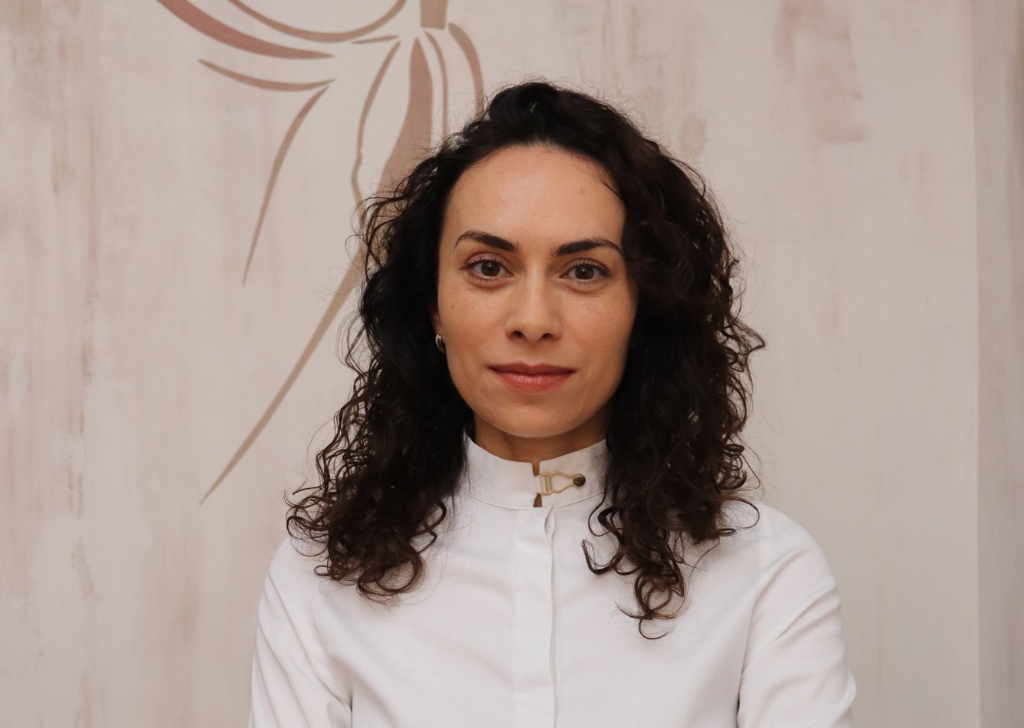
Discover the story of Victoria Croitoru Daschevici, founder of Victoria Dance Academy, as she shares insights on leadership, arts education, entrepreneurship, ballet, the challenges of building an academy, and shaping both children and character through dance.
Victoria Croitoru Daschevici is the mother of three children and the founder of Victoria Dance Academy. With more than 18 years of experience in education, she created this academy with the desire to offer children not only a place to learn how to dance, but also an environment where they can grow and develop in a balanced and meaningful way.
In 2014, her passion for ballet led to the opening of a school that introduced a different approach to Romania—combining the discipline of classical ballet with the sensitivity of Montessori and Waldorf educational philosophies, adapted for children as young as two years old.
At Victoria Dance Academy, excellence is not an end in itself but the natural outcome of a balanced educational process. The academy focuses not only on technique, but also on the emotional, social, and interpersonal development of every child. Victoria strongly believes that education through the arts provides the foundation for building strong, authentic character.
As children grow, the academy’s methodology evolves alongside them. From the age of six or seven, the approach becomes more structured, incorporating technical explanations and fundamental knowledge about the body and movement. In this context, ballet becomes a true discipline—much like a subject studied in school—where children learn to understand and correctly apply what they are taught.
The learning process includes the careful correction of posture and movement, guided by clear principles within an ethical, structured, and respectful educational framework. In this way, every child develops not only physical control but also discipline, focus, and concentration.
This methodology forms the foundation of all the academy’s courses and is adapted to the specific nature of each discipline offered by Victoria Dance Academy, including contemporary dance, street dance, gymnastics, piano, acting, and drawing.
The warm and elegant atmosphere of the classes allows children to express themselves freely without fear of making mistakes, encourages open communication, and helps them gradually build a balanced and confident self-image.
C&B: How would you describe yourself in a single sentence to capture the attention of someone who has never met you?
Victoria: I created Romania’s first ballet academy inspired by Montessori and Waldorf principles, where two-year-old children learn discipline and technique through stories, play, and mindful movement.
C&B: Looking back, what has been the common thread guiding your professional journey?
Victoria: The common thread throughout my entire professional journey has been the belief that a child’s education begins with how you make them feel, not only with what you teach them.
The first defining moment was my decision to build Victoria Dance Academy differently from the traditional dance school model back in 2014. I wanted to create a place where very young children would be introduced to discipline and technique through stories, imagination, and meaningful human connection, inspired by Montessori and Waldorf philosophies—at a time when these methods were almost nonexistent in Romania’s ballet education landscape.
The second defining moment was transforming the academy from a simple dance studio into a place for both artistic and personal development. That is why we introduced contemporary dance, acting, piano, drawing, and performances designed as complete experiences rather than simply “activities for children.”
Another important milestone was choosing to remain committed to quality and long-term development, even when that meant making difficult decisions, investing significant resources, and accepting slower growth. I have always preferred to build something meaningful rather than something superficial.
The constant throughout every decision I have made has been my conviction that art shapes character, not just performers.
C&B: What was a difficult moment or failure that truly changed you?
Victoria: Another major challenge has been the administrative side of running the academy, which often consumes my time and energy. From the moment I realized how many responsibilities came with it, I always said that administration affected my creativity—and it truly does. However, through perseverance and consistent work, I gradually found a healthier balance.
At first, I believed the solution was to delegate quickly and clearly divide responsibilities. In reality, I discovered that not everything can be delegated and, more importantly, that not everyone is able to carry forward the same vision. There were times when I entrusted responsibilities to highly capable professionals, but the new role simply wasn’t the right fit for them, and the outcome lacked the same coherence and quality.
It became an important lesson in leadership. I learned that people can be exceptional in one role while being unsuited for another. In a business built around education, culture, and human sensitivity, shared values are just as important as professional experience.
Following that period, I began building the academy’s organizational structure more carefully, at a more realistic pace, becoming much clearer about what needed to remain close to me and what could successfully be developed by the team. Today, I understand that healthy growth is not only about expansion but also about preserving an organization’s identity as it evolves.
C&B: What is one courageous—or perhaps counterintuitive—decision that significantly influenced your journey?
Victoria: One of the bravest, and perhaps most counterintuitive, decisions I ever made was restructuring both our physical space and our team, partly because some collaborations naturally deteriorate over time due to differences in positioning, attitude, or vision. These were difficult but necessary decisions that ultimately created a healthier foundation for the academy’s future.
I carefully assessed the real risks involved: the possibility of losing students, facing negative reactions, and hearing difficult comments from people who did not understand the changes. Nevertheless, I accepted those risks because I knew I could no longer continue in the direction we were heading.
I refused to preserve the status quo simply for the sake of comfort or out of fear of how others might react. Sometimes, apparent continuity can actually become an obstacle to growth.
The results did not appear overnight; they emerged gradually. The immediate outcome, however, was that the academy retained a core group of people who genuinely shared the same path and values. In many ways, it became a natural selection process that brought greater clarity, consistency, and long-term stability to the academy’s development.
C&B: How have you changed over time as a leader and as a professional?
Victoria: There are moments when someone from outside your organization can clearly show you, in black and white, what is working and what is not. Although the final decision always remains mine, receiving an objective perspective helps me tremendously. Being emotionally involved and present in the academy every day, certain things inevitably become difficult to see from the inside. That is why I consistently choose to work with external specialists who can provide clarity and an outside perspective.
When it comes to pressure, I generally handle it well. I tend to keep a great deal inside and rarely reach a breaking point. Over the years, I have learned to manage stress in a more balanced way and to avoid making important decisions based solely on emotion or exhaustion.
In my relationships with people, I am an open person, and I hope for the same openness and honesty from those I work with. I strongly believe in sincere and direct collaboration. This also applies to parents because, in a way, they are my collaborators as well. There are moments when I feel that we are experiencing the same situation but interpreting it through completely different truths and perspectives. Over time, I have learned to accept these differences more easily and to build bridges through communication rather than conflict.
As for risk, I have taken many throughout the years: the risk of failure, the risk of financial loss, the risk that comes with change, and the risk of making unpopular decisions. But I believe that every authentic achievement requires the courage to keep moving forward, even when you do not have every guarantee.
C&B: What do you think the people who work closely with you would say about you beyond your public image?
Victoria: I believe that the people who work closely with me would first say that I am deeply committed and that I put my heart into everything I build. Beyond the public image, I think they see someone who is constantly trying to maintain a balance between high standards, sensitivity, and responsibility.
One piece of feedback I have received many times is that I am sometimes too kind and too understanding. At times, I give people too many chances or spend too much time trying to understand everyone’s perspective before making a firm decision. That comes from working in a field built on human relationships and education, where people have always mattered deeply to me.
At the same time, there have been moments when those around me did not understand certain decisions I made. Some changes and restructurings were perceived differently from within the organization, especially when they were driven by the need to protect the academy’s long-term direction. Leadership decisions cannot always be fully explained at the moment they are made because they involve many factors that are not visible to everyone.
Over time, I have learned that a leader cannot always expect to be understood immediately and that it is important to accept the discomfort that sometimes comes with making necessary decisions. Even in those situations, I have always tried to remain fair, humane, and honest in my relationships with people.
C&B: What truly sets you apart in the way you build or lead?
Victoria: I believe what truly differentiates me is the deeply personal and human way in which I build relationships and shape the culture within the academy. I often refer to my team as “my girls” because most of them are women. I have built the academy around an atmosphere that feels like a family. From a management perspective, this can sometimes be viewed as either a strength or a risk, but it is the only way I know how to lead authentically, and that energy is reflected throughout the academy.
At the same time, precisely because our relationships are so close, I have learned to address issues directly and without unnecessary detours. I prefer honest and transparent communication, even when conversations are difficult. I believe that this kind of openness serves people far better in the long run than avoiding conflict or postponing necessary truths.
Another important difference is my constant emphasis on methodology and education rather than focusing solely on results or artistic performance. For me, dance is not just about mastering technique—it is about helping children become well-rounded individuals by developing discipline, sensitivity, teamwork, respect, and a healthy relationship with their own bodies.
Methodology is something I continuously work on. I constantly adapt the way we teach to meet children’s real needs and the way they learn and develop emotionally. I cannot say exactly how other dance schools in Bucharest or elsewhere in Romania operate because I do not know their internal processes in detail. What I do know is that, for me, the educational component and the human relationship have always been just as important as artistic training.
C&B: How has the current context—technology, AI, and the economy—changed the way you work?
Victoria: The current landscape, particularly the rapid development of technology and artificial intelligence, has significantly changed the way I work, especially in terms of organization, communication, and content creation. In many ways, AI has become an assistant for both me and my team.
It helps us write texts, structure ideas, and quickly generate different versions of posts, communications, and promotional materials. Sometimes, the sheer volume of information and options can feel overwhelming, but at the same time, the speed with which we can generate ideas or create a solid starting point is a genuine advantage.
AI has also become a valuable tool for exploring visual concepts and creative directions for images and graphic materials. After experimenting with several variations, we often arrive at something very close to what we envision, after which we step in to make the final refinements and add the essential human touch.
That being said, I do not believe AI can replace the people on our team—at least not at this point. In a field built on education, emotion, direct human interaction, and working with children, the human element remains essential. For us, technology is a tool that supports and streamlines our work, not a substitute for people. I see it as an assistant that helps us save time so we can focus more on what truly matters within the academy.
C&B: Is there a habit or routine that has significantly influenced your performance?
Victoria: I believe the habit that has influenced my performance the most is consistency. Even during difficult periods, I kept building step by step without abandoning the direction I believed in. In addition, I regularly seek outside perspectives by working with specialists in strategy and organizational development because I have learned that when you are deeply emotionally invested in a project, you sometimes need clarity that can only come from an external point of view.
C&B: What principles guide your most important decisions?
Victoria: The principles that guide my most important decisions are careful analysis, realism, and taking full responsibility for the consequences. As a rule, I do not make major decisions impulsively. I need time to analyze, discuss, and build a clear strategy together with the person I collaborate with on organizational development and strategic planning.
During difficult moments—especially when the academy went through a significant financial downturn—we began working in a very practical way. We put everything on paper: what was working, what was not, what needed to change, and which directions genuinely felt right for the future. For me, it is important that decisions are not driven solely by emotion but are also based on a clear and rational assessment of reality.
At the same time, I always try to evaluate the possible consequences of every decision. Some outcomes were exactly what I expected—difficult reactions, losses, or resistance to change. Others unfolded very differently from what I had anticipated. But I believe leadership also means having the courage to move forward even when you cannot control every reaction or every outcome.
A concrete example was the period when I decided to restructure certain administrative and organizational aspects of the academy. It was a decision built over time, following extensive analysis and many discussions. I knew there was a risk of losing people or creating dissatisfaction, but the guiding principle behind my decision was protecting the academy’s long-term direction while also protecting myself as a person. The academy is a deeply personal part of who I am, and over time I realized that if I am not well and emotionally balanced, neither what I build can remain healthy in the long run.
C&B: How do you see your industry evolving over the next three to five years?
Victoria: At the same time, I can clearly see a growing trend toward competition, trophies, and external validation. I have realized that many parents place great importance on this type of recognition—awards, quick results, visibility, and constant praise for their children. I believe this also presents a genuine risk: the loss of the purity of dance as an art form and, in some cases, even the authenticity of childhood itself. When too much emphasis is placed on performance and validation, there is a danger that the educational process and a child’s natural joy may be compromised.
On the other hand, I also see tremendous growth opportunities for schools that succeed in building a strong identity, clear values, and authentic relationships with people. I believe there is still plenty of room in the market for personal initiatives and for individuals who create meaningful projects driven by their own vision. In recent years, people have become much more confident in the idea of building something of their own, and this shift is evident in the field of arts education as well.
From an economic perspective, this year has brought a certain level of uncertainty generated by the current context. Although we have not yet experienced any major direct effects, there is a general sense of caution in the air that could influence the decisions of both families and businesses in the coming period. That is why I believe the projects that will endure in the years ahead will be those that have successfully built trust, community, and genuine stability around them.
C&B: What role do you hope to play in this evolution?
Victoria: As the industry evolves, I want the academy to become a benchmark school—a place capable of providing true continuity in arts education, from a child’s very first steps through to advanced levels and professional excellence.
I want to build an academy where there is room both for children who come simply because they love dance and want to develop harmoniously, and for those who choose to pursue a more serious path in the art of dance. I strongly believe in the idea of a school that can support different journeys without ever losing its human and educational essence.
The impact I hope to have is to shape not only children who dance well but also individuals who are sensitive, disciplined, and deeply connected to the arts. At the same time, I want to help develop dedicated teachers who understand the responsibility they carry when working with children and contributing to their personal growth.
Our performances also play a vital role in this vision. For me, they are not simply artistic events but transformative experiences that give children confidence, a sense of belonging, and the feeling of being part of something meaningful and beautiful. Through these performances, I hope to create emotion, cultivate culture, and build memories that stay with them throughout their lives.
In the long term, my goal is to develop a stable academy with a clear identity—one that is recognized not only for its artistic excellence but also for the way it shapes people and builds communities around the art of dance.
C&B: What genuine advice would you give to someone who wants to build something meaningful today?
Victoria: One of the most honest pieces of advice I could give is not to build something based solely on enthusiasm or appearances, but to be prepared for the difficult and often invisible side of the journey. At the beginning, it is easy to believe that passion and a great idea are enough. In reality, true building begins after the initial excitement fades—during the periods when exhaustion, pressure, and responsibility set in.
Secondly, I would advise people not to pursue growth simply for the sake of growing. Over time, I have learned that not every expansion is healthy and that, sometimes, stabilizing what you already have is far more important than constantly adding something new. There are moments when you need the courage to restructure, end collaborations, or change direction, even if it feels like a loss in the short term.
I would also say that it is incredibly important to seek help and outside perspectives. One of the mistakes many entrepreneurs make is trying to carry everything on their own. I have come to understand how valuable it is to work regularly with people who can view things objectively and honestly tell you what is working and what is not.
And perhaps most importantly, build in a way that does not destroy you in the process. When your project becomes such a significant part of your life, it is easy to lose sight of your own well-being. If the person leading the project is no longer healthy and balanced, eventually the project itself cannot remain healthy either.
C&B: What is an uncomfortable truth about your industry that few people are willing to talk about?
Victoria: One uncomfortable truth about this industry is that children’s arts education is often not truly regarded as education at all. Instead, it is seen as “just an hour of physical activity” or simply a way to occupy a child’s time. Sometimes this attitude is reflected in the way certain parents approach it. There have been occasions when I felt the need to say very clearly: the park is for playing—here, we are genuinely learning. Behind every dance class lies methodology, responsibility, educational structure, and an enormous amount of invisible work.
Another reality is that, financially, this industry is far more fragile than it appears from the outside. Running a dance school involves significant expenses. You need large spaces for studios, changing rooms, and waiting areas, and rent is calculated per square meter. Then there are salaries, taxes, utilities, and all the ongoing administrative costs that continue throughout all twelve months of the year.
In reality, however, the academy generates enough income to cover these costs for approximately nine months of the year—not twelve. That is why many dance schools operate on very narrow margins or rely on additional sources of financial support. In my own case, there were periods when the support of my partner—my husband—was essential in allowing us to continue building the academy exactly as we envisioned it.
I believe very few people speak openly about this reality because, from the outside, everything looks beautiful: performances, costumes, the stage, and happy children. Behind the scenes, however, there is an enormous amount of financial, organizational, and emotional pressure. It is an industry sustained far more by passion, perseverance, and conviction than by the prospect of quick or spectacular financial success.
Victoria Croitoru Daschevici’s journey proves that true excellence begins with education, values, and genuine care for people. Through Victoria Dance Academy, she has built far more than a dance school. She has created a community where discipline, creativity, and holistic development grow together.

 UK
UK
 IT
IT
 ES
ES
 DE
DE
 FR
FR
 RO
RO
 PT
PT
 HU
HU


