


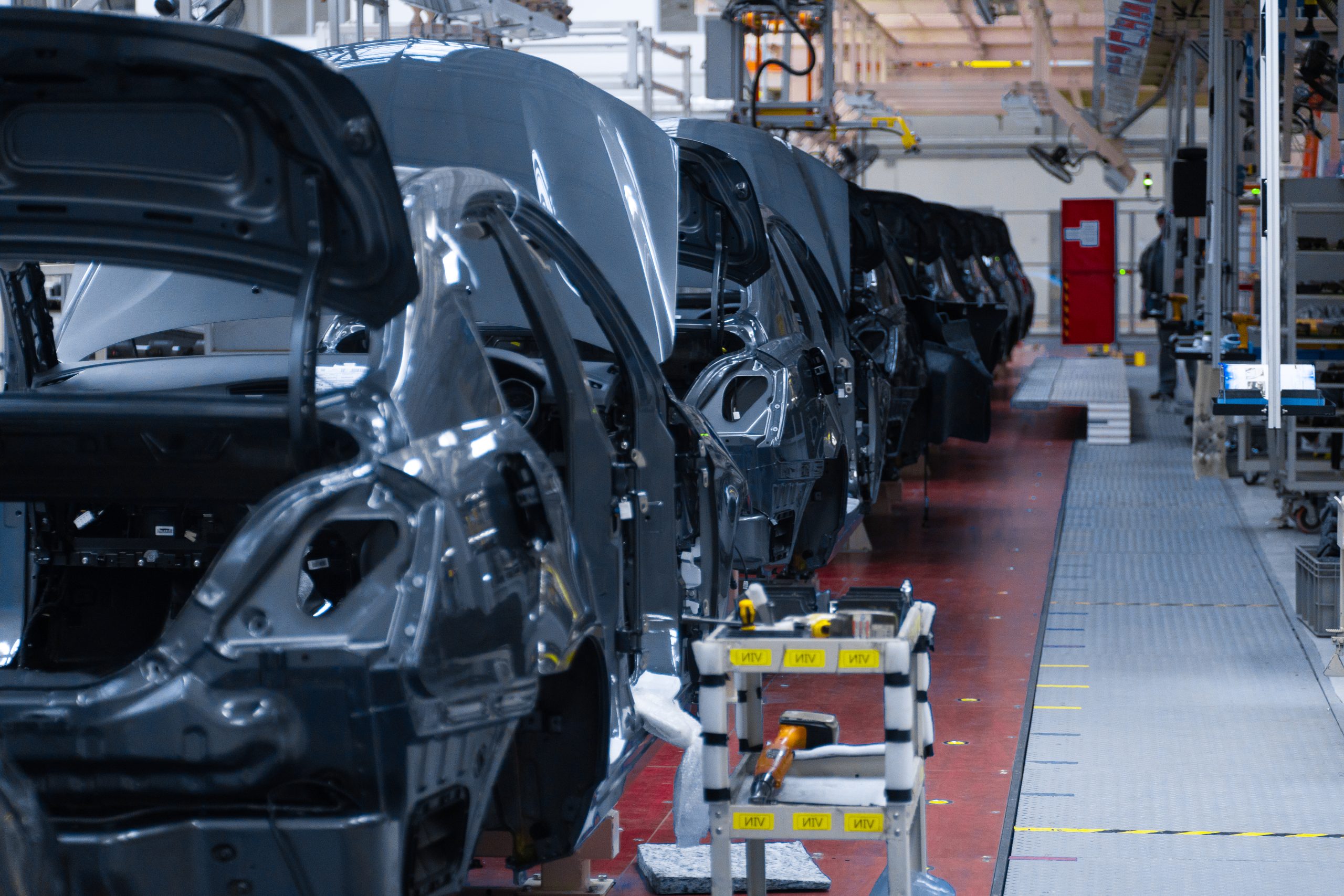
Europe’s automotive manufacturers and parts suppliers are divided over the European Commission’s proposed “Made in Europe” rules, which aim to strengthen the bloc’s competitiveness against growing Chinese competition, according to EuroNews.
The proposal is part of the forthcoming Industrial Accelerator Act and would encourage the use of electric vehicles built largely with European-made components in public procurement and support programmes.
Industry Disagrees on Local Content Rules
At the center of the debate is the European Commission’s proposal requiring 70% local content in electric vehicles to qualify under the new framework.
According to EuroNews, the European Association of Automotive Suppliers supports the proposal, arguing that most electric vehicles already manufactured in Europe contain between 80% and 90% European-made components, based on a study conducted by consultancy Roland Berger.
However, the European Automobile Manufacturers’ Association advocates a different methodology that would evaluate the overall value of finished vehicles, including research, engineering and design, rather than focusing solely on locally manufactured parts.
Suppliers Warn of Job Losses
CLEPA argues that the alternative approach would effectively reduce the share of required European-made components to around 50%, with the remaining value coming from activities such as research and development.
According to EuroNews, the organization estimates that such a change could put as many as 350,000 jobs at risk across Europe’s automotive supply chain.
Benjamin Krieger, Secretary General of CLEPA, told EuroNews that measuring only the finished vehicle rather than the origin of individual components fails to adequately protect European manufacturing workers.
Competition With China Intensifies
The disagreement comes as European automakers face mounting competition from Chinese electric vehicle manufacturers, whose lower production costs continue to challenge domestic producers.
According to EuroNews, the Industrial Accelerator Act is intended to reinforce Europe’s industrial base by encouraging greater use of locally produced components while reducing dependence on external suppliers.
As negotiations continue between EU member states and the European Parliament, the final version of the legislation is expected to play a key role in shaping the future competitiveness of Europe’s automotive industry.
Photo: usertrmk/ magnific.com

 UK
UK
 IT
IT
 ES
ES
 DE
DE
 FR
FR
 RO
RO
 PT
PT
 HU
HU


