


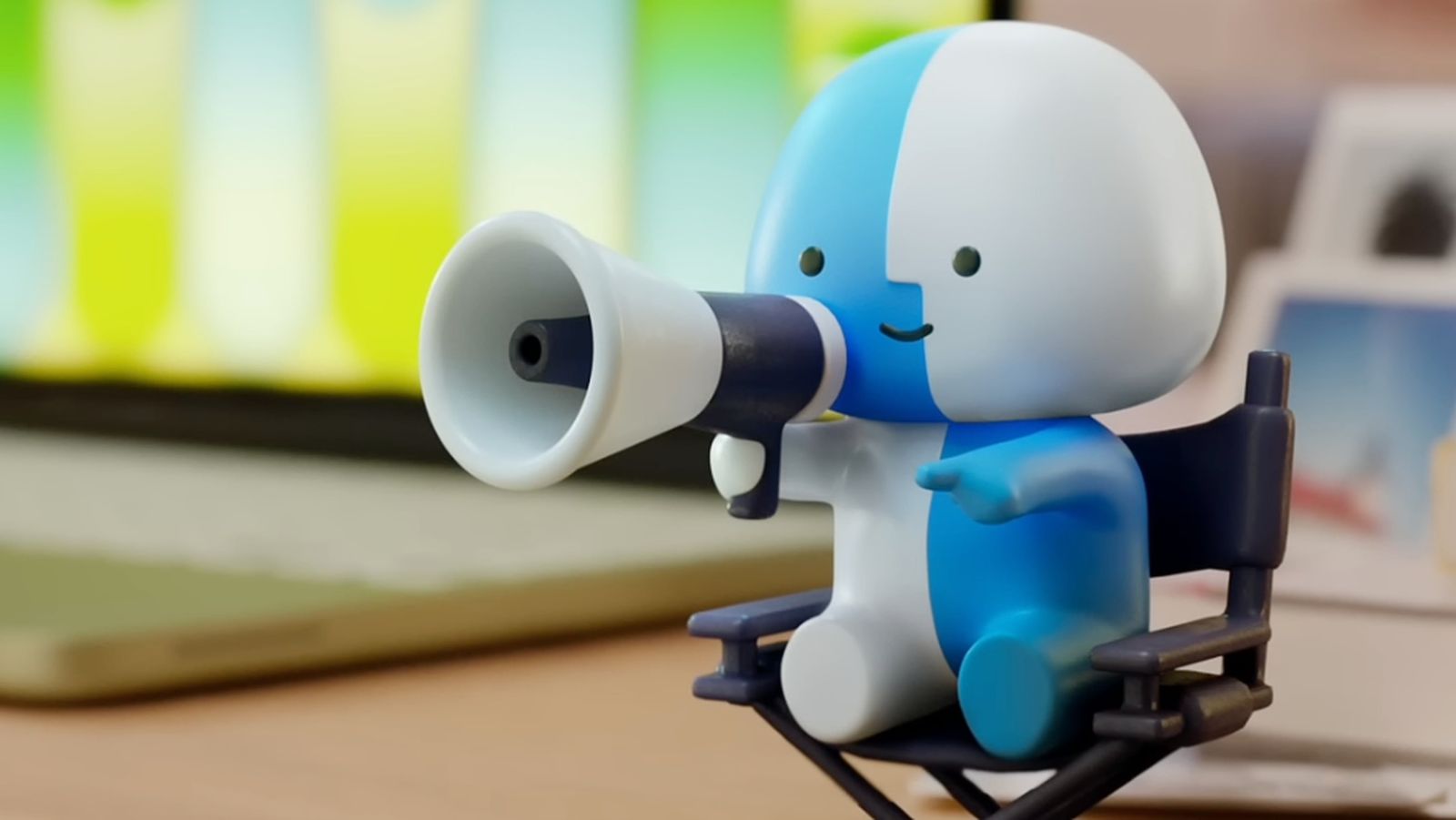
Major technology companies are increasingly turning to cartoon mascots as part of their branding strategies, seeking to create stronger emotional connections with users and make their products appear more approachable, according to the BBC.
Companies including Apple and Microsoft have recently introduced new animated characters, joining a broader trend that marketing experts say is designed to humanize brands and improve customer engagement.
Tech Firms Embrace Friendlier Brand Identities
According to the BBC, Apple recently introduced a blue-and-white animated character informally dubbed “Little Finder Guy” to promote one of its latest laptops on social media.
Microsoft has also unveiled Mico, a smiling avatar designed for its AI assistant, Microsoft Copilot. The company describes the character as an optional visual identity intended to make conversations with AI feel more natural and engaging.
Other technology brands are adopting similar approaches. Google expanded the use of its Android robot mascot by allowing users to create personalized versions, while Reddit refreshed its mascot Snoo and Mozilla transformed its Firefox branding into a dedicated character named Kit.
Building Trust in an AI Era
Marketing researchers cited by the BBC argue that mascots can strengthen brand recognition and loyalty by giving companies a more relatable identity.
Research has shown that brands using mascots are significantly more likely to grow market share compared with those that do not use character-based marketing.
However, some experts believe the resurgence is also linked to growing public skepticism toward large technology companies.
Psychology and technology specialist Nathalie Nahai told the BBC that many consumers increasingly view major tech firms with distrust, making friendly characters an effective way to soften corporate images and improve public perception.
Concerns Over AI-Powered Mascots
The combination of artificial intelligence and digital mascots is also raising new questions.
Some analysts warn that future AI-powered brand characters could interact directly with consumers in highly personalized ways, potentially increasing their influence over purchasing decisions and online behavior.
Despite these concerns, companies continue to invest heavily in character-driven branding. One of the most successful examples remains Duolingo, whose green owl mascot, Duo, has helped the company attract millions of followers across social media platforms.
According to the BBC, marketing experts believe mascots remain effective because they tap into natural human responses to familiar, expressive and emotionally engaging characters—an approach that many brands now see as increasingly valuable in the AI era.
Photo: macrumors.com

 UK
UK
 IT
IT
 ES
ES
 DE
DE
 FR
FR
 RO
RO
 PT
PT
 HU
HU


